“As traditional standards of ‘good work’ waver, it becomes an opportunity to reexamine work within the context of human life and meaning—ultimately rediscovering its purpose.”
Since its founding in 2014, the Shenzhen robotics ecosystem has found a beating heart at the Songshan Lake XbotPark in Dongguan, Guangdong. It has incubated over 80 hard-tech startups with an 80% survival rate. Six have become industry “unicorns,” and several boast valuations exceeding ¥10 billion.
While resembling a startup incubator, XbotPark also functions as a university, attracting student entrepreneurs who treat innovation as education—honing engineering and design thinking through product development. This hybrid model aims to erase boundaries between academia and industry.

From RoboMaster to XbotPark
Kuang Zheng, born in 1995, studied computer science and joined DJI Innovations (SZ:002168) as a sensor engineer in 2017. There, he worked on RoboMaster—a robotics competition where wheeled robots duel in simulated combat. Kuang’s task was to develop sensors detecting bullet impacts and damage severity. When his team sought flexible “e-skin” sensors for full-body coverage, they found no viable suppliers. The idea lingered, and in 2020, Kuang joined XbotPark after Professor Li Zexiang encouraged him to launch Moxian Tech.
Nestled beside Dongguan’s Songshan Lake, XbotPark’s 98-acre campus—opened in 2023—defies the city’s factory-dominated reputation with lush gardens, R&D labs, and even a kindergarten. “We’re not entirely sure what we are,” jokes Li, 64, a Hunan native who earned degrees from Carnegie Mellon and UC Berkeley before joining HKUST in 1992. Dubbed the “professor who understands startups,” Li mentored DJI’s founder Frank Wang and co-launched XbotPark in 2014 with HKUST colleagues Gao Bingqiang and Gan Jie to address China’s manufacturing limitations.
The Vision
“Without homegrown global brands, entire industries stagnate in low-margin imitation.” — Li Zexiang

Startup Methodology: From 0 to 1
After entering XbotPark in 2020, Kuang first joined a six-week innovation bootcamp. During this period, mentors guided teams through the entire startup lifecycle—from product definition and design to prototyping, manufacturing, sales, operations, and management. “The bootcamp provided a quiet, secure environment where we could focus without feeling alone,” Kuang recalls.
Entrepreneurship involves many pitfalls, and everyone expects them. Li Zexiang shares his own early failures, including one that nearly bankrupted him: Birai, an LED wire-bonding machine company he co-founded with students. To secure investment, they signed share buyback agreements. Initially successful—customers arrived with bags of cash before products were even ready—the company collapsed when co-founders quarreled and abandoned the project. Li was forced to repurchase shares personally, ultimately shutting down the firm.
Tang Xiaoxi, XbotPark’s incubation lead of seven years, explains how the program has evolved. Beyond the main 4-6 week summer/winter bootcamps, XbotPark now offers monthly two-week mini-camps and regular workshops. Each cohort typically includes 50-60 participants—mostly university students, plus some social entrants with work or startup experience like Kuang.
The Benmo Tech Story: Pivoting to Success
Zhang Di, founder of Dongguan Benmo Technology Co., Ltd., is Kuang’s contemporary and another “unruly young person.” During graduate studies, Zhang suddenly envisioned removing the reducer—a key component in traditional electromechanical systems—and developed a new direct-drive motor technology improving system response speed and lifespan. He immediately recruited classmates to start a business.
Initially targeting industrial robots—a “chokepoint” sector for China with higher margins—Zhang discovered it was prohibitively difficult for startups. “It’s not just about technical breakthroughs,” he explains. “Consider: one minute of factory downtime costs how much? Their product import processes are lengthy, and they heavily prioritize supplier trust—which we lacked, having no successful cases.”
After this failure, in 2019, Zhang returned to Songshan Lake XbotPark and founded Benmo Tech. This time, abandoning industrial robots, they targeted emerging home robotics like floor washers and robotic vacuums. These smaller robots required more compact, durable direct-drive motors. Zhang’s products quickly found market traction, and business began rapid growth.

Leveraging Supply Chain Advantages
In 2021, Kuang’s team produced an A4-paper-sized sample where only a rubber-stamp-sized area functioned properly. This poor consistency made mass production an imperative challenge.
They frequently visited Huaqiangbei. They once passed the second floor of Huaqiang Electronics World, noticing many electronic pianos. Touching the keys, they found silicone construction with no dynamic pressure sensitivity or volume variation. Kuang asked shopkeepers how to produce different sounds. “Turn the knob beside it while playing, like a DJ,” they replied. Kuang felt this consumer experience was poor, befriended the owners, learned where these pianos were manufactured, and discovered their need for product improvement.
Moxian Tech’s first formal order came from an electronic piano manufacturer. “Factories need validation—how else do you know if your production works? The best validation is delivering products to customers. But we didn’t dare accept large orders initially; once quality control fails, reputation is gone,” Kuang explains. Huaqiangbei partnerships were ideal: “First, their quality requirements weren’t so strict, with higher tolerance. Second, they sold inexpensive products, so consumers didn’t have high after-sales expectations.”

Li Zexiang often calls the Greater Bay Area “Hollywood for manufacturing.” Recently, he hosted an MIT delegation. Several entrepreneurial students described their difficulties: working on metal 3D printing, they found establishing supply chains in the U.S. nearly impossible. One product required 100+ suppliers; missing one screw or nail meant failure.
Li recognizes that even in Shenzhen and Dongguan, many supply chain resources cater to large corporations; small companies often must seek small manufacturers with questionable quality and pricing—pitfalls his startup teams have experienced.
From “Hunting” to “Farming” Talent
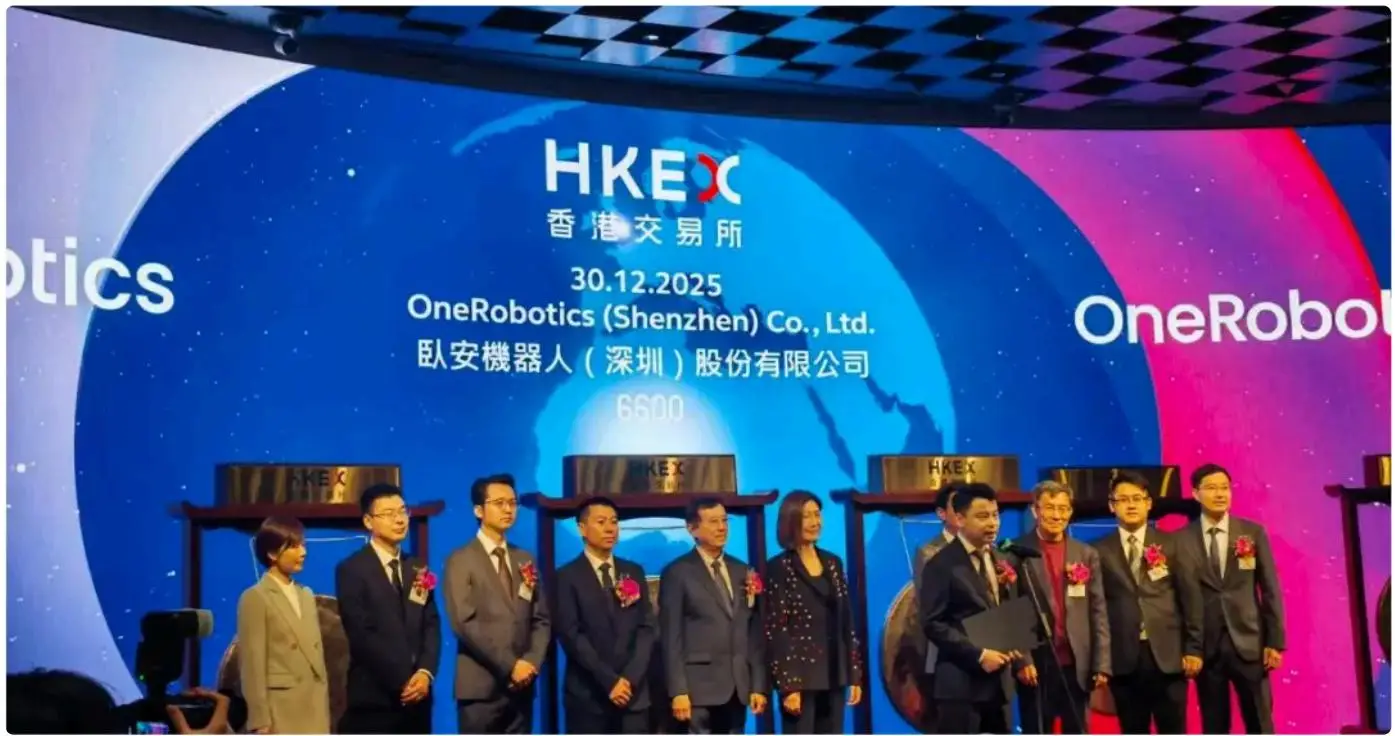
XbotPark has birthed 80+ hard-tech startups, including six industry unicorns like Narwal, YD Tech, OneRobotics, and HAI Robotics. As a new wave of technology arrives, visitors nationwide come to learn XbotPark’s model. Li sees opportunity to transform China’s traditional engineering education.
In early XbotPark days, Li recruited nationwide, calling this model “hunting”—like traditional angel investing, searching worldwide for “prey,” investing when suitable projects appeared. But in recent years, Li believes “hunting” should shift to “farming”—creating more industrial innovation test fields, cultivating from seed to full growth cycle, requiring deeper educational reform participation.
Li emphasizes that especially within schools, implementing new engineering education means bridging the education-industry gap, overturning entire curriculum structures, teaching methods, and evaluation systems. “We don’t want students who only score high on tests, but those with curiosity, willingness to act, and persistence,” Li says.