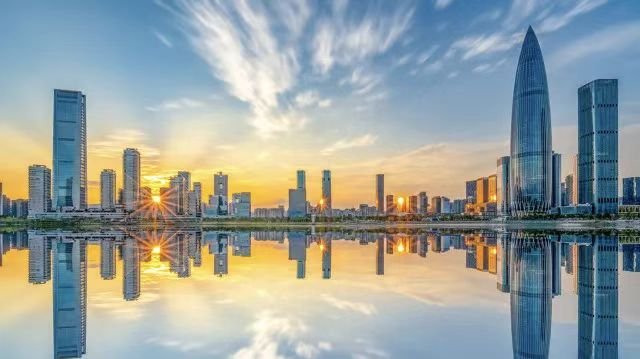
Currently, artificial intelligence is reshaping the global industrial landscape at an unprecedented pace, and the “AI+” initiative has been elevated to a national strategy. As a core engine of technological innovation in the Guangdong-Hong Kong-Macao Greater Bay Area, Shenzhen is leveraging its vitality of openness and inclusiveness, in-depth application, and full-domain empowerment to accelerate the deployment of AI from laboratories to thousands of industries.
This vibrant city, with a GDP exceeding 4 trillion yuan and home to China’s most complete manufacturing system and industrial chains, has become the best “training ground” and “amplifier” for the implementation of AI technology. In 2024, the scale of Shenzhen’s artificial intelligence industry exceeded 600 billion yuan, accounting for nearly 40% of the province’s total, with over 2,800 enterprises gathered here, ranking among the top in China.
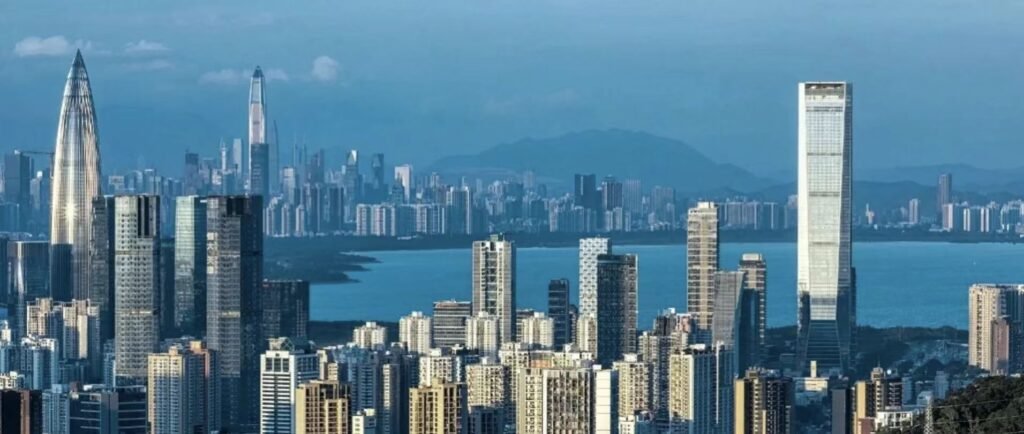
Shenzhen AI Drives Intelligent Upgrading of Industries
In Shenzhen, AI is not a concept but an ongoing efficiency revolution. The intelligent transformation here has not only significantly improved the efficiency of existing industries but also spawned entirely new innovative industries and paradigms.
Recently, Shenzhen issued China’s first special legislation on the artificial intelligence industry and introduced the Several Measures for Shenzhen to Build a Pioneer City of Artificial Intelligence. The full-stack industrial chain represented by Huawei’s Ascend Ecosystem and Tencent’s Hunyuan Large Model is accelerating its construction, and the city’s intelligent computing power supply level has been significantly improved.
Today, we see that relying on leading technology enterprises such as Huawei and Tencent, as well as emerging hard technology enterprises such as DJI, Honor, Bambu Lab, and Pasini, Shenzhen is reconstructing the entire chain of R&D, production, and services through AI and radiating this capability to the industrial hinterland of the Greater Bay Area, including Dongguan, Foshan, and Guangzhou.
In the field of intelligent terminals, AI has been deeply integrated into mobile phones, drones, and wearable devices. For example, the “CoMagic Coding Assistant” jointly launched by Honor and Tencent has helped more than 600 engineers, increasing the code generation ratio to 30%, significantly improving R&D efficiency, and driving the accelerated intelligent transformation of the entire Greater Bay Area’s intelligent terminal industrial chain.
In the cutting-edge track of embodied intelligence, Shenzhen enterprises are moving from “hardware leadership” to “software-hardware collaboration”, enabling embodied intelligence technology to move from laboratories to real scenarios. Leading Internet enterprises represented by Tencent are deeply collaborating with local robot hardware manufacturers, becoming a key force driving the development of “integrated software and hardware”. Taiss, China’s first modular embodied intelligence software platform jointly launched by Tencent Robotics X Lab and Fujiang Lab, provides a standardized “brain” for more than 40 domestic robot enterprises, significantly lowering the development threshold. For example, Shenzhen-based Pasini Technology has greatly improved training and inference efficiency in robot data processing services with the help of Tencent Taiss.
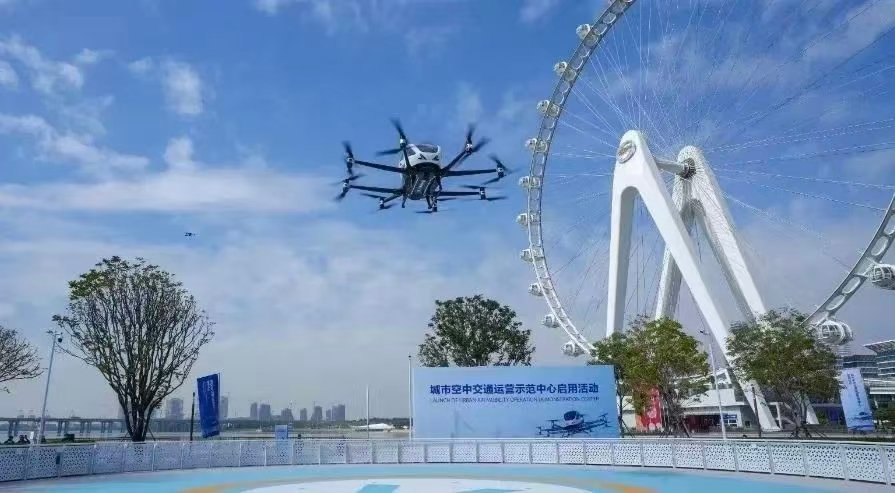
In the low-altitude economy sector, Shenzhen has gathered more than 260 AI enterprises above designated size and more than 170 drone enterprises, forming two core tracks for the integrated development of “artificial intelligence + low-altitude economy”. Together with enterprises such as DJI and Douchong, Shenzhen can dispatch more than 12,000 drones in real time and build a low-altitude emergency rescue system with “1-minute response and 20-minute arrival”.
In the field of AI + design, Shenzhen-based Bambu Lab has connected to the capabilities of Tencent’s Hunyuan Large Model. Users can generate high-precision printable 3D models in just 2 minutes with text or image input, improving efficiency by more than 6 times. The “one-click generation” and “one-click optimization” capabilities of the product have further inspired global 3D printing creators to use it, with the monthly active users of its platform MakeVoxel exceeding 100,000, not only activating the local creative economy but also driving the export of Greater Bay Area digital content through cross-border e-commerce.
Shenzhen Boasts a Solid Foundation for the AI Industry
In the rapid development of the AI industry, Shenzhen has built a complete industrial chain and industrial cluster ranging from underlying computing power infrastructure, core algorithms, and frameworks to the industrial layer. In terms of computing power, a number of major computing power infrastructure projects such as the Pengcheng Cloud Brain III and Tencent Intelligent Computing Center have been completed, and the “Pengcheng·Nao Hai” large model of the Pengcheng Laboratory has reached a scale of tens of billions of parameters. In the field of large models, Shenzhen’s multimodal Xingchen Large Model and Yingwu Lingxi Large Model are at the forefront of the country.
In 2024, the scale of Shenzhen’s artificial intelligence industry exceeded 600 billion yuan, gathering more than 2,800 enterprises, both ranking among the top in China. Shenzhen has formed an AI industry matrix consisting of 13,000 specialized, sophisticated, and innovative “little giant” enterprises, 40,000 specialized, sophisticated, and innovative small and medium-sized enterprises, 14,000 high-tech enterprises, more than 200 listed companies at home and abroad, and 7 Fortune Global 500 enterprises, forming a solid gradient development pattern.
In Shenzhen, enterprises focus on key tracks such as chips and large models to tackle breakthroughs, laying a solid foundation for the industry with hard-core technology, which has become the core competitiveness of Shenzhen’s AI industry. In 2024, entities such as Shenzhen enterprises and universities applied for 34,000 AI-related patents worldwide, including 32,000 invention patents (accounting for 95%) and 12,000 PCT patents, a year-on-year increase of 21.6% compared with 2023.
Shenzhen also has the investment and determination for underlying innovation from technology enterprises represented by Tencent and Huawei.
Since 2010, Tencent’s cumulative R&D investment has exceeded 400 billion yuan, with 17,000 AI-related patents, making it one of the companies with the most AI patents in the world. In the field of large models, Tencent independently developed the Hunyuan Large Model, which has a scale of trillion parameters, focusing on general large models, vertical industry large models, and multimodal large models, and building a “general + industry” large model matrix.
Among them, Tencent’s industry large models have been implemented in more than 200 scenarios such as finance, industry, government affairs, cultural tourism, and education, serving more than 400 customers, including more than 200 large enterprises, making it one of the most popular large models in the world. More importantly, Tencent adheres to the “open co-construction” technology development route, opening up the underlying capabilities of the Hunyuan Large Model to industry partners, and has served more than 2 million developers, becoming one of the most open large model ecosystems in the world.
More importantly, the rapid iteration of technology and the in-depth integration of industries are continuously improving the intelligent level of Shenzhen’s industries, and also providing an important practical sample for the Guangdong-Hong Kong-Macao Greater Bay Area and even the whole country.
Shenzhen AI Empowers Industrial Globalization
The intervention of AI is not only reflected in the transformation of industrial efficiency and the improvement of production efficiency but also can empower international competitiveness. In 2024, the AI export volume of the Greater Bay Area was about 5.7 trillion yuan, a year-on-year increase of 11%, of which Shenzhen’s export volume was about 1.5 trillion yuan, a year-on-year increase of 11%, becoming an engine driving global intelligent development.
At present, more than 100 Shenzhen AI “going global” enterprises are exporting AI-related products such as intelligent terminals, robots, and low-altitude economy products to Southeast Asia, the Middle East, Europe, and other regions in the “AI + product” model. The overseas revenue of Shenzhen’s intelligent security enterprises accounts for more than 30%, and some enterprises even exceed 70%.
The development of artificial intelligence is related to the future of the industry, the future of Shenzhen, and the future of the Greater Bay Area. With the vitality of openness and inclusiveness, in-depth application, and full-domain empowerment, Shenzhen is accelerating the deployment of AI from laboratories to thousands of industries, not only improving its own development speed but also driving the technological innovation and industrial upgrading of the entire Greater Bay Area. The continuous optimization of systems and industrial ecology is building a brand-new technological foundation, and the development of Shenzhen’s AI industry has entered a new stage of technological breakthroughs, model innovation, and ecological construction.
Standing at a new historical starting point, Shenzhen’s AI industry, with its unique advantages of “hard-core technology + open ecosystem + full-domain empowerment”, has become a core engine for the development of artificial intelligence in the Guangdong-Hong Kong-Macao Greater Bay Area and even the world.