On 18 August, Xiaomi president Lu Weibing and vice president and CFO Lin Shiwei took questions on the group’s second-quarter 2026 results. On the smart-EV business they addressed five points: the Pengcheng model’s buyers barely overlap with existing models; the Pengcheng N90 Max and N70 Max are not yet priced, so margin impact is unclear; overseas dealers show very high interest in Xiaomi cars; the ratio of range-extender to pure-electric sales is hard to pin down; and average selling price swung on product mix.
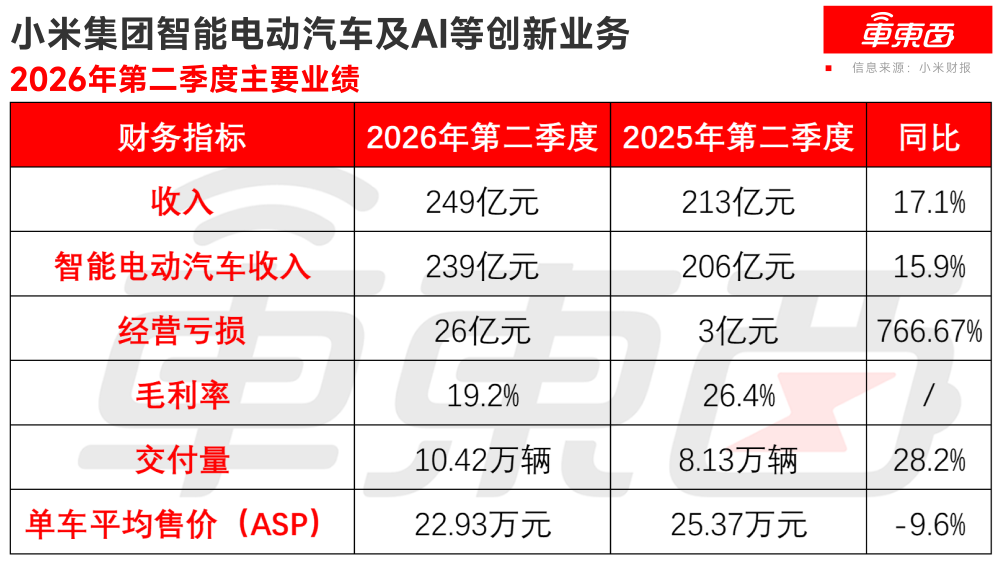
For the second quarter, Xiaomi’s total revenue was 108.9 billion yuan with adjusted net profit of 6.2 billion yuan. The smart-EV and AI innovation segment brought in 24.9 billion yuan, of which smart-EV revenue was 23.9 billion yuan, up 15.9 per cent. Its operating loss was 2.6 billion yuan, widening about 766.67 per cent year on year, and its gross margin was 19.2 per cent, down 7.2 percentage points year on year and 0.9 points quarter on quarter. Deliveries reached 104,200 vehicles, up 28.2 per cent.
Pengcheng buyers barely overlap, overseas dealers are eager
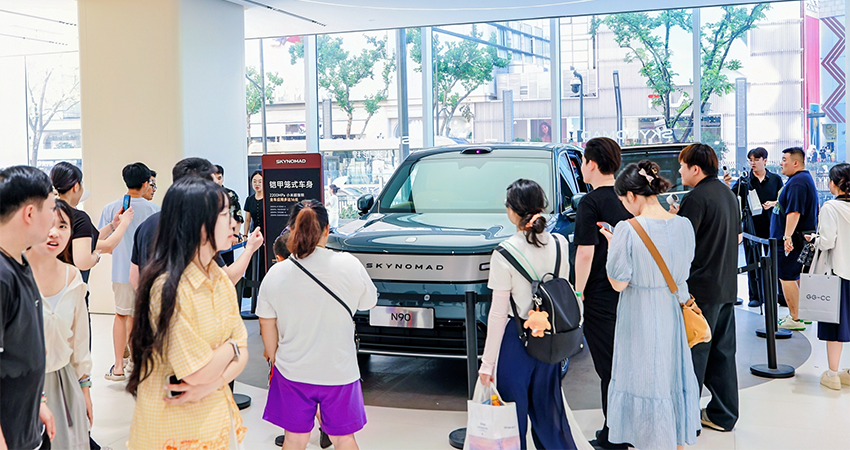
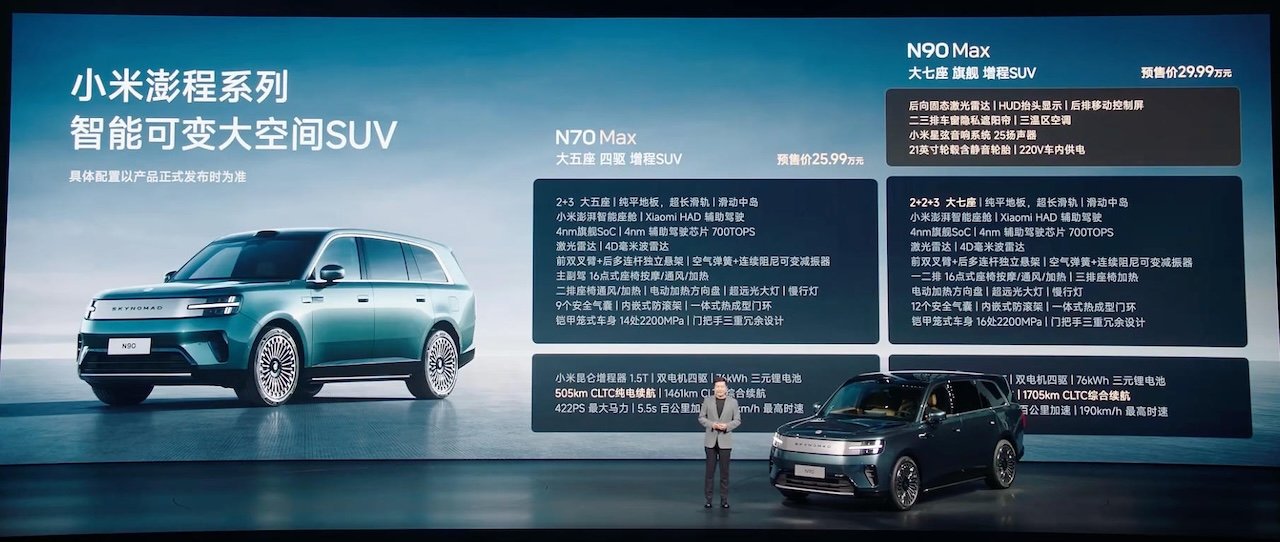
Lu said the Pengcheng series was planned from the start to differ from the SU7 and YU7, with different users, to avoid cannibalisation. Early data show only about 10-odd per cent overlap with the SU7 and very little with the YU7. Where the SU7 and YU7 are driver’s cars, Pengcheng is built for space, a flexible cabin that extends to many scenarios. Family and multi-passenger use is far more common than among SU7 and YU7 buyers, and the average age is several years older. Pengcheng pre-orders have been strong, and the launch is set for September.
On overseas plans, Lu said Xiaomi will go abroad in the second half of 2027 and has visited many countries this year. Overseas dealer partners show unusually high interest and want the franchise badly, because Chinese smart EVs abroad are seen as an unstoppable trend, Xiaomi’s “human-car-home” ecosystem is unique globally, and it is a tech company making cars rather than a legacy carmaker. Most top local dealers in each market have approached Xiaomi directly.
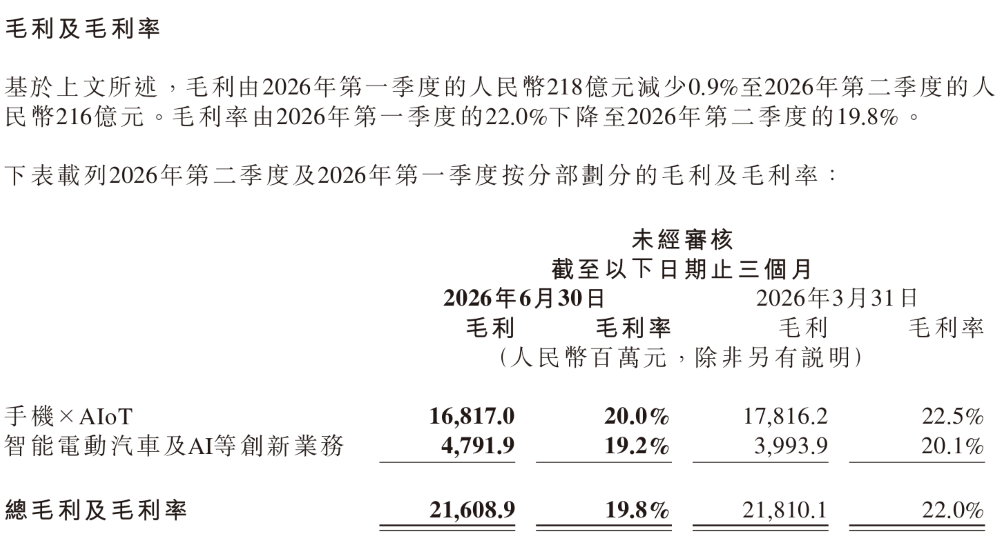
Lin attributed the margin dip to a high base from last year’s SU7 Ultra, more next-generation SU7 deliveries this quarter, and early losses from the large-model business. On the ASP, he said the swing came from mix: more SU7 and less YU7 this quarter, and last year’s higher-ASP SU7 Ultra fell. ASP is a result, not a target, and low ASP does not mean low margin.
A half-year loss of 5.7 billion yuan
In the first half, the smart-EV and AI segment’s revenue was 24.9 billion yuan in the second quarter, up 17.1 per cent and 22.9 per cent of group revenue. Operating loss was 2.6 billion yuan, up from 300 million yuan a year earlier, and with the first quarter’s 3.1 billion yuan loss the half-year operating loss reached 5.7 billion yuan. Gross margin was 19.2 per cent, down from 26.4 per cent, blamed on lower SU7 Ultra share, higher parts costs and AI-related spend. ASP was 229,300 yuan, down 9.6 per cent from 253,700 yuan. Operating expenditure was 7.4 billion yuan, up 25.7 per cent.
The scorecard is mixed. Volume and EV revenue rose, but the segment still lost 2.6 billion yuan in the quarter. The Pengcheng range-extender series launches in September, and the market now waits to see what it does next.
Editor’s note: This is an adapted translation of the original Chedongxi report. It has been trimmed and restructured for readability for an international business audience.