The humanoid robot trade is losing its illusion. Unitree listed on Shanghai’s STAR Market on 19 August as the A-share market’s first humanoid robot stock, but the first-day high quickly turned into a slide in price and market value, and a full moon became a crescent.
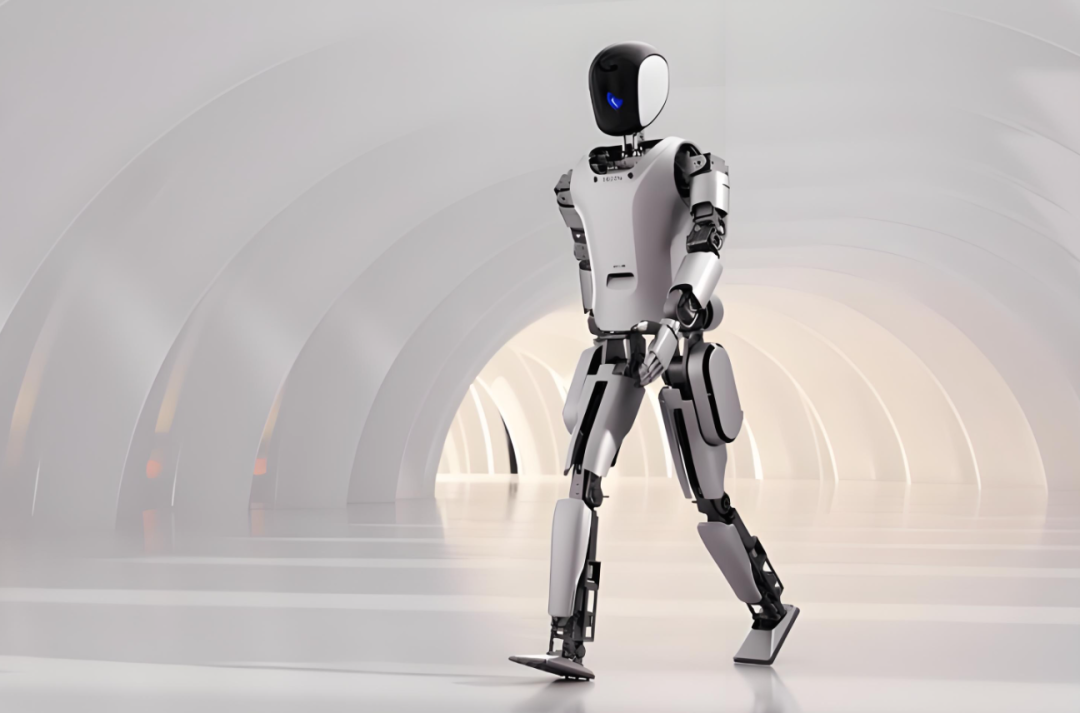
As Unitree slid, the industry staged a second dive. Shao Tianlan, founder of Mech-Mind, which has just listed in Hong Kong, attacked so-called assembled-deal embodied intelligence firms on social media over two days, naming Galbot. Zhipingfang, Star Era and Robotics Era were then reported to have been reported by peers. Word also circulated that regulators had issued informal guidance to tighten humanoid robot IPO approvals.
These look like isolated events but are two sides of one revaluation. As humanoids move from slide decks and televised galas into the capital markets’ spotlight, the sector’s biggest contradiction is no longer whether a prototype can be built but whether a real, sustainable, non-related-party business with genuine core technology can be.
Unitree’s halving may mark the end of the capital carnival. The industry’s fundamentals have not worsened. What has changed is how markets examine the sector, opening a shakeout defined by real technology, real orders and real deployment.
Unitree priced its IPO at RMB 150.80 a share and opened at RMB 1,100, a market value of about RMB 444.9 billion. By 15 September it closed at RMB 469.80 after six straight sessions of decline, a market value of RMB 190 billion, about 57 per cent below the debut. Warning signs were there. Before listing, brokers flagged its 219-times issue price-to-earnings ratio against a sector average of 38.56 times and UBTECH’s Hong Kong multiple of about 19.37 times. On debut the intraday multiple briefly exceeded 800 times.
Beyond share structure, the crash reflects a correction in fundamentals on two fronts. The debut valuation had already priced in decades of imagination, with Unitree treated as the benchmark for the humanoid industry and its price carrying a huge amount of long-dated trillion-yuan market expectations rather than current earnings, so cooling sentiment forced a violent pullback. And the company hit an inflection where revenue grew but profit did not. First-half 2026 revenue was RMB 1.152 billion, up 48.54 per cent, a sharp deceleration, while adjusted net profit fell 19.34 per cent to RMB 244 million as research and marketing spending moved forward and research spending rose more than RMB 82 million year on year.
More telling is the revenue mix. Research and education accounted for 73.6 per cent, commercial and consumer 17.39 per cent, and genuine industrial, inspection and logistics uses together only about 9 per cent. That means Unitree’s products mostly serve research rather than production lines, a wide gap from the mass production and industrial penetration a valuation in the hundreds of billions demands. Yet Unitree is not a bad company. It is one of very few whole-machine humanoid firms worldwide to reach scale profit, with 2025 revenue growth of 332 per cent, full-stack in-house core components and gross margin above 60 per cent. At its roadshow it described a path where humanoids first focus on research, application development, education, cultural performance and intelligent services, and later serve industrial, household and social scenarios. Even after the crash it has not slowed its industrial build-out, which distinguishes a pure storyteller from a hard-tech manufacturer. Of the RMB 4.202 billion it plans to raise, RMB 624 million goes to a manufacturing base and RMB 2.022 billion to embodied model research, targeting a full chain of hardware plus brain. Since listing it has registered subsidiaries in Tianjin and Chengdu, released the world-action model UnifoLM-X2-1.0 and iterated the G1 humanoid, As2 quadruped and GD01 manned transforming mech. Even so its share price will keep hunting for a fair range. CITIC Securities puts fair value at RMB 50.6 billion to RMB 55.9 billion, still well below the current market value.
The internal fight has made the core contradiction public. Shao Tianlan said the sector is full of assembled-deal embodied firms that use related-party transactions to manufacture false, unsustainable revenue, lack product-market fit, hype big news and seek listings two or three years after founding. His core charge: a company sells humanoids to a data-collection centre, the money circulates and the company buys back the training data it collected, forming a closed cash loop. This books revenue without real industrial demand, and the orders cannot sustain. Once listed, the firm must grow the same kind of revenue the next year, trapping it in a cycle of bleeding. The firms he described include well-known, highly valued Beijing and Shanghai names that have appeared on Spring Festival galas, and he named Galbot, which issued a statement declining the war of words and reported the matter to police.
The attack resonated because it touched a nerve: when technical routes are unsettled and real demand has not scaled, what revenue counts? Separately, reports said leading embodied firms Zhipingfang, Star Era and Robotics Era face a key review this month and had been reported by a peer, with the content undisclosed. Zhipingfang called the reports untrue, Star Era said it was unclear, and Robotics Era declined to comment officially. Behind these events is tightening IPO scrutiny. People familiar said regulators recently gave informal guidance to some investment banks and institutions to raise the bar for humanoid IPO approvals, requiring applicants to show recurring revenue, movement towards narrower losses or genuinely important technical innovation.
The reality is that today’s humanoid boom looks prosperous but is fragile. Global humanoid shipments in the first half of 2026 were about 19,100 units, up 272 per cent, with Chinese makers above 97 per cent. But most orders come from research procurement, scenario demonstrations and data collection, with very few scaled orders landing on factory lines, in warehouse roles or in households. Commercialisation faces high cost, limited task capability and poor generality. Humanoids mostly complete single simple tasks with weak adaptation to complex environments, and hardware costs stay high, so in most scenarios the total cost of use exceeds human labour and return on investment has not turned positive.
If the informal guidance is real, the evaluation system for embodied intelligence is changing. The market used to ask whether a robot could be built, how it moved and whether its model led. As the industry enters commercial validation, real repeat purchases, fulfilment cost, operating cash flow, return on investment, recurring revenue and genuine self-controlled hard technology are becoming more important than funding, valuation and order size. By incomplete counts, 28 Chinese embodied and humanoid firms are planning or pursuing IPOs. The Hong Kong 18C specialist technology route and STAR Market hard-tech policy gave unprofitable frontier firms a window, with many applying on the strength of prototypes and a few project orders. If the guidance lands, that capitalisation dividend shrinks sharply and firms relying on government projects, one-off performance orders and related-party packaging will face far stricter scrutiny.
The shakeout has begun, and what matters after the revaluation is two things. First, sustainable commercial capability ahead of technical parameters. Flashy demonstrations are over and capital is returning to commercial basics: whether buyers are market-based industrial customers, whether orders repeat, whether revenue is non-related-party, whether losses keep narrowing. One-off project orders and state data-collection orders will carry far less valuation weight. Second, native foundational technology rather than parts assembly. Firms that buy in gearboxes, motors and controllers and only integrate and clad will stay under pressure, while those with in-house core components, embodied foundation models, body control algorithms and long-term self-iteration will command a premium.
On competition, Unitree has said the core will centre on core-component cost reduction, winning real orders and closing commercial loops in real scenarios, and that the industry will soon enter consolidation with resources concentrating in leaders with technical barriers and extreme cost control, which is why it works on brain, cerebellum and body while seeking cost cuts. A recent Orient Securities report said first-half 2026 sector sentiment rose with fast revenue growth and accelerating shipments, and that firms positioning in vertical scenarios and those with stronger model generalisation are likely to gain an edge.
Over the next three to five years the humanoid sector will not go cold but will enter brutal competition and selection. The fight will concentrate in three arenas: scenario positioning, where industrial inspection, logistics sorting and special operations land first and whoever closes a single-point commercial loop wins; cost and volume, where higher domestic content in core parts keeps pushing whole-machine cost down and scaled delivery sets the profit floor; and data and models, where the scale and quality of real-machine data will set the intelligence ceiling.
Together, Unitree’s halving, the peer fight and tighter IPO review have completed a collective disenchantment for the sector. This long race will not end because of one valuation pullback. But Unitree’s rollercoaster has forced the industry to face reality: what your company is worth will no longer be set by a gala stage and a grand future, but by the balance sheet and repeat orders off the production line.
Editor’s note: This is an adapted translation of the original OFweek Robot report. It has been trimmed and restructured for readability for an international business audience.