By September 2026, an investor’s 2025 memo had been tested daily: a humanoid will not make money in five years, but skip it now and regret it forever. IT Juzi data shows embodied-AI financing jumped from 105 deals and RMB 9.5 billion in 2024 to 333 deals and RMB 40.6 billion in 2025, up 217 per cent and 326 per cent, then to 322 deals and over RMB 93.4 billion in the first half of 2026 alone, up 350 per cent.
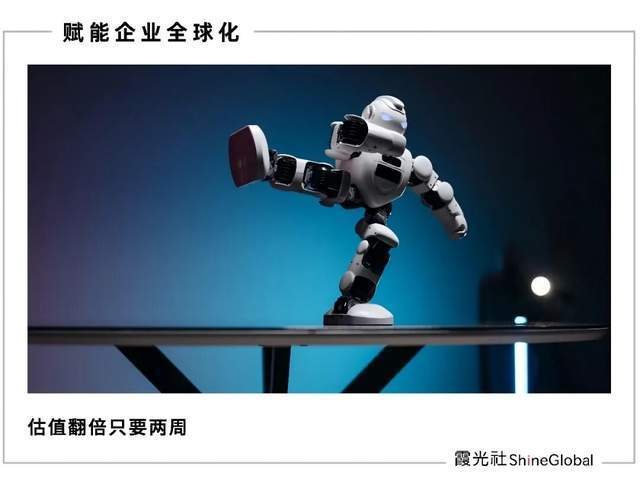
The catalyst was cultural as much as technical. At the 2025 Spring Festival Gala, 16 Unitree H1 humanoids performed a silk-scarf dance, and Unitree’s own prospectus later credited the show for lifting domestic brand awareness. A month later Figure’s Brett Adcock unveiled Figure 03, pouring tea and folding laundry with what reviewers called fluid motion. Inside and outside, the humanoid party peaked.
The mood then turned from “can we” to “who pays”. Unitree listed on the STAR market on 19 August at RMB 150.80, opened at RMB 1,100, a 629.44 per cent pop, and hit a RMB 444.9 billion market value before sliding to RMB 427.80 by 8 October, down over 61 per cent from the high. The deeper worry sat in revenue: about 70 per cent came from research procurement, under 10 per cent from industry, with weak repeat orders.
Investors now ask the only question that clears the room: what job does your robot actually do, who pays, and do they buy again? One podcaster argued the sector runs on “circular revenue”, related-party orders, government demo purchases and friend-to-friend trades that inflate top lines. He counts a company as real only if non-related third parties exceed half its revenue and it reorders next year, and says fewer than ten qualify.
The arithmetic is brutal. Argo Venture Partners’ Wayne Shiong says 300 is far too many and the market may hold only 20 to 30; the rest become parts of larger groups or pivot. Gao Heng of the China Society for Science and Technology expects the shakeout to land in the second half of 2026 through 2027, sparing only firms with full-stack tech, volume capacity and real orders.
Darwin’s line fits: the species that survives is not the strongest but the one most responsive to change. In embodied AI, the divide is singular. Whoever’s product is used, and used again, wins. Everything else is noise.
Editor’s note: This is an adapted translation of the original Sohu report. It has been trimmed and restructured for readability for an international business audience. The full original (in Chinese) is at https://www.sohu.com/a/1085966759_120157439.