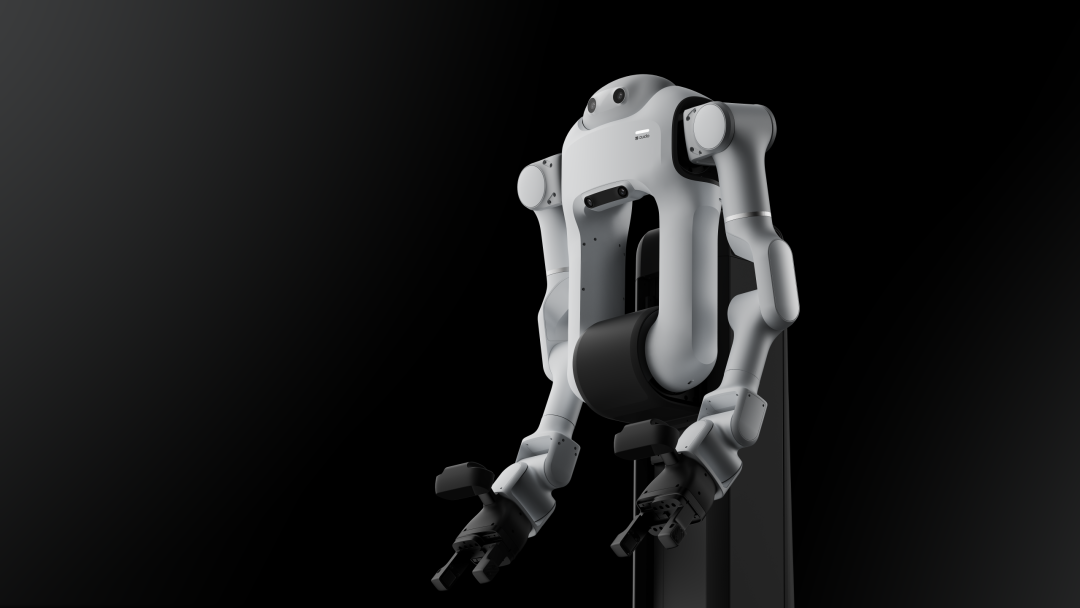
On 30 September, Shanghai state-backed investment funds said Sudo Technology, a Shanghai embodied-AI company, had closed a new financing round above RMB 1 billion.
The round was led by the Shanghai State-owned Investment Pioneer Fund, Guotai Haitong and Futeng Capital, with industrial and long-term capital including Dahe Longterm, Dongfeng Asset, China Development Bank Capital, Langmafeng and Liangtu Zhice joining, and Xiaomi among the returning shareholders. The proceeds will fund full-stack technology work and scaled validation in real industrial scenarios.
Sudo was founded in 2025 and is headquartered in Yangpu, Shanghai. Co-founder and chief executive Han Zheng is a serial entrepreneur whose earlier company, Rocket Tech, was acquired by Ucommune. Co-founder, chairman and chief technology officer Su Hao is a distinguished professor at Fudan University and the founding dean of the Institute of General Physical Intelligence. He created ShapeNet and PointNet, foundational three-dimensional vision works, and has more than 150,000 Google Scholar citations. R&D vice-president Xu Zexiang was a research scientist at Adobe Research, and the hardware lead comes from robotics systems engineering.
A simulation-first route
The company’s technical path treats large-scale simulation as primary and real-robot validation as secondary. It defines the basic capabilities a robot needs in the physical world as “atomic abilities”: precise placement, soft-object manipulation, dual-arm coordination, mobile grasping and autonomous navigation.
In April, Sudo released its self-developed Sudo R1 platform, which reached a 98 per cent first-attempt grasp success rate on targets such as transparent glass, reflective metal and soft cloth. During WAIC in July, the company demonstrated more than ten skills extended from strongly generalisable grasping, covering dual-arm operation, soft-body handling, precision assembly, mobile grasping and multi-robot coordination. With CATL it replicated a battery-module production line in which four robots collaborated to complete the full process from loading to unloading.
Han said on the WAIC floor that the company treats a 99 per cent-plus success rate as the precondition for commercialisation, “and only then talks about generalisation”. On the production timeline, Sudo plans early proof-of-concept and small-batch deployment at lead clients in the second half of 2026, then scaled volume from 2027.
Why the route matters
The simulation-first approach is the variable that sets Sudo apart from most embodied-AI firms. Collecting data through real-robot teleoperation is expensive and covers limited scenarios. Sudo instead generates data in bulk inside simulation and then migrates it to real production lines, a commercialisation test most visible in its CATL line replication.
But between the four-robot coordination on the WAIC booth and bulk deployment on a real line sit two gates: engineering reliability and customer acceptance standards. The entry of both local state capital and market institutions marks the stage where the company moves from technology demos toward real orders.
Editor’s note: This is an adapted translation of the original OFweek Robotics report. It has been trimmed and restructured for readability for an international business audience. The full original (in Chinese) is at https://robot.ofweek.com/2026-10/ART-8321205-12005-30705730.html.