Huilun Technology, incubated by GAC Group, signed an agreement on 5 November with GAC’s powertrain business unit on production of embodied intelligence robots, formalising a strategic framework agreement reached on 25 June.
The stated goal is clear: ten-thousand-unit scale manufacturing.
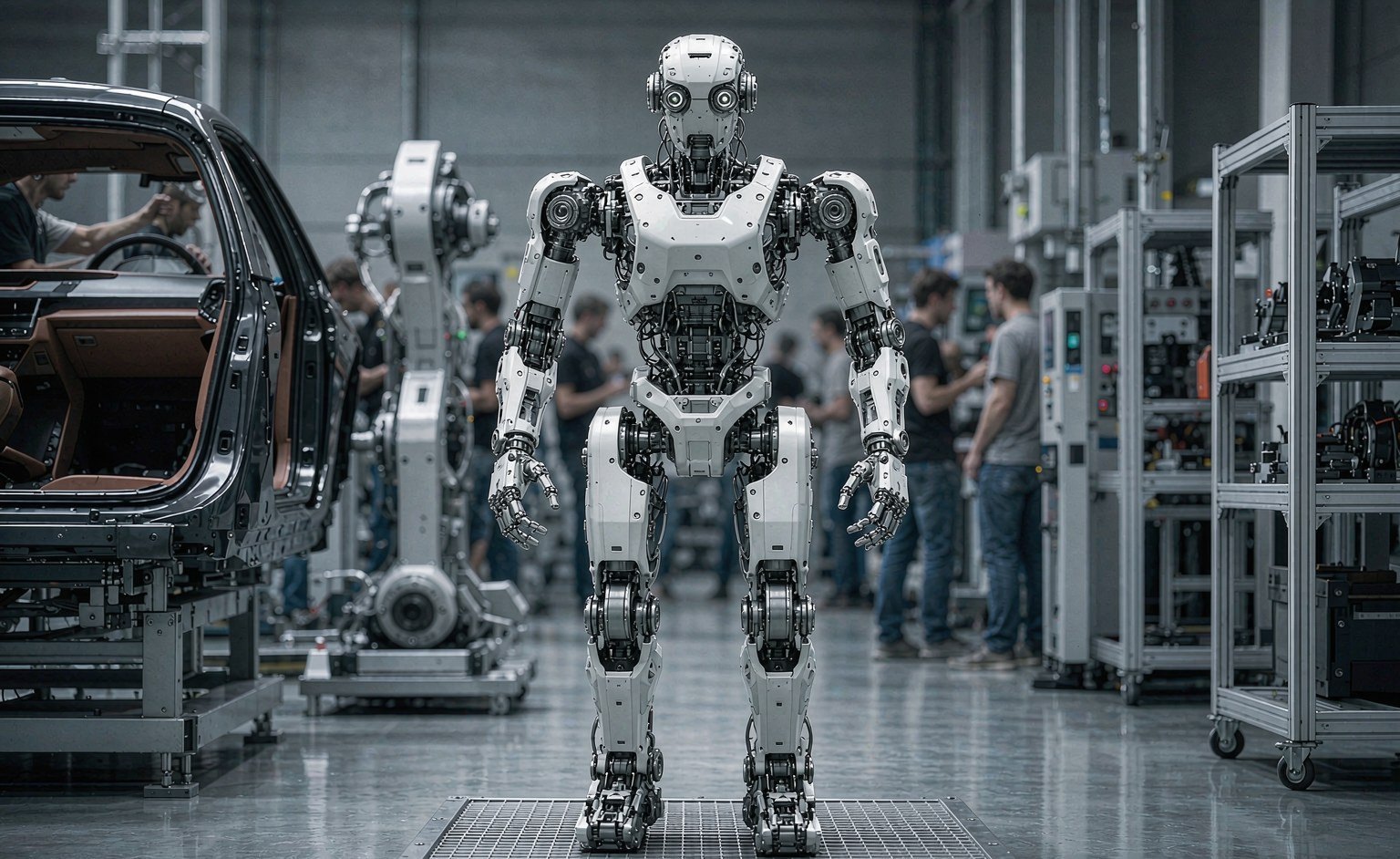
Who does what
Huilun supplies the complete technical system, process specifications and the full set of production materials. The GAC Powertrain business unit takes on final assembly, performance testing and finished-goods delivery, and the two sides will jointly build a standardised line for ten-thousand-unit output.
In plain terms it is full-chain contract manufacturing. Huilun decides how the robot is designed, and GAC’s powertrain unit decides how to build it repeatably.
Why an automaker
The industry view is that building cars and building robots share much of the same stack: perception, electric drive, batteries and compute. Carmakers hold capabilities robot companies lack, namely mature assembly processes, end-to-end quality management and supply chain systems.
Putting a robot onto a car-grade line addresses consistency and stability at volume, the threshold that does not matter in the prototype phase and cannot be avoided in production.
The two sides also plan to deploy Huilun’s robots inside the GAC powertrain plant, using them in assembly and material handling to raise the automation rate of the line and cut cost.
What Huilun already has in the field
Huilun is a core company GAC has backed for embodied intelligence robot research and industrialisation, and has launched the GoMate and GoMate Mini. The fourth-generation wheeled and legged GoMate Mini is deployed at close to 50 units in Guangzhou, Hong Kong, Xiamen and Tianjin, covering seven scenario types including automotive production lines, campus security and subway screening. One project has run continuously for 12 months, and the company has taken close to RMB 10 million in orders.
For the wider sector the significance is in the contract structure rather than the robot. Humanoid makers have spent two years proving prototypes and raising money. Production at ten thousand units requires a line, a process specification and a quality system, and buying those from a carmaker is faster than building them.
Editor’s note: This is an adapted translation of the original Gasgoo report. It has been trimmed and restructured for readability for an international business audience. The full original (in Chinese) is at https://auto.gasgoo.com/news/202611/6I70477109C601.shtml.