DeepSeek is closing a second funding round of roughly RMB 105.5 billion, with a post-money valuation of RMB 615.5 billion. Around thirty institutions are participating, and the round sets a record for a single financing in Chinese artificial intelligence.
Across two rounds in six months the company has raised more than RMB 150 billion. The first round, about RMB 51 billion, put founder Liang Wenfeng and Tencent in the top two slots, followed by the CATL group including its Puquan Capital arm.
Who wrote the cheques
In the second round CATL, Tencent and CATL chairman Zeng Yuqun each committed RMB 10 billion. ChangXin Memory Technologies and its chairman Zhu Yiming took part, as did SMIC, the state-controlled foundry. Xiaohongshu invested between RMB 1 billion and RMB 3 billion.
A longer tail of strategic money came in at RMB 1 billion to RMB 3 billion each: Meituan, Ctrip, Midea, Vivo, Geely and Luxshare Precision. On the venture side, Beijing Lisi Capital put in RMB 3 billion in the first round and RMB 7.5 billion in the second, IDG invested RMB 6.5 billion across both, and Boyu Capital took RMB 3.5 billion in the second.
The state share went from 2 per cent to 27 per cent
State investors supplied 27 per cent of this round, against 2 per cent of the first. Combined across both rounds the public share is about 19 per cent. The National AI Industry Investment Fund put in RMB 1 billion, matching its first-round ticket. China Mobile, China Telecom, CICC, CITIC Securities and China Life each committed between RMB 2 billion and RMB 8 billion.
That shift matters more than the headline number. A company that took almost no state money in its first round is now taking a quarter of its second from it, at a valuation that would rank among the largest AI companies in the world.
Why an electric-car battery maker is the biggest buyer
CATL’s interest is not financial. In April the company told investors on its quarterly call that the binding constraint on AI is energy, not compute, and that data-centre storage demand would grow sharply. Zeng has said he wants a role in power solutions for AI-driven data centres, and JPMorgan has described CATL as building a vertically integrated storage business for AI infrastructure.
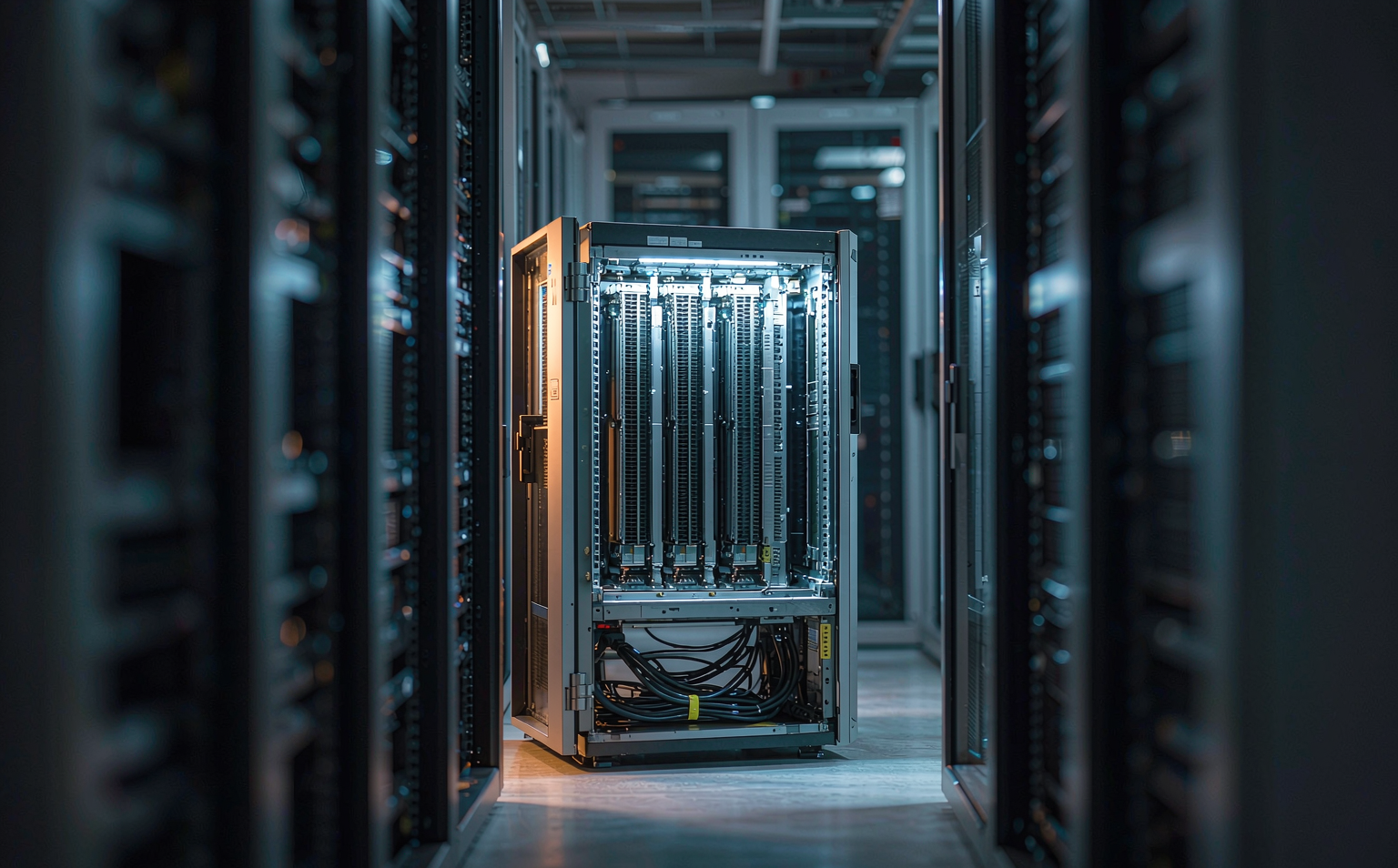
The arithmetic is straightforward. A very large data centre can consume several hundred million kilowatt hours a year, with instantaneous load swings that need high-voltage direct current supply, storage to absorb renewable fluctuation, and backup capacity. That is CATL’s core business. Investing in a model lab is a way of locking in a future customer.
The structure keeps control with the founder
The first round used an unusual architecture. Apart from the National AI Development Fund, investor money went into Hangzhou Chengli, an entity controlled by Liang. Those investors gave up voting rights and accepted a five-year lockup unless the company lists earlier. It has not been disclosed whether the second round reuses the structure. If it does, Xiaohongshu and most of the corporate investors are financial holders with dividends and no vote.
For the strategic backers the logic is different. Tencent gets a stronger position in its AI and cloud stack. Xiaohongshu, which has now invested in Moonshot’s Kimi, MiniMax and DeepSeek, has bought a seat at every table in the first tier of Chinese model labs.
Editor’s note: This is an adapted translation of the original Sohu Tech report. It has been trimmed and restructured for readability for an international business audience. The full original (in Chinese) is at https://www.sohu.com/a/1097702413_122045489.