Forget the secrets and the export quotas. In the Jensen Huang affair, Beijing has one question that matters: does he keep his job?
Washington is asking the wrong questions about Jensen Huang.
Congress wants to know what Alice Huang learnt. Nvidia’s board wants to know whether anything left the building. Sit where XJ sits and neither question matters much. The biggest obstacle to Chinese dominance of the AI revolution is not a China hawk on Capitol Hill. It is the American chief executive who keeps lobbying Washington for permission to sell to China. Seen from Beijing, Huang has to go.
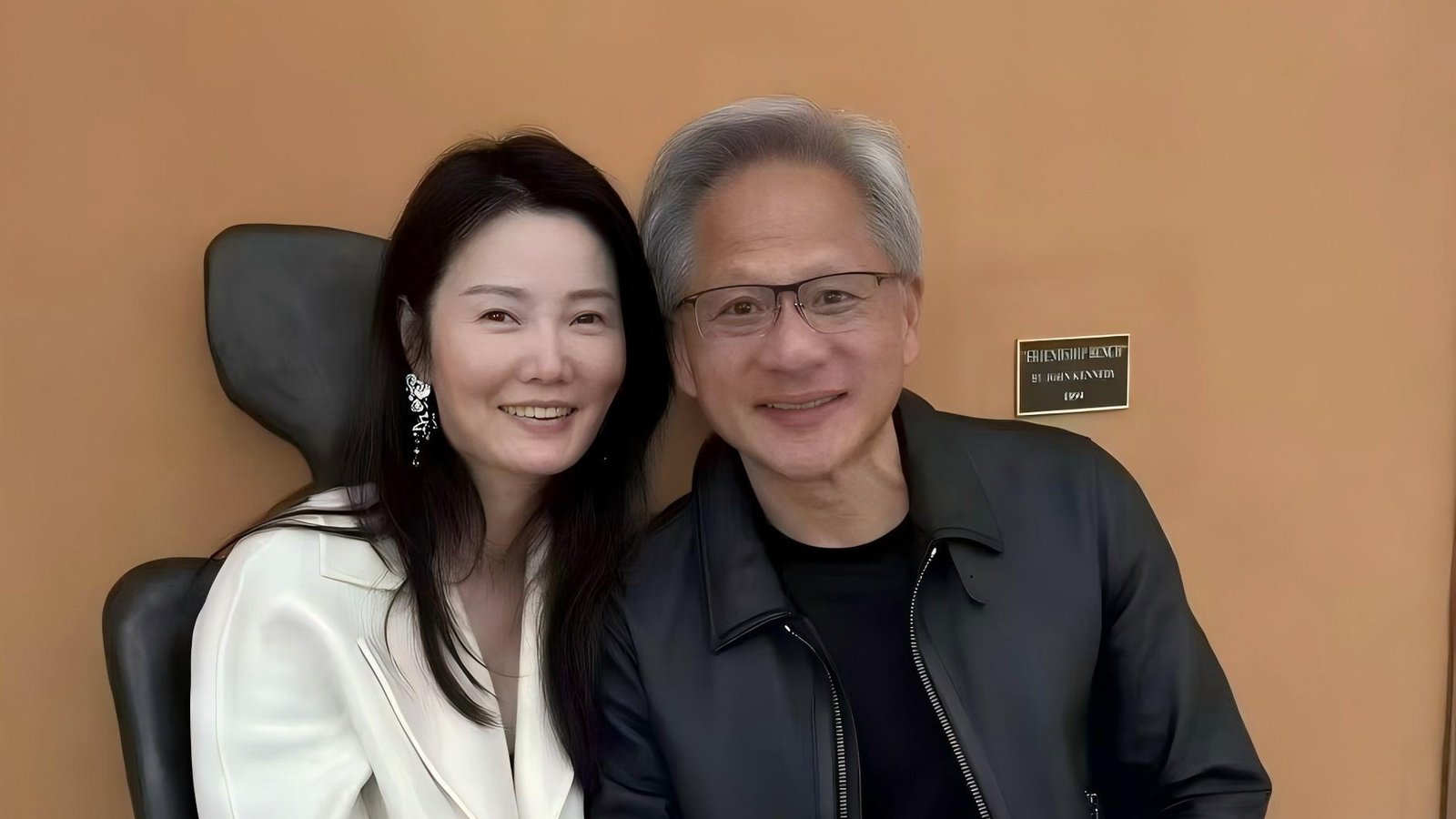
On 29 October the New York Times reported that US intelligence officials had concluded Alice Huang was working for China’s Ministry of State Security and had grown close to Nvidia’s founder. She is a Chinese citizen and an executive at Megaspeed, a Singapore-based data-centre operator that became one of Nvidia’s largest customers, buying about $4.8 billion of equipment.
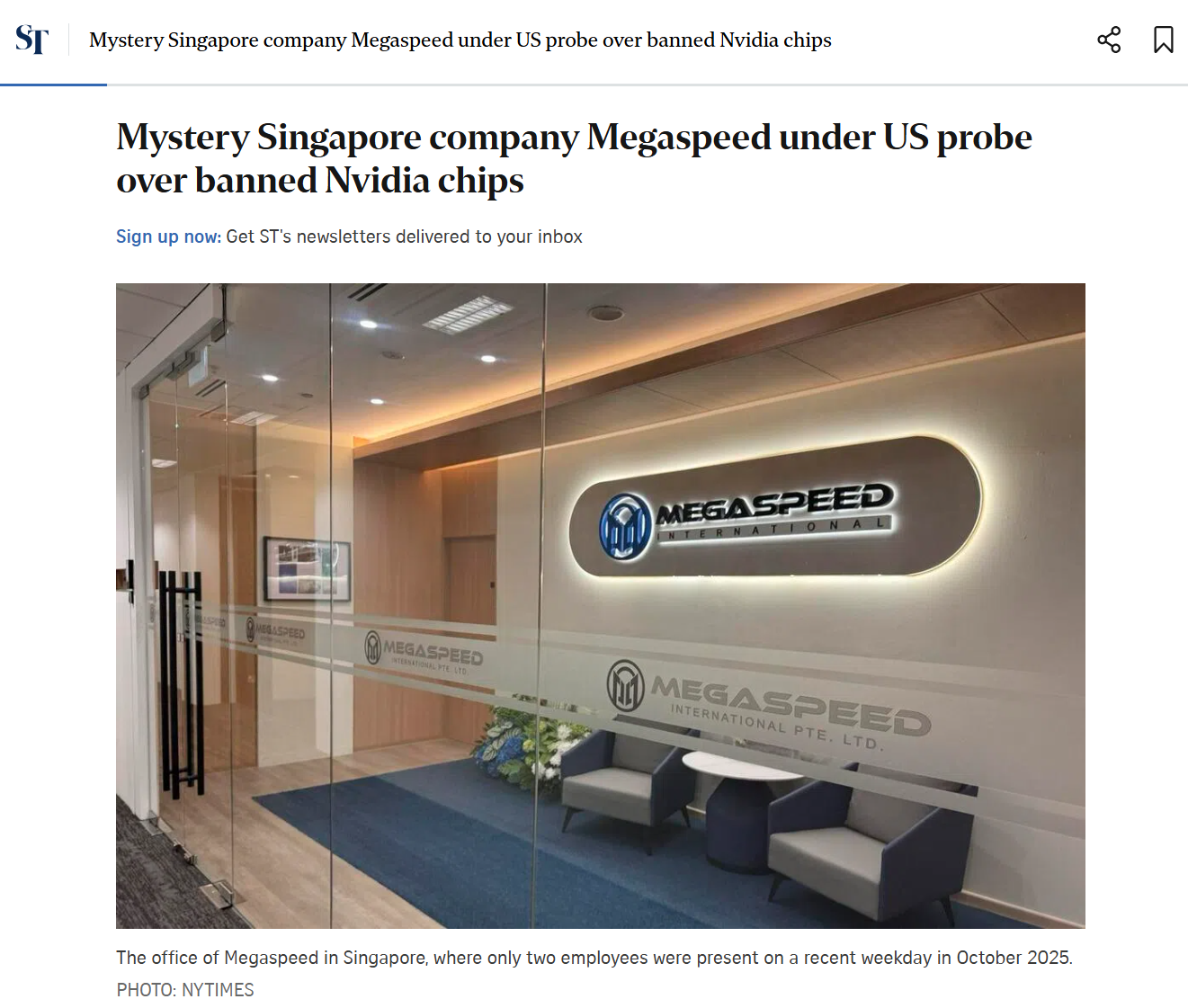
On Sunday Huang told staff: “I was unfaithful to my wife.” The board has appointed independent directors to investigate, says it has “no reason to believe” national security or company secrets were compromised, and still backs him. Three House committee chairs have asked him to a closed-door briefing on 18 November, the day after Nvidia reports earnings. Beijing calls the espionage claims groundless, and no evidence for them has been made public.
Whether she was an asset is a question for counter-intelligence. Whether he survives is a question for the AI race, and Beijing has three reasons to care about the answer.
Nvidia without Huang is Intel
In June 2018 Brian Krzanich resigned as Intel’s chief executive after an inquiry into a relationship with an employee. Intel was then worth more than Nvidia. The board handed the company to its finance chief, and two years later Nvidia’s market value passed Intel’s for the first time. Intel went on to lose its manufacturing lead to TSMC and the AI era to Nvidia. It took seven years, three more chief executives, a 10 per cent stake from Washington and a $5 billion cheque from Nvidia itself to turn the stock around. Intel came back as a foundry and a national champion, not as the company that sets the pace in AI.
Nvidia’s defenders will say CUDA does not depend on one man. True, in the way x86 never depended on Krzanich. An installed base survives a succession. Momentum does not.
And Nvidia is built around Huang to an unusual degree. He has run it for 33 years through a deliberately flat structure with dozens of direct reports. There is no named successor and no public succession plan. “Jensen Huang’s leadership is critical to Nvidia’s strategic roadmap,” says Wedbush’s Dan Ives. Beijing’s bet is that without him, Nvidia becomes a $4 trillion company run by committee.
A founder, an entrepreneur or an outstanding chief executive can lead a technology company to a large market share, even a duopoly. Only a visionary leads an era. Jensen Huang is the visionary of the AI era. He took Nvidia from gaming graphics to accelerated computing and championed CUDA with developers before the market existed. A successor can run that business. Nothing says a successor can see where it goes next.
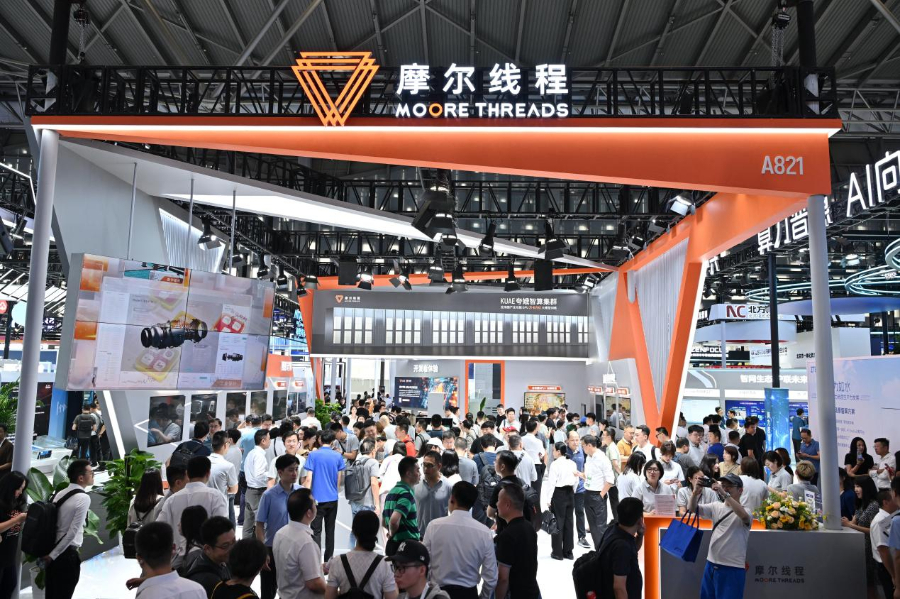
Its Chinese challengers are not run by committees. Huawei still runs on Ren Zhengfei’s wolf culture. Cambricon is led by its founder, Chen Tianshi. Moore Threads was founded by Zhang Jianzhong, who ran Nvidia’s own Greater China business for 14 years before leaving to build a rival. Founder against founder, Huang wins. Founders against a committee is a different race.
Second best, forever
Huang understands China better than most of Washington, and his answer is the one Beijing fears most.
He has never pretended China can be stopped. “The question is not whether China will have AI, it already does,” he told investors in May 2025. “The question is whether one of the world’s largest AI markets will run on American platforms.” He has called export controls “a failure”. This May he said Huawei was “very, very strong” and its local chip ecosystem was “doing quite well, because we’ve evacuated that market.” In April he told Dwarkesh Patel that DeepSeek optimising its models for Huawei first would be “a horrible outcome for our nation.”
His prescription has never been a ban. It amounts to a permanent lag: let Nvidia sell China chips a generation or two behind the frontier, and keep its developers on CUDA. Washington adopted a version of it. Commerce Secretary Howard Lutnick said last year the aim was for Chinese developers to “get addicted to the American technology stack.” Since January the H200, a generation behind Blackwell, has been licensed case by case, with 25 per cent of the revenue going to Washington. Blackwell stays banned.
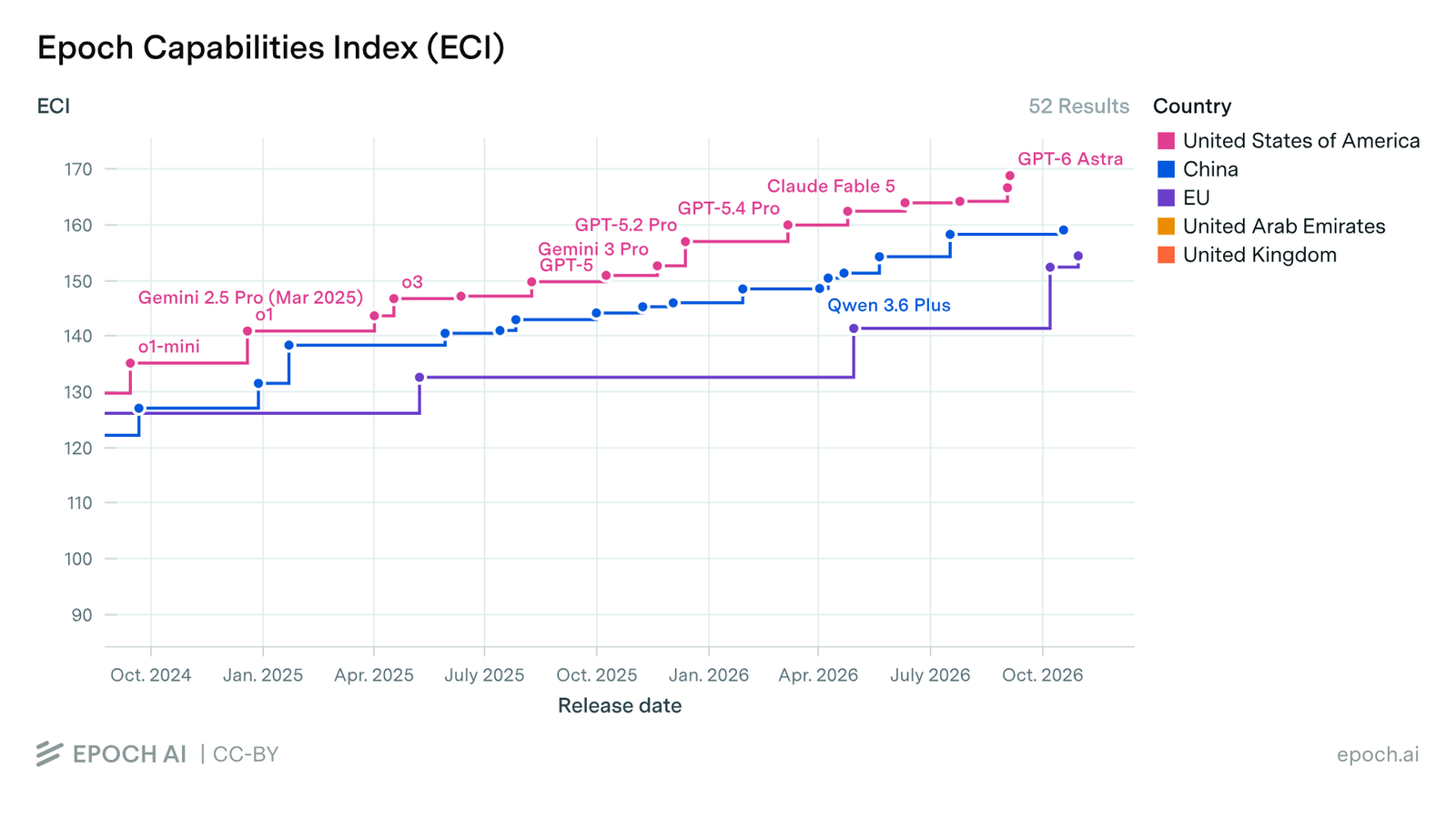
The lag is measurable. Epoch AI found Chinese models have trailed the US frontier by seven months on average since 2023, and never by less than four. Chinese labs say as much themselves. DeepSeek’s V4 paper in April said the model “trails state-of-the-art frontier models by approximately 3 to 6 months”.
Liang Wenfeng was blunter in a leaked transcript of a private investor meeting. By his account DeepSeek works with about one-twentieth of America’s compute, and “four Huawei cards equal one Nvidia card”. “The talent gap,” he said, “is essentially also a compute gap.” Yang Zhilin’s Kimi K3 topped a coding leaderboard in July. Within days Moonshot had to stop taking new subscribers. “Our GPUs are feeling it,” the company said.
Chinese labs wring every last flop out of whatever Nvidia silicon they can get, and still finish months behind. That is the equilibrium Huang sells.
Beijing has spotted the trap. Some 600,000 H200s are reportedly sitting in Hong Kong because Beijing will not approve large-scale imports and wants Alibaba, ByteDance, Tencent and DeepSeek on domestic chips. Donald Trump said in May that China “chose not to” buy because “they want to develop their own.” Washington sees Huang as a salesman. Beijing sees the one American containment strategy that works: it contains China by feeding it.
Three computers, one dependency
Physical AI is where China leans on Nvidia hardest, and where Nvidia has the most to lose.
Huang describes physical AI as three computers. DGX trains the robot’s brain. Omniverse and Cosmos, running on RTX PRO servers, simulate the world it will work in. Jetson Thor or DRIVE Thor runs it inside the robot or the car. Lay China’s humanoid and smart-car industries over that diagram and Nvidia sits in nearly every box.
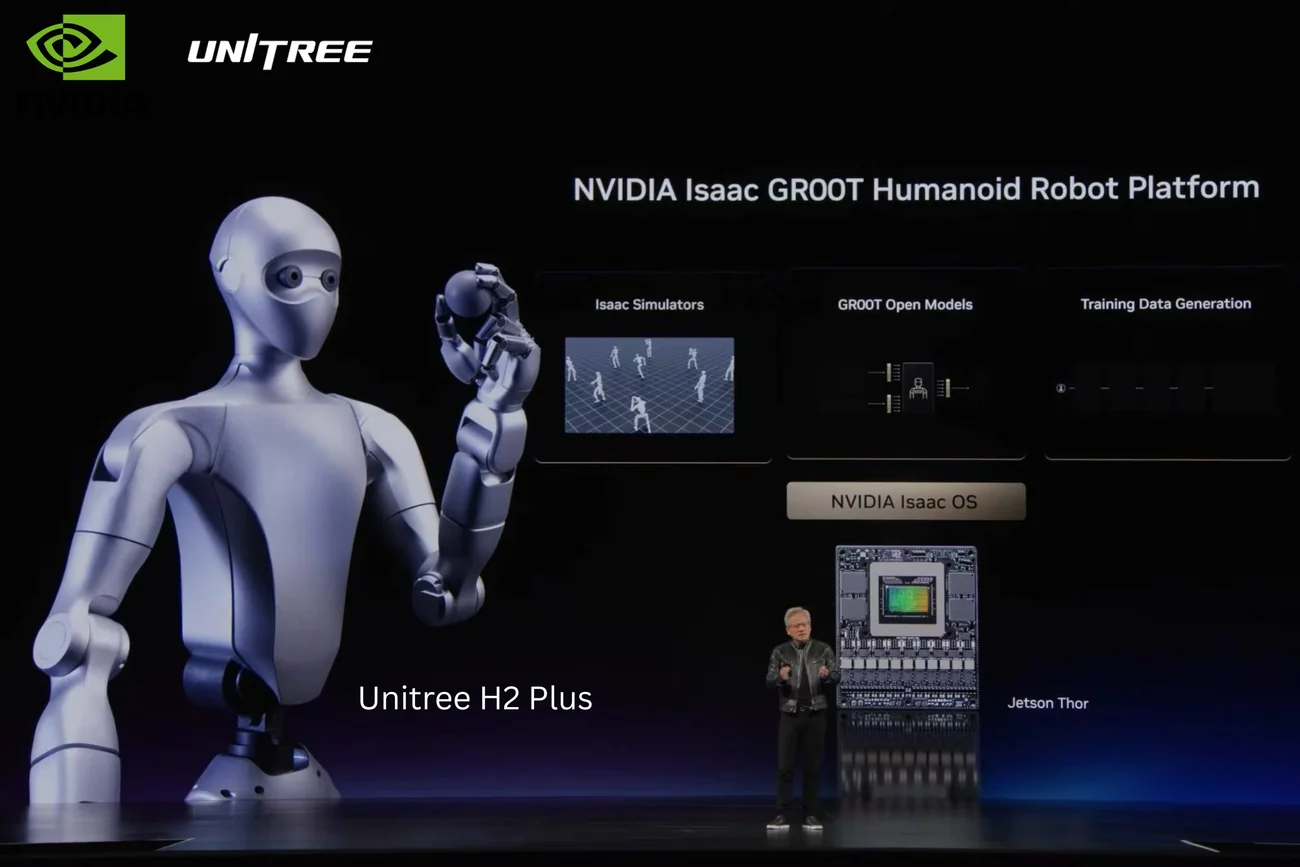
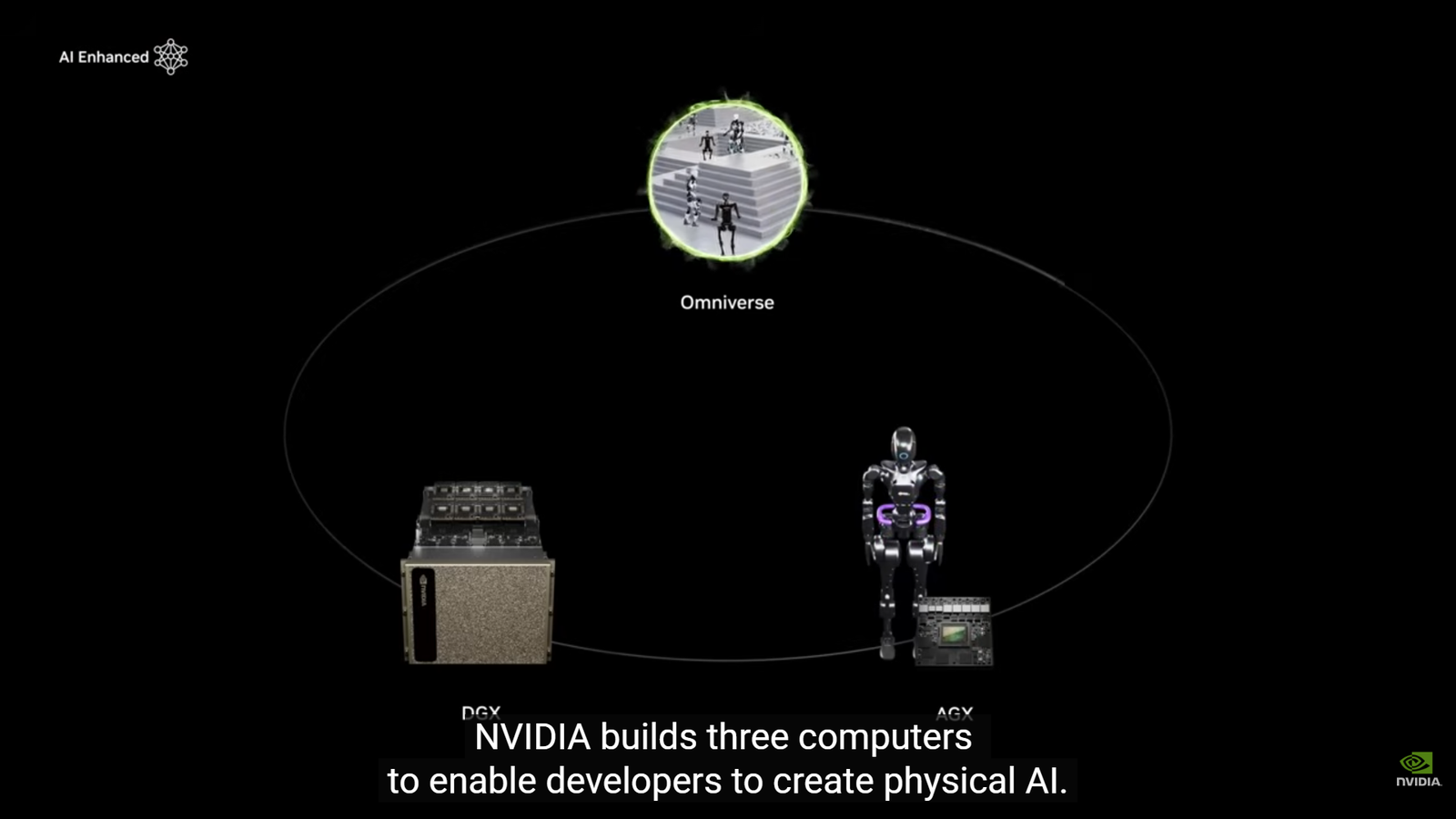
MERICS found in April that Chinese robotics firms “remain reliant on the physical AI stack” of Nvidia. UBTech, Galbot, Unitree, EngineAI and AgiBot were among the first to receive Jetson Thor, and Unitree and Galbot train their robots with Nvidia’s Isaac simulation tools. On the road, Nvidia supplied almost half the chips behind China’s urban navigate-on-autopilot systems in 2025.
Without Huang in Washington’s ear, an embargo on physical-AI chips becomes far easier to imagine. The short-term damage to China’s robot makers and driving-system suppliers would be severe.
But neither industry has taken off yet, and the supply chain is already Chinese. China built about 90 per cent of the world’s humanoids last year and controls 63 per cent of the key companies supplying their components. Huawei and Horizon Robotics held about two-fifths of the urban driving-chip market in 2025. Horizon’s spin-off D-Robotics has shipped more than eight million robot chips, with UBTech and Fourier among its customers.
An embargo would slow China down by a few years. It would cost Nvidia the market for good. Nine in ten humanoids are built in China, and a robot brain needs a robot to sit in.
The reversal
So the question in the Huang affair is not whether secrets leaked, whether a Singapore customer’s chips went where they should not have, or whether anyone nudged Washington’s export quotas. It is whether Nvidia’s board ends up doing what Intel’s board did in 2018.
Huang’s protection runs through the White House, where Trump calls him “an honourable guy”. Congress is another matter. Democrats won both chambers last week and take over in January, and Elizabeth Warren says Huang and his board “owe Congress answers.”
Washington will spend the next fortnight asking what she learnt. Beijing will be watching one office in Santa Clara.