The first Chinese robot company to face a public listing committee this quarter does not build robots. It builds the gears inside their joints, in a city most investors could not place on a map.
Newstart Planetary Transmission, based in Zibo in Shandong province, goes before the Shenzhen Stock Exchange listing committee on 13 November, at the 62nd review meeting of 2026. The company is raising RMB 823 million. Its business is precision planetary reducers, the component inside every robot joint that never appears in a launch video.
Twenty years of gears
Chairman An Lishu started the predecessor company in July 2006 with RMB 1.05 million, after a career at the state-owned Boshan Electric Motor Factory. By 2025 the company was producing more than 700,000 precision planetary reducers a year, first in China and second globally on shipment volume, according to the deputy general manager.
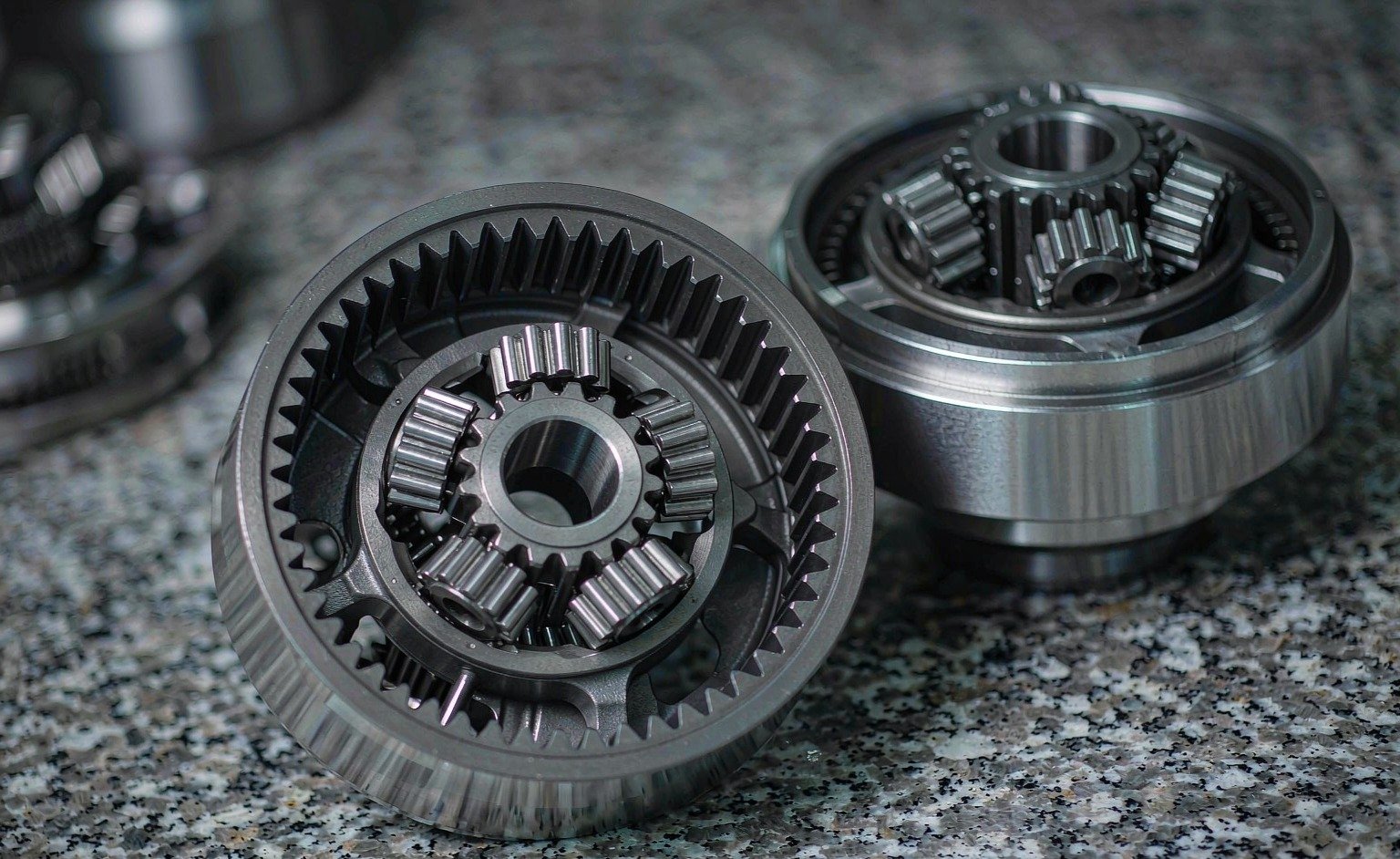
The function is simple to describe and hard to make. A sun gear drives planet gears to convert the high-speed, low-torque output of a motor into the low-speed, high-torque motion a joint needs. Whether an arm shakes or a chassis drifts under steering is decided here. Reducers account for about 30 per cent of the cost of an industrial robot. That market was held for decades by Harmonic Drive in strain wave gearing and Nabtesco in RV reducers.
The customer list is the real prospectus
Joint modules from AgiBot, UBTech and Zhongqing buy Newstart reducers. Warehouse robots at JD Logistics, Cainiao and SF Express use its steering wheel drive. Even the stacking equipment in CATL plants runs on its transmission parts.
The financials track the sectors that buy them. Revenue was RMB 479 million in 2023 with net profit of RMB 152 million. In 2024, as solar and lithium battery equipment demand contracted, revenue fell 28.86 per cent to RMB 341 million and factory utilisation dropped from 94.39 per cent to 56.62 per cent. In 2025, as embodied AI robot production began, the related revenue line grew from RMB 7.23 million to RMB 96.62 million, a twelvefold increase, and utilisation recovered to 101.81 per cent.
What the IPO actually buys
The RMB 823 million splits three ways. RMB 623 million builds a plant for 1.5 million precision planetary reducers and transmission modules a year, RMB 100 million goes to an automated central warehouse and RMB 100 million to the research centre. The new site adds 1.3 million units of capacity, which is 2.6 times actual 2025 output, and both exchange review rounds asked how that volume gets absorbed.
The balance sheet makes the raise look odd. At the end of June 2026 the debt ratio was 10.11 per cent with no interest-bearing debt. Cash, time deposits and debt investments came to RMB 1.453 billion, or 72 per cent of total assets. The company paid RMB 252 million in dividends across the reporting period, close to all of its net profit in that window. Founder An Lishu and his wife realised roughly RMB 300 million through dividends and share transfers. Share transfer prices moved from RMB 39.65 a share in September to RMB 11.67 and 14.52 in two year-end transactions, then back to RMB 37.64 in a November capital increase.
The price is falling, on purpose
Reducer prices are in structural decline. Leaderdrive disclosed average harmonic reducer prices falling from RMB 802 in 2023 to RMB 573 in 2025, close to 30 per cent, while unit cost came down from RMB 482 to RMB 351 through supply chain work. Newstart gross margin fell from 55.6 per cent to 48.51 per cent. Falling margin here is not decay, it is the transition from a specialist component to a standard industrial part.
Market share has moved with it. In the 2025 Chinese strain wave market Leaderdrive holds 27.5 per cent, Leaderdrive’s domestic rival Laifual 21.4 per cent, and Harmonic Drive just 4.4 per cent. Nabtesco still holds more than 90 per cent of the global RV reducer market. Harmonic Drive plans 3.47 million units of global capacity in 2026, which is a conservative number against the volumes humanoid production implies.
The valuation gap between the two ends of one supply chain is the part European buyers should register. Leaderdrive closed on 9 November with a market capitalisation of RMB 54.3 billion, a trailing price to earnings ratio around 355 times. Newstart’s last funding round implied RMB 5.2 billion, roughly 35 times 2025 profit. Same chain, ten times apart.
There is one more movement that decides who keeps the margin. Robot makers are moving into joint modules that bundle motor, reducer, encoder and drive. A parts supplier that sells only gears risks becoming a contract manufacturer. Newstart has raised joint module revenue from 5.24 per cent of the total to 12.2 per cent in the first half of 2026.
Three dates tell the story. RMB 1.05 million in 2006, when a provincial engineer bet on precision gears. 13 November 2026, when a component maker faces public market scrutiny on its own numbers. April 2027, when the revised national standards for strain wave gearing take effect and Chinese reducers finally get a uniform performance yardstick.
Machine builders are valued on deliveries that have not happened yet. Gear makers are valued on orders already booked.
Editor’s note: This is an adapted translation of the original OFweek report. It has been trimmed and restructured for readability for an international business audience. The full original (in Chinese) is at https://robot.ofweek.com/2026-11/ART-8321207-8420-30711068.html.