The Japanese car in China did not lose a price war. It lost the definition of the product, and the share numbers have been following that loss for six years.
In October, Japanese brands accounted for 10.2 per cent of Chinese passenger car retail. In October 2020 the same measure was 23.9 per cent. What was one car in four became one car in ten.
The September numbers
Nissan sold 23,658 vehicles in China in September, down 61.6 per cent year on year. Honda’s terminal sales were reported at 25,564, down 53.1 per cent.
The longer series is starker than any single month. Honda sold roughly 1.627 million vehicles in China in 2020. In 2025 it sold 645,000. Nissan has gone from a full-line manufacturer with two joint ventures to a company whose most interesting Chinese project is exporting a pickup designed and built there.
And that export is real. In October Nissan launched the Frontier Pro, a plug-in hybrid pickup, in Mexico. Design, development and production were handled by Zhengzhou Nissan. It is the first Nissan model developed and built in China for global export, with Mexico as the first market outside China.
The market shrank, and that is not the main story
Passenger vehicle retail for January to October was 14.978 million units, down 22.3 per cent, which puts volume roughly where it was in the same period of 2020. October retail rose 1.5 per cent month on month but fell 27.1 per cent year on year.
Part of the weakness is policy timing. In 2026 the purchase tax exemption on new energy vehicles became a half-rate charge, pulling a slice of demand into the end of last year and inflating the comparison base.
Part of it is household behaviour. Car ownership reached 366 million by the end of 2025. Retail sales of consumer goods grew 1.1 per cent in the first three quarters, 2.8 per cent excluding autos, while retail above designated size in the automotive category fell 14.9 per cent. When income expectations are soft, a purchase of a hundred thousand renminbi gets deferred, particularly when the old car still runs and showroom prices keep falling.

The mix broke, and the mix is where Japan lived
October tells the story better than the annual totals. Conventional petrol passenger car retail was about 530,000 units, down 45 per cent. New energy retail was 1.109 million, down 13.7 per cent but up to 67.5 per cent of domestic retail.
Ordinary hybrid retail grew 28 per cent. That is the one segment where Japanese engineering still has a defensible answer, for buyers without convenient charging. It is also far too narrow a segment to carry a share that once spanned every mainstream price point.
The competitive reset is visible at the entry level. In January the new BYD Qin Plus DM-i was listed from RMB 79,800, in the same compact sedan class as a Corolla or a Sylphy, with electric commuting and petrol range. Once the alternative has a battery, comparing litres per hundred kilometres stops being the decision. Range, software updates and driver assistance become the comparison, and those are not Japanese strengths.
Resale value was the last moat, and price cuts drained it
For two decades the Japanese compact sedan sold on three things: fuel economy, fault rate and resale value. The third was the most durable, because it made the total cost of ownership defensible even at a higher sticker price.
Repeated discounting undermines it mechanically. Buyers price used cars against today’s new car price, so every factory incentive depresses the resale value of every car already on the road. The discount bought this quarter’s volume with next year’s residual.
There is one counter-example worth studying. The GAC Toyota bZ3X, launched in 2025, was developed with a Chinese regional chief engineer leading the programme in cooperation with GAC. Toyota’s own disclosure puts 2025 cumulative sales above 70,000 units.
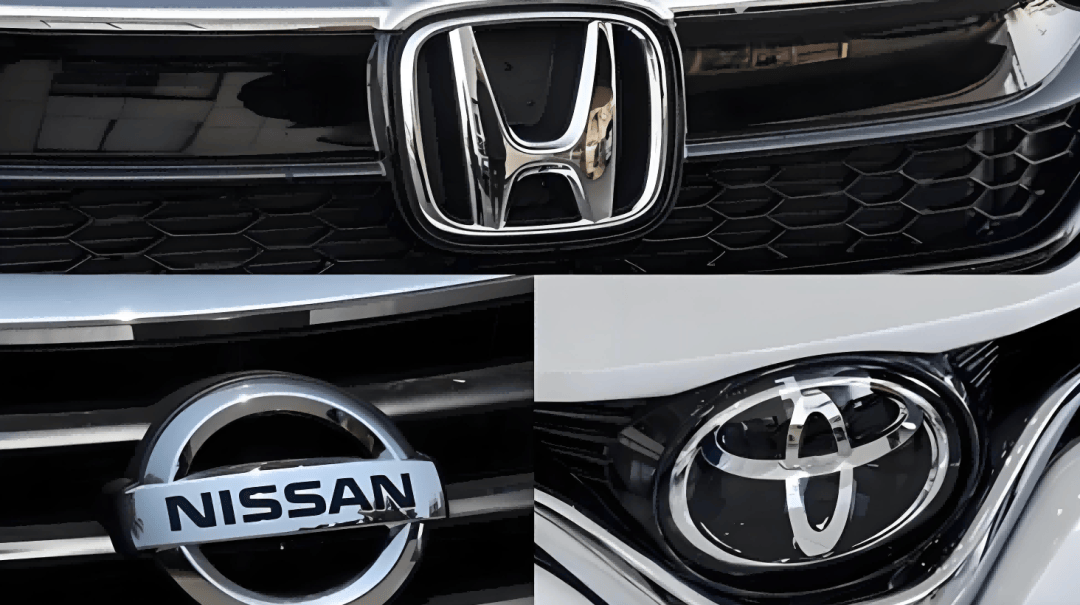
That model is the exception that proves the rule. The old pattern was to bring a finished global car to China, remove equipment and stretch the wheelbase. The new pattern is to develop inside China’s supply chain, where battery, drive unit and cockpit suppliers iterate alongside the carmaker, and where a new feature becomes mandatory within one model cycle.
The export door is the remaining one
In October, FAW, Toyota and GAC signed a new cooperation framework under which GAC is expected to take a larger role in joint development. Nissan’s Mexico pickup is the same logic executed differently: use Chinese engineering and Chinese cost structure, then sell where Japanese brand equity still works.
That is a viable business. It is not the business these companies had in China, and the difference is permanently reflected in the 10.2 per cent.

Editor’s note: This is an adapted translation of the original Sohu Tech report. It has been trimmed and restructured for readability for an international business audience. The full original (in Chinese) is at https://www.sohu.com/a/1100267415_120924473.