Germany’s largest carmakers are rewriting where cars get built and how, and they are doing it under duress. Profits from China have fallen faster than German cost bases can be cut, and the arrangement that funded both sides of the business for two decades no longer balances.
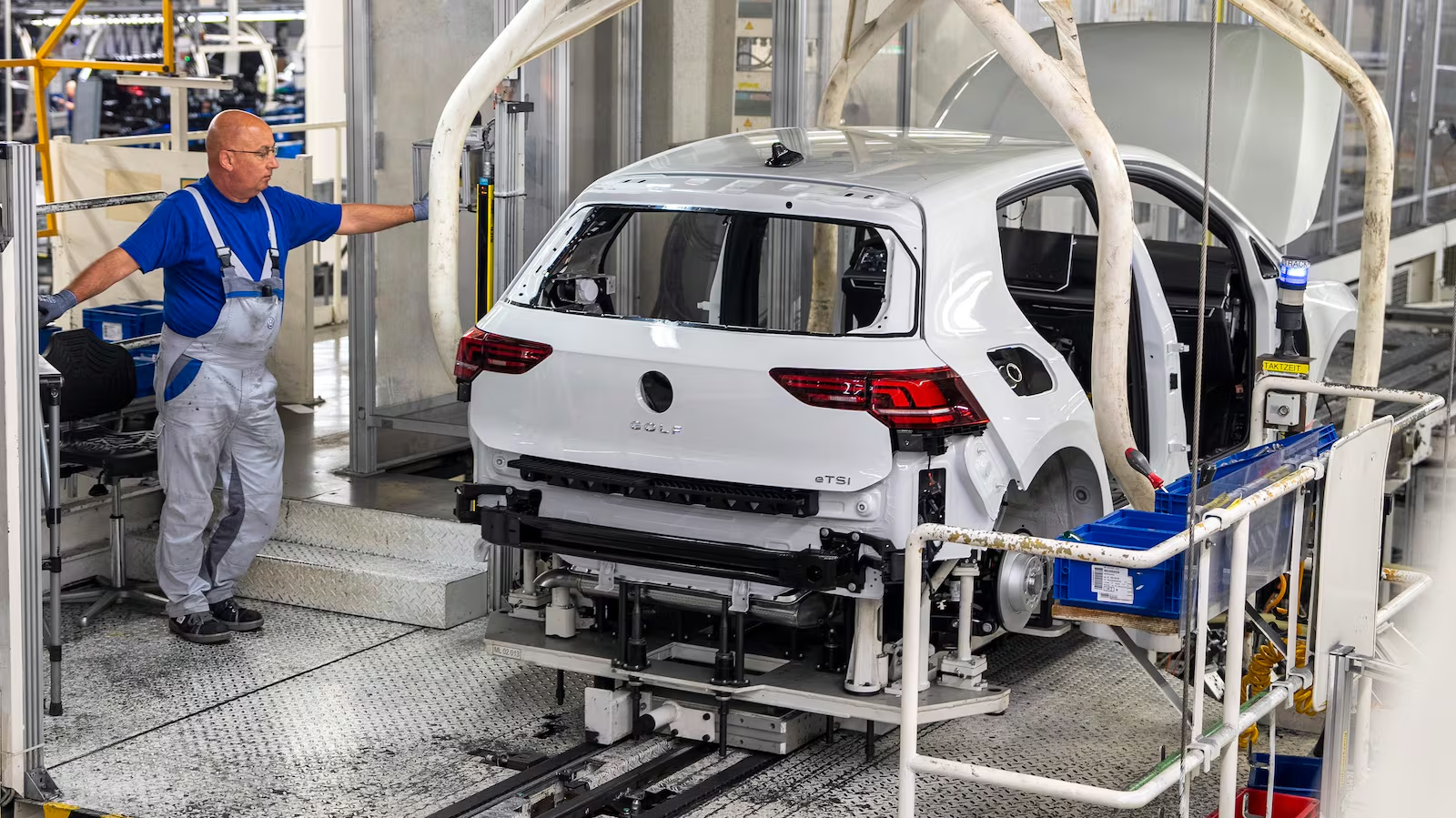
On 11 November, Volkswagen Group cancelled a large advanced manufacturing project at its Wolfsburg headquarters, saying financial pressure had forced it to re-examine investment plans across its German plants. The project, internally named Gamechanger, was meant to install a set of new production techniques at Wolfsburg before rolling them out to factories worldwide. It included gigacasting, the practice of casting large body sections in a single shot to cut part counts and process steps.
Volkswagen said development of its next electric platform and models, including an electric T-Roc, continues. Its works council chair Daniela Cavallo called the decision a breach of a December 2024 agreement and said the union would oppose the change until the company explained the effect on jobs and output.
The other half of the problem sits in Stuttgart
At the same forum in Berlin, Mercedes-Benz chief executive Ola Källenius said talks with German employees over longer working hours without extra pay must produce a substantive result. He warned that without a marked improvement in German competitiveness, German industrial activity would shrink noticeably within ten years.
Källenius also confirmed a strategic shift. Mercedes used to develop cars such as the C-Class and E-Class in Germany and adapt them for Chinese buyers afterwards. That model, he said, no longer works. The company is moving to what it describes as 100% China for China, with the electric E-Class the first model built to that logic, scheduled for Chinese production in the second half of next year.
Mercedes sold 31 per cent fewer cars in China in the third quarter. It says its German plants are no longer competitive with its sites in eastern Europe and the United States, and puts the German cost index at 100 against roughly 80 in the US. The additional savings it is chasing are described as equivalent to closing two plants, though it says no specific closure has been decided.
The supplier layer is already there
ZF has moved further. Chief executive Mathias Miedreich said in Berlin on 11 November that some German plants are down to 30-hour weeks or less to protect jobs, while the company continues a cost programme that will remove about 14,000 positions this decade.
Renault chief executive Francois Provost put the trajectory bluntly at the same event. Europe’s existing development model no longer works, he said, and without change European vehicle output would halve.
The arithmetic behind all three statements is the same. Chinese competitors have forced development and production of more models into China, while weaker profitability demands deeper cuts in Germany. Volkswagen plans to remove roughly 100,000 jobs globally and is targeting about EUR 31 billion, or USD 34.5 billion, in savings, while still funding new cars, software and plants.
One counter-signal exists. Volkswagen’s brand said its China deliveries of battery-electric and plug-in hybrid cars hit a record last month, led by the ID. ERA 5S sedan, and the group expects further growth there next year. That is a volume recovery, not a margin recovery. The profit still has to be earned somewhere, and the factories that used to earn it are the ones being re-examined.
Editor’s note: This is an adapted translation of the original Gasgoo report. It has been trimmed and restructured for readability for an international business audience. The full original (in Chinese) is at https://auto.gasgoo.com/news/202611/12I70477804C108.shtml.