Most quadruped robots sold into Chinese utilities inspect. They walk a route, point a camera at a gauge and read a number. The tender Shenmou Robotics just won with its Fumo machine asked for something else: a quadruped that can carry an arm into a space where a person cannot safely stand, and use a tool when it gets there.
The contract is State Grid’s programme for quadruped robots in complex environments. Shenmou says it beat mainstream suppliers on capability rather than price. The company had already won State Grid’s live-line working humanoid project with a machine called Fu’an, which it describes as the first delivery of a humanoid in that scenario.
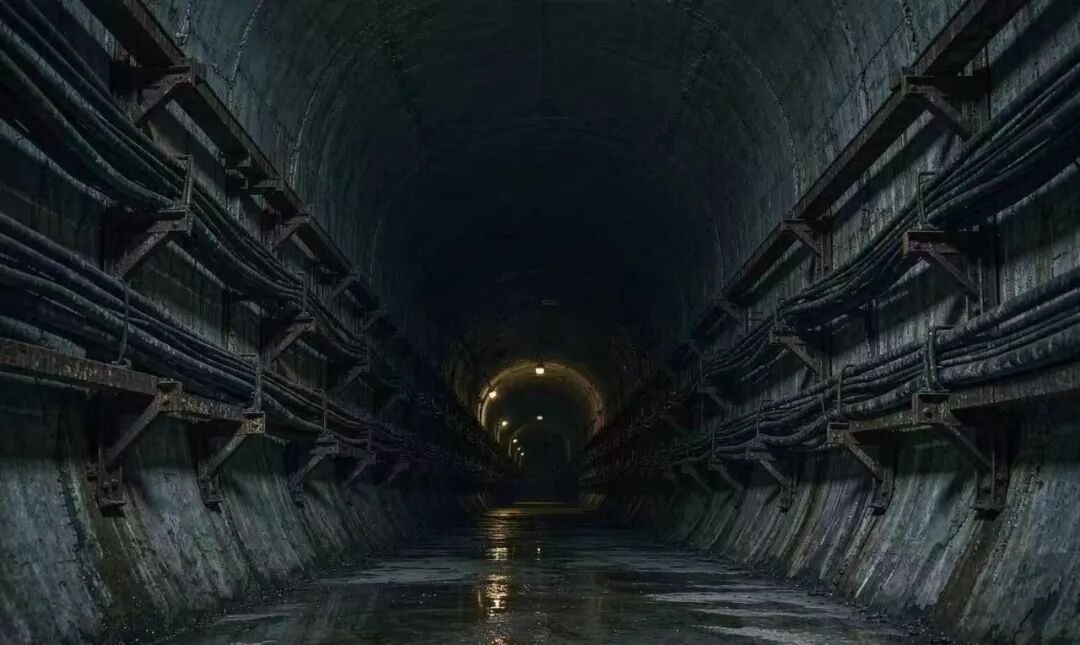
Why the tunnel is the hard part
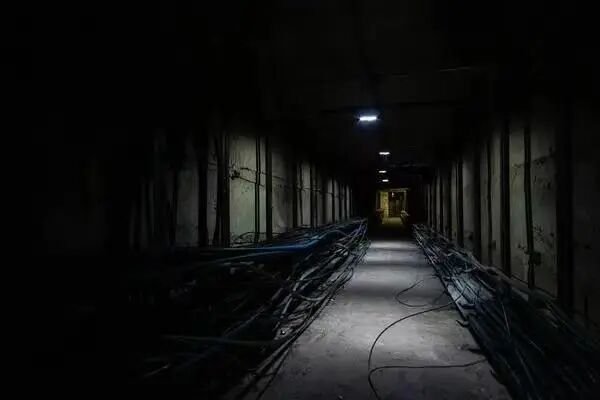
Power cable tunnels are the arteries of a city’s distribution network and the worst possible place to send people. More than 60 per cent of the installed base is old-style tunnel, much of it with no power, no network and no fixed monitoring. Space is narrow, ventilation is poor, water pools, and the floor is uneven. Crews carry lighting, thermal cameras, gas detectors and logbooks, and face oxygen deficiency, poisoning, slips, electric shock and difficult evacuation when something goes wrong.
The quadrupeds already deployed do not solve that. They read instruments visually and stop there. They struggle with narrow passages, large level changes and flooded sections, and they cannot operate where there is no power or network. A machine that can walk a tunnel but cannot close a valve has automated the observation and left the intervention with the human.
What the vendor claims
Shenmou’s list of claimed advantages is specific enough to be checkable. Integrated design of the body with a manipulator and a dexterous hand. Stability and passability in confined spaces, rough terrain and standing water. Perception and localisation in legacy tunnels with no power, no network and weak light, using multi-source fusion. Multimodal data collection, defect recognition and dynamic visual servoing tuned for distribution tunnels. A dexterous hand hardened against electromagnetic interference. Gas detection for oxygen, carbon monoxide, carbon dioxide, methane and hydrogen sulphide through a surface acoustic wave single-chip multi-channel wireless passive sensor, which the company presents as its own. Image quality enhancement and information recovery under low light, humidity and water mist.
These are vendor claims attached to a won tender, not independently measured results. The tender itself is the strongest available evidence, because State Grid’s stated reason for running it was that previously purchased quadrupeds could not do intelligent work in complex scenes. Buyers had to commission secondary development, failed, and shelved the units. A framework that requires the machine to work on delivery is a different procurement standard from one that requires it to walk.
The unit economics of a tunnel
The commercial case is arithmetic rather than narrative. On State Grid’s internal assessment, as cited by the company, every 10 to 20 kilometres of cable tunnel needs one inspection and working quadruped. A province typically holds 500 to 1,500 kilometres of legacy cable corridor. Purchase price is estimated at RMB 600,000 to 800,000 per unit. One province therefore represents a market above RMB 100 million.
That figure explains why Shenmou argues against pricing these machines as cheap hardware. Its stated position is that embodied products for high-value industries should not be commodity platforms in the early commercial phase, and that companies which cannot charge for difficulty end up chasing ordinary inspection in a crowded market and competing on price cuts.
The uncomfortable comparison
The same argument cuts both ways. If a quadruped that reads gauges is a commodity, the price premium only holds while the machine can do something the commodity cannot. That means the arm, the hand, the gas sensor and the low-light perception have to survive years of tunnel duty, not one demonstration.
Utilities are a good place to test that, because the buyer is a single organisation with a maintenance budget, a safety liability and a long memory. They are also a slow place to scale, because a province-level framework of RMB 100 million takes years to fill and one failed winter of flooded tunnels can end a supplier relationship.
The interesting number is not the tender. It is the annual fleet hours per unit after the first year, and whether the same province orders a second batch without running a new competition.
Editor’s note: This is an adapted translation of the original OFweek report. It has been trimmed and restructured for readability for an international business audience. The full original (in Chinese) is at https://robot.ofweek.com/2026-10/ART-8321204-8120-30708025.html.