China’s home car market and its export machine have stopped moving together, and October’s data from the China Association of Automobile Manufacturers shows how far apart they have drifted.
Domestic passenger car sales fell 27.4 per cent year on year to 1.734 million units. Passenger car exports rose 62.3 per cent to 927,000 units, from 571,000 a year earlier, an increase of 356,000 vehicles in a single month.
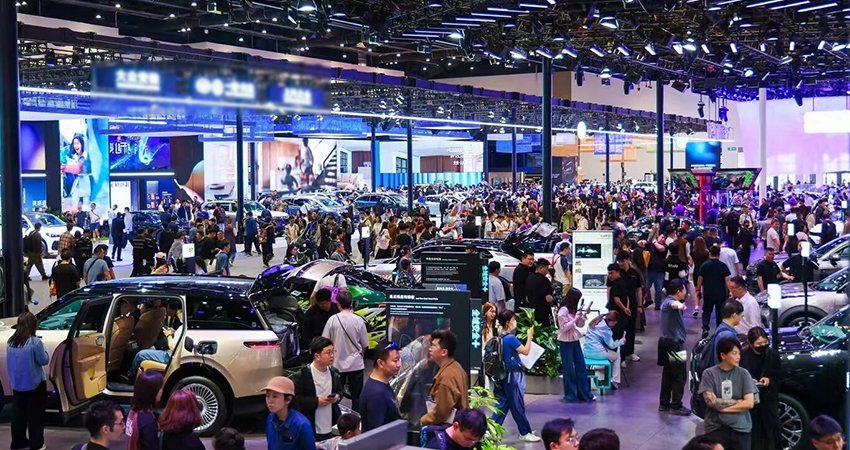
The combustion engine is leaving the domestic market
Traditional fuel passenger car sales inside China came to 513,000 units in October, 500,000 fewer than a year earlier and a fall of 49.4 per cent. Domestic car sales have now fallen more than 20 per cent year on year for seven consecutive months.
New energy is the only segment still growing. October production reached 2.017 million units and sales 1.940 million, up 13.8 per cent and 13.1 per cent. New energy took 64.3 per cent of total new vehicle sales.
Even that is now export-led. Domestic new-energy sales fell 8.6 per cent to 1.334 million units, and domestic new-energy passenger car sales fell 11.3 per cent to 1.222 million. New-energy penetration of domestic passenger car sales nonetheless reached 70.4 per cent, with the January to October figure at 61.2 per cent.
Overall passenger car production and sales came to 2.713 million and 2.662 million units, down 9.4 and 10.1 per cent year on year but up 3.3 and 2.9 per cent on September.
Plug-in hybrids are outrunning battery cars abroad
New-energy exports reached 606,000 units in October, up 1.4-fold year on year, of which 591,000 were passenger cars, also up 1.4-fold. For January to October, new-energy exports totalled 4.612 million units, up 1.3-fold, with passenger cars at 4.504 million.
Inside the export number, plug-in hybrids are growing faster than battery-electric cars. October battery-electric exports reached 374,000 units, up 1.3-fold, while plug-in hybrids reached 233,000, up 1.6-fold. For the ten months, battery-electric exports were 2.823 million units, up 1.2-fold, and plug-in hybrids 1.789 million, up 1.5-fold.
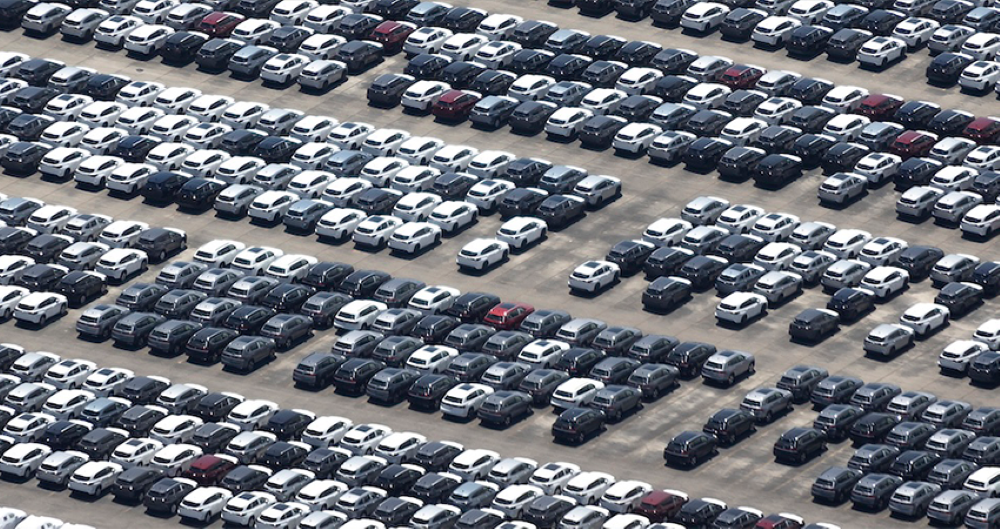
Chen Shihua, deputy secretary-general of CAAM, told the association’s monthly briefing that full-year vehicle exports are expected to exceed 11 million units.
Imports keep shrinking
China imported 21,000 vehicles in September, down 48.7 per cent year on year, and 288,000 in the first nine months, down 20.1 per cent. The world’s largest car market is now almost entirely a production and export base rather than an import destination.
For Chinese carmakers the foreign market is no longer incremental. It is the difference between growth and decline. The dual-track battery and plug-in hybrid export strategy is likely to remain the industry’s main line for some time, and it lands directly on European, Southeast Asian and Latin American dealers who are already absorbing Chinese volume.
Editor’s note: This is an adapted translation of the original Chedongxi report. It has been trimmed and restructured for readability for an international business audience. The full original (in Chinese) is at https://chedongxi.com/p/379673.html.