On 18 November, Guangdong-based Deep-sea Intelligence completed a share restructuring, converting from a limited liability company into a joint-stock company under a new name. The corporate paperwork is unremarkable on its own. What matters is what the company had accumulated before it changed its legal form.
Orders on hand matter more than the name change
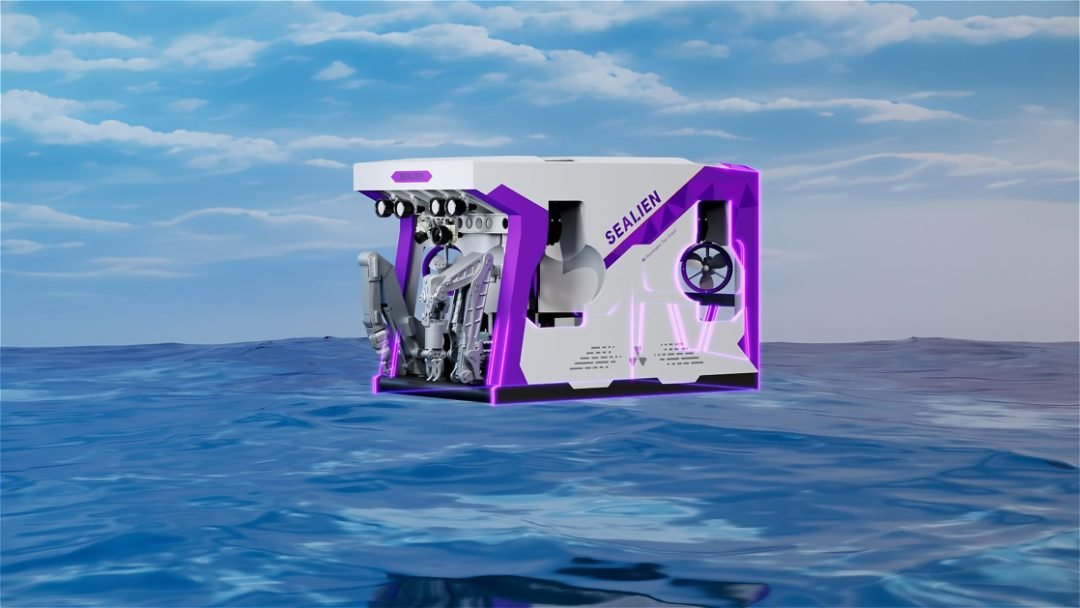
Two November contracts carry more information than the restructuring itself. The first covers eight 250-horsepower work-class remotely operated vehicles worth RMB 300 million, sold to a Brazilian oil-services company and a Singapore offshore engineering firm, with delivery scheduled across 2026 and 2027. The machines are the Singularity model launched this year.
The second is more revealing. A well-known Norwegian oil and gas services provider ordered six 250-horsepower hybrid electric-hydraulic ROVs worth RMB 250 million. Norway is the world’s base for deep-sea oil services. A large part of the customer network and engineering system of SMD, the second-largest deep-sea robotics supplier globally, sits there, while Oceaneering, Kongsberg and Saab Seaeye all operate in the same supply chain. Selling ROVs into Norway amounts to winning business on the incumbents’ home ground.
Founder Ma Yiming is SMD’s first Chinese engineer. He graduated from Harbin Engineering University in naval architecture and ocean engineering in 2013, joined SMD and rose to chief systems engineer and technical manager, working on the world’s largest ROV-based subsea cable burial robot at 2,400 horsepower, the first Zone 1 explosion-proof robot called Sensabot and the first commercial deep-sea mining system called Nautilus. The path is clear: learn at SMD, build at home, then sell back into SMD’s territory.
In 2025 the Phoenix 600 was delivered to a UAE telecom group under a RMB 100 million order, a breakthrough for Chinese commercial deep-sea robots sold overseas. In 2026 a domestic version was delivered to a state-owned enterprise and completed a 1,200-metre test in the South China Sea. By November the company held nearly RMB 1 billion in orders for the year, with whole-machine sales making up about 90 per cent. A stockpiling target originally set for 2027 was reached early.
How 90 per cent domestic content was built
Deep-sea robots run into three barriers. Radio waves do not travel underwater, so communication relies on narrow-band, high-latency acoustics. Cables cannot be lowered to great depth, so machines depend on batteries and hydraulics. At several thousand metres no human can steer in real time, so the machine must decide for itself. The global market has long been held by Oceaneering, Kongsberg, Saab Seaeye and Teledyne Marine. China’s four small dragons in the segment are Qianxing Chuangxin, Deep Blue, Shihang Intelligence and Shandong Future Robot.
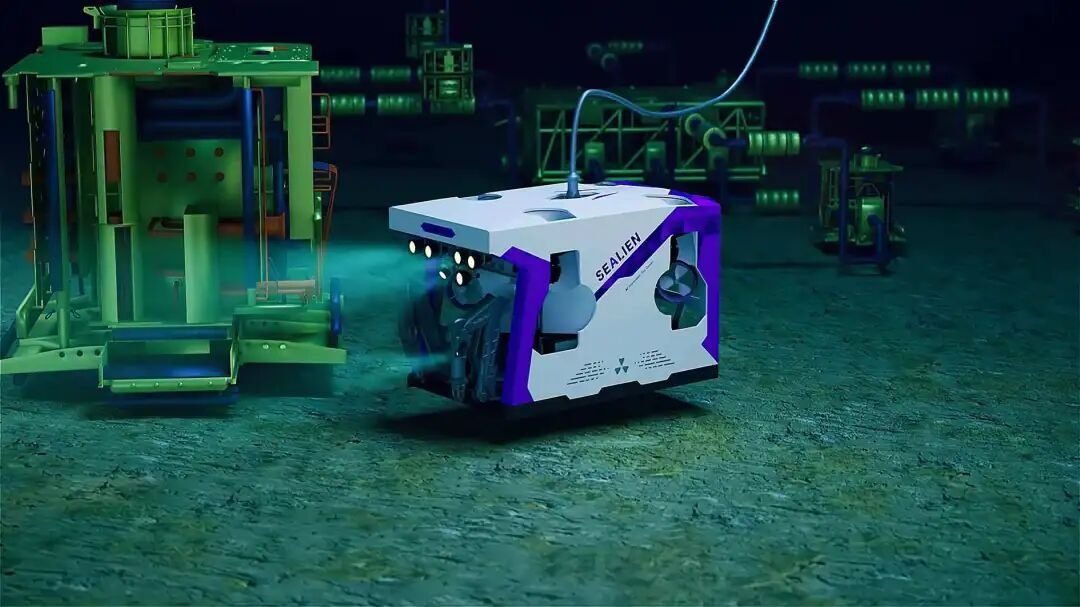
Deep-sea Intelligence claims more than 250 intellectual property rights and 90 per cent domestic content. Apart from standard parts and acoustic sensors, it develops everything in-house, including electrohydraulic servo systems, fibre multiplexing, deep-sea optics and electromagnetic sensors. Its product line runs from the Eagle observation class through the Phoenix and Taurus cable-burial systems to the Pisces ballast-tank inspection robot. The Phoenix 600 works at 3,000 metres, cuts trenches up to three metres and supports Level 3 operations. In April the company released an underwater multi-agent task decision model called SEAgent 1.0, intended to coordinate several machines alongside an unmanned support vessel under construction.
The real test is delivery, not the exchange
Beyond the name change, the restructuring added four directors and an independent director, replaced the finance chief and changed the company type to an unlisted joint-stock enterprise. There are 27 shareholders. Ma Yiming holds 27.9 per cent, an employee platform 18.4 per cent and Zhengxuan Qianzhan 8.8 per cent. That investor is backed by Xia Zuoquan, a co-founder of BYD. An August round raised more than RMB 500 million in series A. Management says it will improve governance and push ahead with a capital-market path, but gave no listing timetable. Competitor Deep Blue filed for a STAR Market listing in December 2025 and answered its first round of questions in May 2026, though it remains loss-making with accumulated losses above RMB 600 million.
Global market figures from GIR put the sector at USD 1.311 billion in 2025 and USD 2.875 billion by 2032, a compound growth rate near 12 per cent. Yet when deep-sea wind, subsea cables and deep-sea mining actually scale, few machines can work reliably at depth. The near-RMB 1 billion figure is an order book, not revenue. Whole machines mean large unit values and long acceptance cycles. A 95-person company must deliver 14 work-class ROVs within two years while absorbing a state-owned order. Whether the supply chain holds should become visible in the first quarter of next year. The distance from being able to build a machine to delivering one on time is far greater than the distance from a limited company to a joint-stock one.
Editor’s note: This is an adapted translation of the original OFweek report. It has been trimmed and restructured for readability for an international business audience. The full original (in Chinese) is at https://robot.m.ofweek.com/2026-11/ART-8321204-12003-30712895.html.