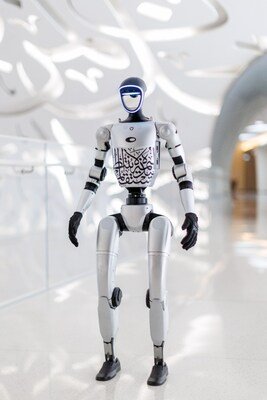
Humanoid robots can dance, backflip, and run marathons. What they cannot do is find enough paying customers.
A growing number of analysts are asking an uncomfortable question about the humanoid robot boom: who is actually buying these machines?
The answer, according to a detailed analysis on Chinese tech media Sohu IT, is mostly other robot companies, university labs, research institutions, and trade show organizers. Genuine industrial deployments — robots earning their keep on factory floors — remain vanishingly rare.
The analysis breaks down potential commercial use cases into four tiers, in descending order of viability:
Industrial manufacturing
Car factories — wire harness installation, material handling, screw driving — are the most obvious near-term market. A factory worker costs roughly ¥150,000 ($21,000) per year in China. If a robot genuinely replaces one worker, the payback period is about two years. In theory, every factory in China should be buying them.
In practice, robots are still too slow and inflexible. A skilled worker inserts a wire harness in about 3 seconds. A robot takes 15 seconds — not because the mechanical arm is slow, but because it must sense, localize, plan a path, and only then act. Worse, when the production line switches parts, the robot must be retrained and reprogrammed. Companies like BYD, Geely, and NIO are all testing robots. Not one has placed an order for more than a handful of units.
Hazardous environments
Chemical plants, nuclear zones, mine inspections, fire rescue. Safety is the priority, so price sensitivity is lower. But reliability requirements are extreme — a robot that fails after 10 minutes inside a reactor is worse than no robot at all.
Commercial service
Restaurants, hotels, hospital logistics. Simple arithmetic: a ¥100,000 robot replacing half a server takes over two years to break even. Most Chinese restaurants don’t survive that long.
Home robots
The largest potential market is ironically the hardest. Household robots must cook, clean, provide childcare, and care for the elderly — all without a single serious accident. A factory robot dropping a part costs pennies. A home robot causing a fire is catastrophic.
The article argues the industry looks like new energy vehicles circa 2014: impressive technology, no supply chain readiness, excessive costs, negligible real sales. The turning point will come when robot prices fall below ¥200,000, a single customer orders 1,000+ units, continuous stable operation exceeds 10,000 hours, and companies start turning a profit without fresh funding. None of these signals are visible yet.
The most profitable players in the short term may not be robot makers at all, but component suppliers — reducers, ball screws, force sensors, hollow-cup motors, PEEK materials — because whichever robot company wins, they all need the same parts. The gold rush, as always, is best played by selling shovels.
Translated and adapted from Sohu IT (it.sohu.com).