In a park in May 2022, a boundary-free robotic mower prototype ran back and forth on the lawn. It ran well. Qin Ling, who had just joined the team, took the mower as his first project. The team formed in late 2021, core members in place by early 2022, and in about five months built the prototype. This was the predecessor of today’s independently run outdoor-yard robotics company, NaiShiLao Intelligent Technology.
The prototype used RTK, high-precision GPS with differential correction for decimetre-level positioning. But Qin Ling chose not to ship it. RTK depends on GPS, and a home yard is not an open field with steady signal. Trees, walls and eaves break it. For a robot working alone in a yard long term, that route has a blind spot, he said.
Wireless mowers were at the edge of a first boom. The boundary-free approach removed the need to bury wires and needed only mapping and setup. A clear upgrade, and a big category prize. Shipping then could have seized the lead. But Qin Ling held: poor experience makes users pay for the company’s tech iteration, and that is not fair.
The call was soon vindicated. Overseas RTK mowers launched and saw high return rates from unstable signals. NaiShiLao’s pause kept it out of that early quality trap.
The team did not stop. Qin Ling’s group built delivery robots for nine months, from zero to mass production, gaining complex robotics engineering and supply-chain muscle.
They kept asking whether the mower was worth a long bet, and whether there was a route better than RTK for home yards. Robot vacuums offered the clue: random walking was poor until LiDAR arrived in 2016 and the category exploded. But mowers face outdoor 3D space, needing stronger 3D perception. The blocker was cost: early 3D LiDAR units ran about 10,000 yuan, unacceptable for a consumer mower.
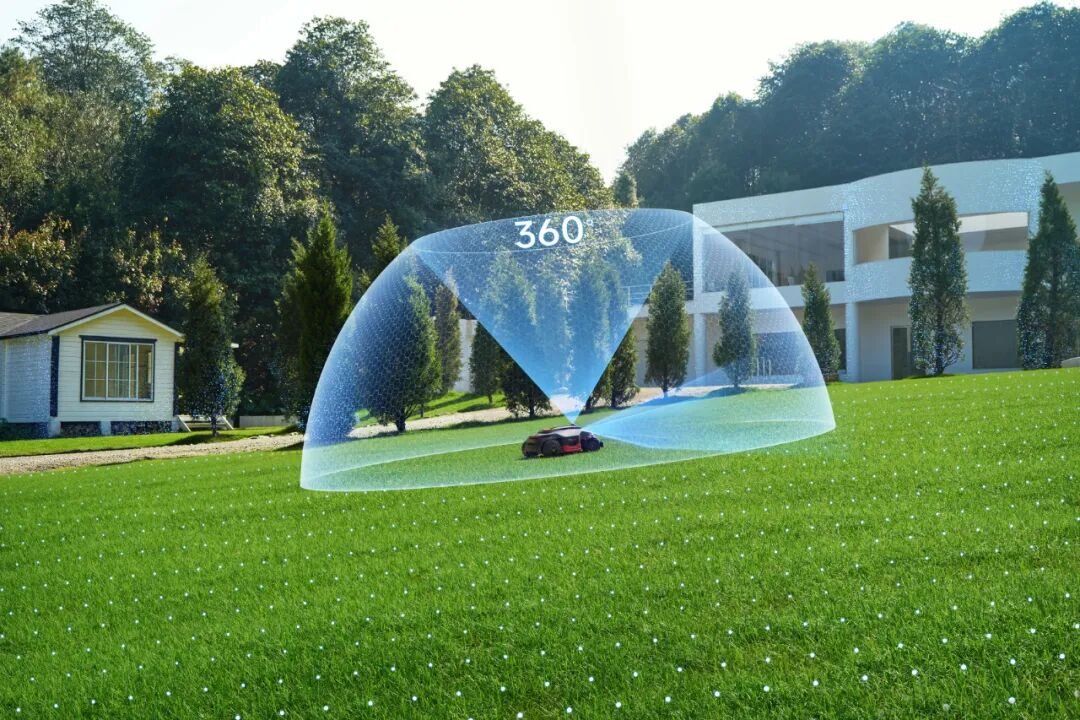
The turn came in January 2023. Livox, spun out of DJI, launched the Mid-360 360-degree hybrid-solid-state LiDAR at 3,999 yuan. Falling LiDAR cost made a LiDAR mower commercial. Qin Ling’s team restarted the project and, with its engineering base, reached mass production in eight or nine months and began selling in 2024.
The market responded. We started online, did well, and offline channels came to us, Qin Ling recalled. Versus RTK rivals, the LiDAR stability was visible to channels at a glance.
Then came the supply-chain test. Demand exploded. To avoid bottlenecks, the team went to Hesai to co-develop a radar built for the scenario, no longer just a buyer but specifying core metrics.
The hard question: can an expensive, complex route be a profitable, scalable business? With 3D LiDAR, firms lose money on the market, was the common view. Qin Ling’s math: the first-gen radar cost about 2,000 yuan, overseas retail was 1,999 euros, so gen one was already profitable. The real margin lever is return rate, not just bill-of-materials cost.
The lesson: the steep cost-down curve of robot-vacuum supply chains applies here too. As volume climbs, core-part cost falls into a sane commercial range. NaiShiLao’s story is a rare one in robotics, a consumer robot that made money on version one.
*Translated and adapted from LeiPhone (https://www.leiphone.com//banner/homepageUrl/id/3496).*