The narrative that battery makers only earn thin margins is over. At the 2026 Greater Bay Area auto show, only two power-battery makers, CALB and Gotion High-tech, took independent stages, and in the first four months of the year their installed volumes differed by just 0.14 GWh, a 0.08 per cent gap in share, slotting them third and fourth behind CATL and BYD.
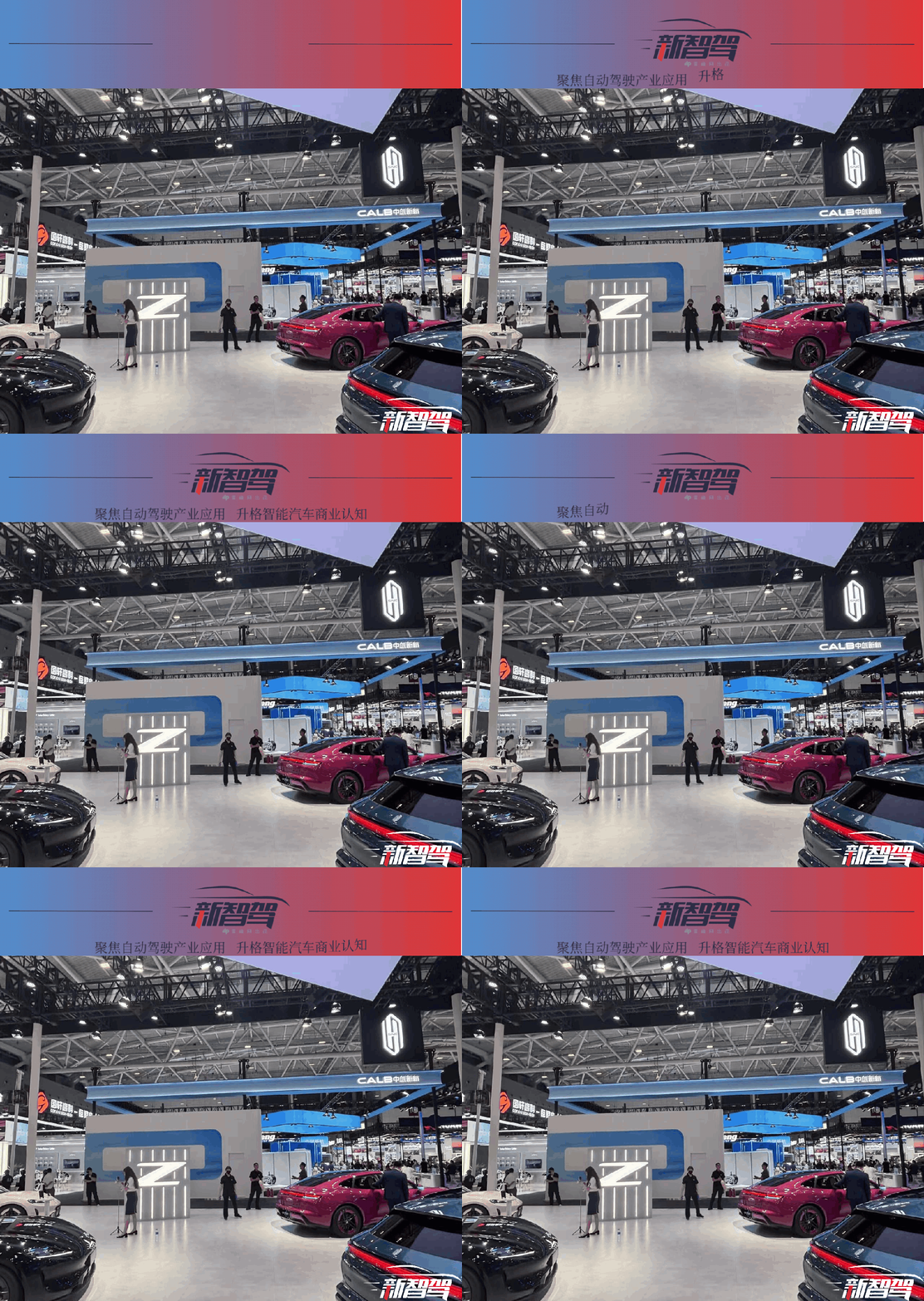
Both appeared on the same stage: Huawei’s Harmony Intelligent Mobility “Whale” battery platform. As strategic partners they feed the supply chain for Huawei’s five brands, Aito, Luxeed, Stelato, Maextro and Shangjie.
Huawei sets the bar, not the price
Huawei does not buy cells directly. It draws a very high standard line and forces partners to co-develop above it. Since its late-2023 debut the Whale platform has iterated to version 3.0, now on over 1.3 million vehicles with more than 150 million cells and a zero spontaneous-combustion record. Version 3.0 builds a 15-layer high-voltage thermal-runaway shield with thermal-electric separation and “upright” cell layout that moves high-voltage parts away from the road surface.
That standard pushes cost and consistency onto the manufacturers. Gotion arrived early, signing its first Huawei supply pact in June 2019, and now covers Aito M7 LFP packs, storage with Huawei inverters, and a 5G-factory retrofit that cut energy use about 18 per cent. CALB came later but went all-in, taking the 82 kWh ternary pack for the Luxeed S7 in late 2023 and the R7 since 2024, with battery health still at 97 per cent after 100,000 km.
The “de-bytisation” of the supply chain
Their 2025 profits tell the story: Gotion revenue 45.07 billion yuan, up 27.35 per cent, net profit 2.383 billion, up 97.49 per cent; CALB revenue 44.40 billion, up about 60 per cent, net profit 1.476 billion, up 150 per cent. The broader shift is a “de-bytisation” of auto supply, where the old buy-sell relation gives way to co-development. The risks are real too: when a thermal event happens, blaming the cell versus the BMS is a murky accounting, and CAM data cited by the passenger-car association shows battery firms squeezing OEM margins, CATL alone taking 71 of 147 billion dollars in profits among listed Chinese carmakers.
For the two near-twins, the contest inside Huawei’s Whale framework is just starting, and it will be won on engineering depth and supply response, not on price.
Read the original report (LeiPhone)
Translated and adapted from LeiPhone (leiphone.com).