For a decade the cleaning-robot story happened on the floor. Sweeping, mopping, self-emptying, auto water refills, each feature layered on, each price war driving the category toward saturation. Now Chinese makers are looking up, from the plane to the facade, and the window-cleaning robot is having its moment.
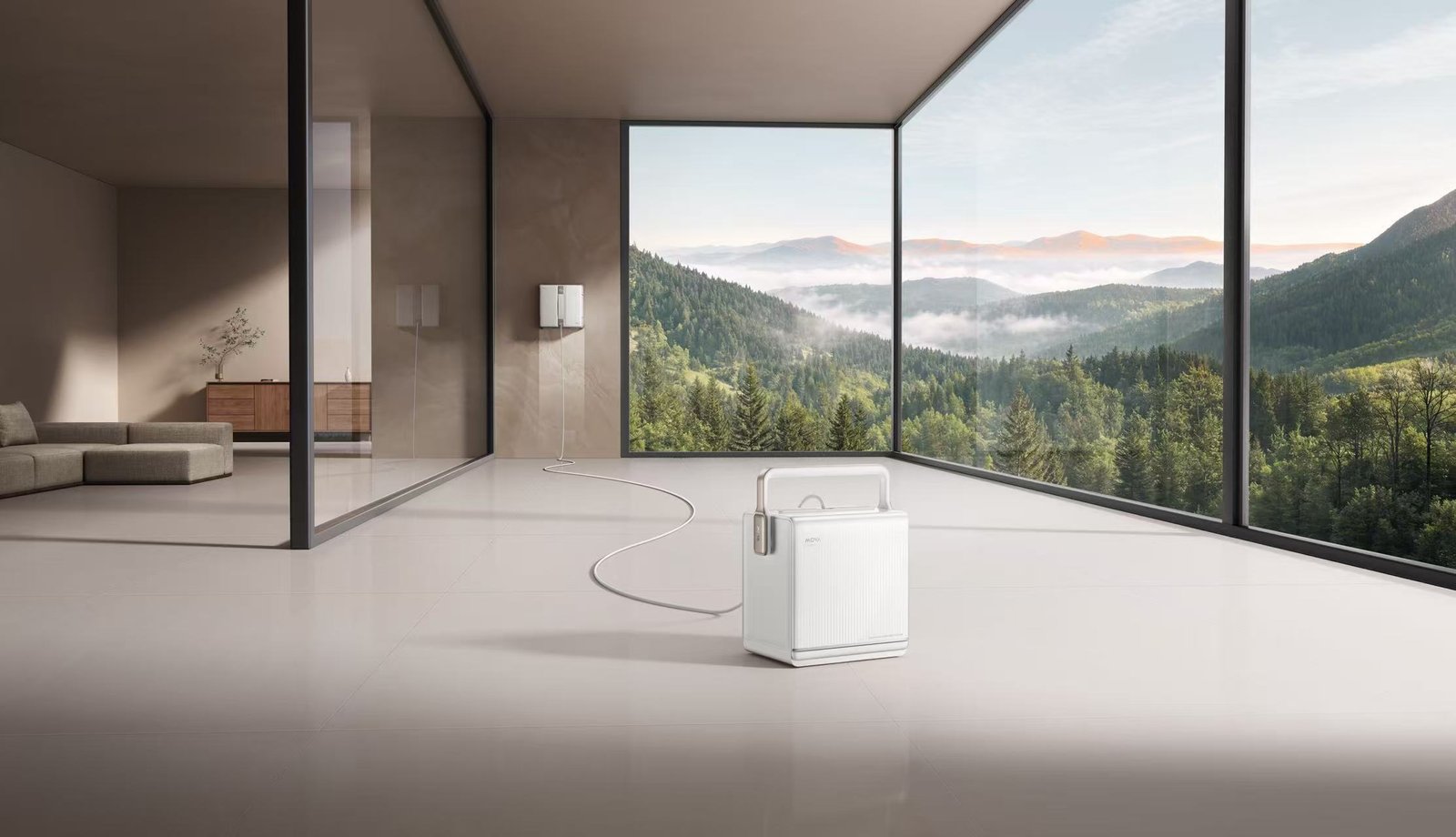
Cui Haishun, who runs the window-robot business at MOVA’s Jingjie unit, argues the category is crossing its scaling inflection. Globally the segment has compounded at 30 to 50 per cent a year, with some channels in high-labour-cost markets, Northern and Southern Europe, North America, Australia, doubling.
An eerie echo of the Roomba curve
The trajectory rhymes with early floor robots. Pre-2021 window bots could only dry-wipe, smearing more than they cleaned. The 2021 breakthrough was wet-wiping, spraying while dissolving grime, the threshold for actually cleaning. In 2023 the “base station” form factored in power cord and safety rope, solving handling. By 2025 miniaturised models hit the thousand-yuan price point, reaching older buildings and lower-tier cities.
But the engineering is nothing like the floor. A window bot fights gravity, climbing a slick vertical surface while keeping a stable path; the top and bottom edges bear uneven load, so any slip in traction or path planning means a fall. Glass also betrays every water mark, where floor tiles hide them.
The unsolved 70 per cent
Cui is blunt that the product is immature. Coverage at corners is still weak; the machine cannot yet cross between windows, so a human still moves it outdoors. Cloths foul fast on dirty glass, forcing manual pauses. His team has tried over a hundred wipe materials and introduced active and passive corner brushes, with the new T1 using 40-degree warm water and four corner structures to lift corner coverage to 80 per cent.
MOVA chose a square form over the round dual-spin design for better edge and frame adaptation, accepting higher engineering difficulty, multi-bumper tech, triple drop detection, sensor fusion. For Cui the logic is clear: if it cannot clean the outside window, 60 to 70 per cent of the product’s point is lost. The ceiling is high precisely because the problems are real.
Read the original report (LeiPhone)
Translated and adapted from LeiPhone (leiphone.com).