Unitree, the “first humanoid-robot stock”, set its IPO price at RMB 150.8 per share with a price-to-earnings multiple of 219.23x, far above the 38.56x industry average, throwing more fuel on the embodied-AI boom. Over the past three months, giants on both sides of the Pacific have been heating the sector too.
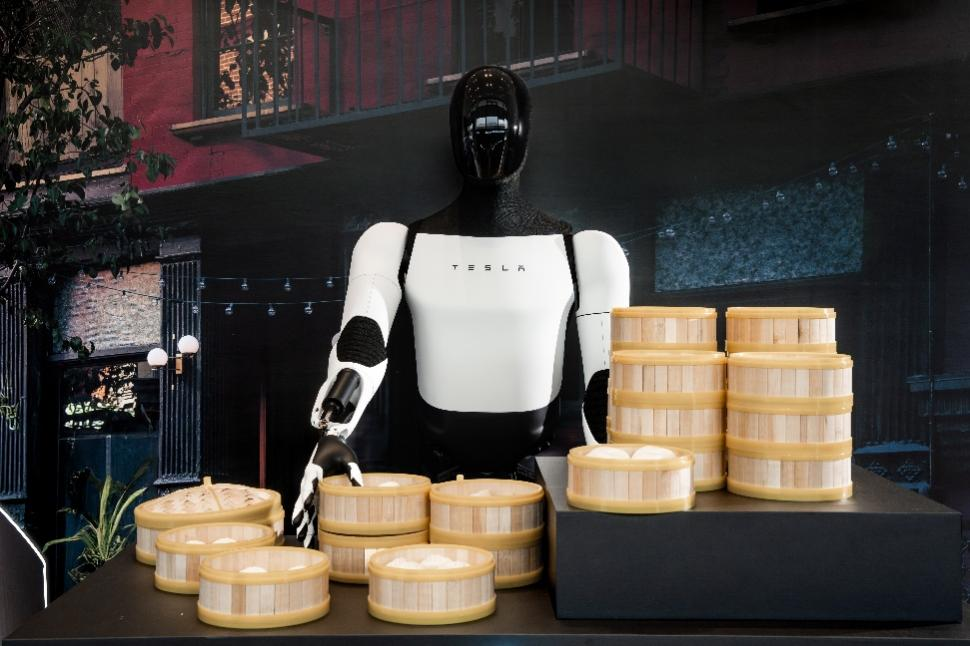
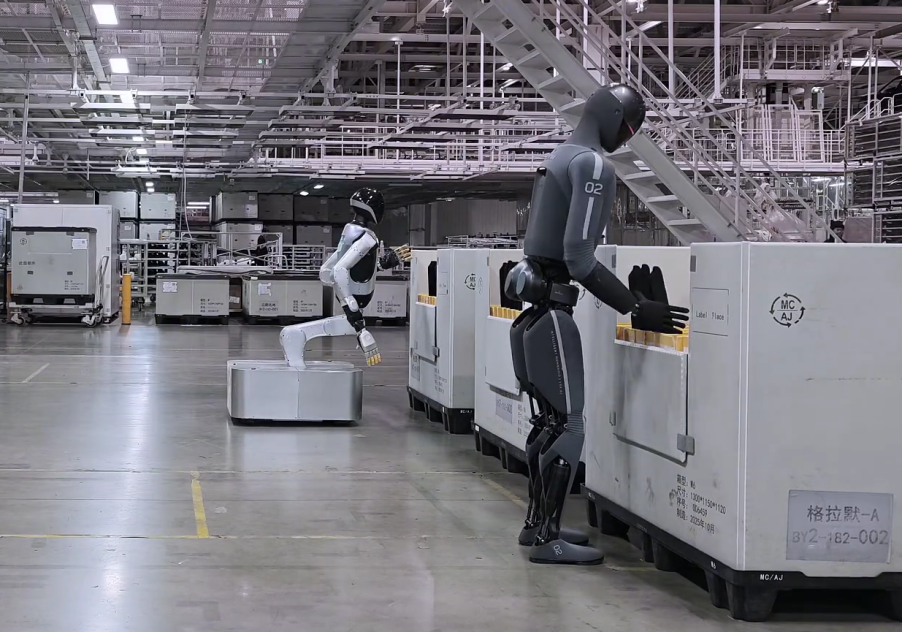
In June, Elon Musk called Optimus mass production the hardest ramp in Tesla’s history and moved the car line at Fremont aside for robots. In July, Lei Jun posted unedited footage of a Xiaomi humanoid working four months in a car plant, with nut-fitting success nearing skilled workers. Huawei Cloud and Tencent each unveiled embodied-AI platforms at WAIC. The last such dense land-grab was smartphones around 2014 and EVs around 2020. This time the battlefield extends from screens and wheels to joints, dexterous hands and neural nets.
Build the robot, or build the soil
Tesla’s struggle reveals the first bottleneck: the supply chain. Every part on the robot is new, with almost no ready-made supply, so thousands of components must be developed in-house. A brand-new line with ten thousand new parts can stall at any link.
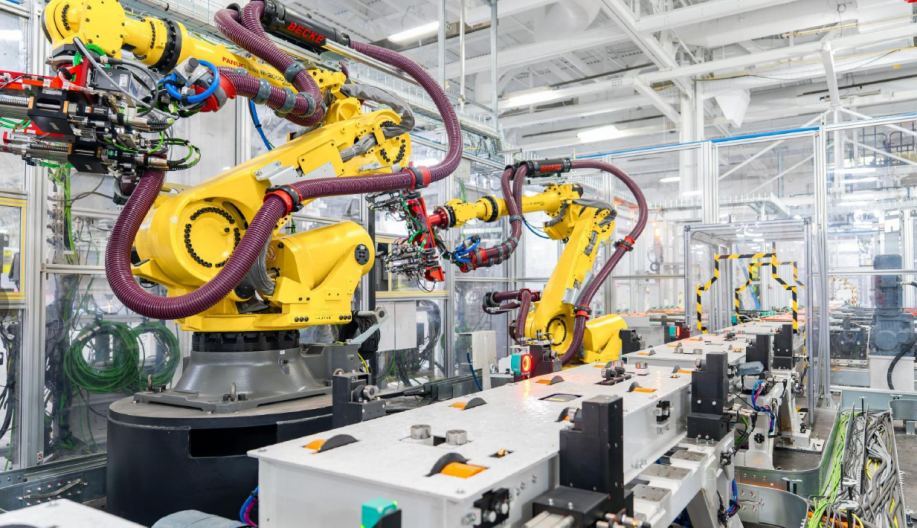
Xiaomi’s four-month plant internship opened the second bottleneck: data and the ability to process it. On the self-tapping nut station, two-sided success rose from 90.2 per cent to 98 per cent, one point short of the 99 per cent a skilled worker reaches, though the “unedited” clip ran at triple speed.
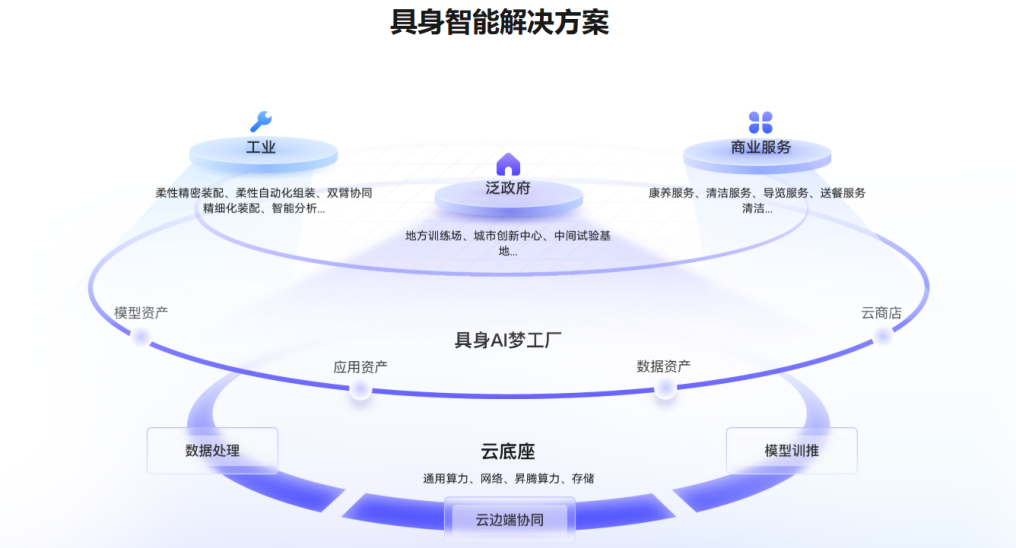
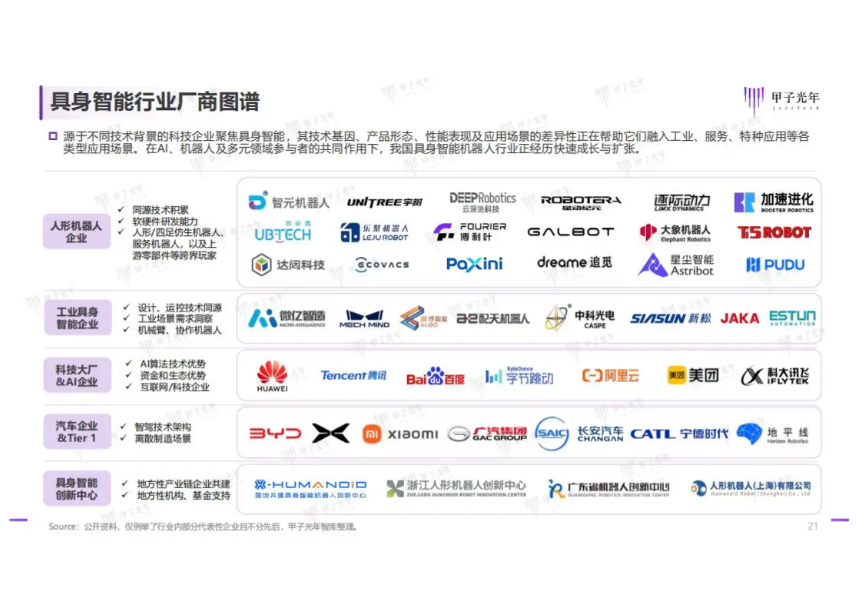
Huawei and Tencent chose different paths. Huawei Cloud positioned itself as “silicon soil”, launching the CloudRobo development platform and partnering with special-robot maker Yijiahe to inject cognitive decision-making into physical products. Tencent, a year after a “three-no” stance (no hardware, no mass production, no commercialisation), upgraded to a full-stack embodied-AI suite spanning cloud, model, platform and application, now live in over 30 industries.
From the model wars to the year of delivery
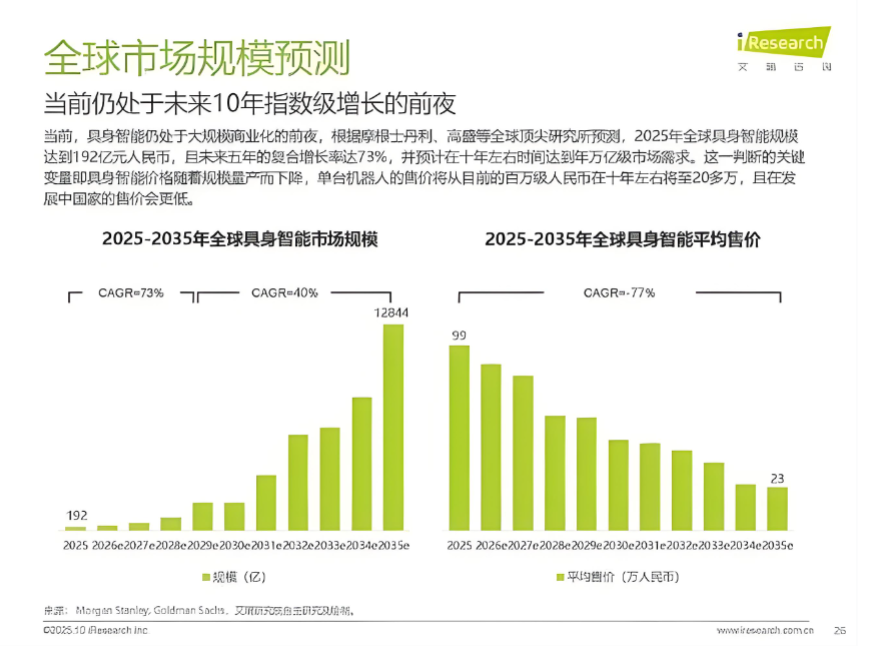
The sector has left its wild-growth phase. In the first half of 2026, China’s embodied-AI funding rose fivefold to RMB 93.5 billion across 322 deals, up 137 per cent, but capital concentrated in the head: eight firms passed RMB 20 billion in valuation. The dividend now belongs only to players that can mass-produce and create real industrial value.
Tesla’s second-quarter 2026 revenue was US$28.236 billion, up 26 per cent, but net profit was US$1.114 billion, down 5 per cent against US$1.172 billion a year earlier, with nearly US$5.8 billion of capex as free cash flow turned negative for the first time in over two years, driven by autonomy, AI and robotics. Musk called humanoid mass production the hardest product Tesla has ever built.
The inflection point is moving from technology worship to value landing. Without mass-production capacity, the smartest algorithm is a castle in the air; without real scenarios, the slickest prototype is a showpiece; without a commercial loop, the hottest capital is a bubble. 2026 is widely called the delivery year for embodied AI, but it is only a turn from fantasy to the field.
Editor’s note: This is an adapted translation of the original OFweek report. It has been trimmed and restructured for readability for an international business audience.