For years, Sinian Intelligent Driving was known almost entirely for one thing: autonomous driving in ports. Compared with robotaxis and city NOA, port automation is a quiet corner of the industry, a closed scenario with a limited market and long, fiddly delivery cycles. Easy to dismiss as a niche.
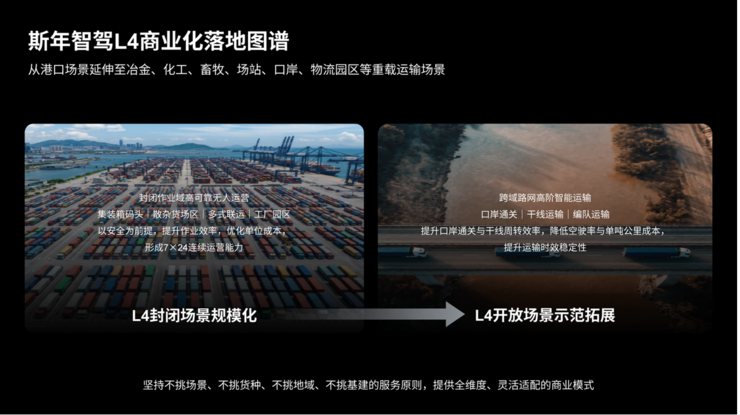
Then Sinian closed a RMB 300 million Series C, led by Industrial Securities Capital and Yidao Capital, and quietly revealed it is moving out of the port and onto open roads. The company that was “the port firm” is extending its boundary into heavier, broader logistics.
Why ports first
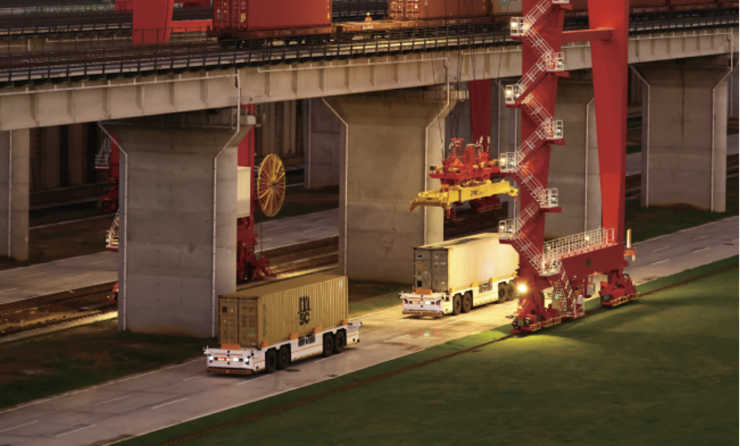
Founded in 2020, Sinian focused on terminal scenarios because ports are more digitalised, have higher labour costs, and make the business case for autonomy easier to prove than open roads. But the reality was messier than the slideshow. An autonomous truck shares the terminal with human-driven vehicles, co-ordinates with quay and yard cranes, and answers to a central dispatch system. The whole logistics chain, not just the vehicle, had to be tamed.
Sinian now leads global market share in port autonomous driving. Its vehicles also run in rail yards, steel mills, multimodal hubs and cross-border ports on the China-Mongolia and China-Vietnam borders. Qingdao and Weihai roll-on/roll-off projects, with narrow lanes and ships holding few fixed references, were among its hardest cases, yet the team pushed them through by iteration.
From single vehicles to a system
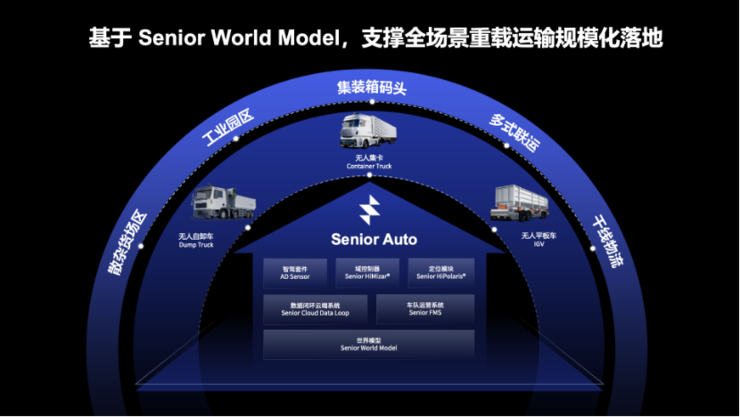
As project count grew, Sinian moved from a single-vehicle supplier to a full-scenario systems provider, adding cloud dispatch, roadside units and EPC turnkey service. Its view: customers do not buy an autonomous truck, they buy a transport-capacity system that keeps creating value. With the fleet scaling from hundreds toward thousands of vehicles, that system thinking is what solves large-scale operations.
To cut replication cost, Sinian dropped high-definition maps for a map-free approach, shortening deployment and lowering cost. That same playbook travels: a capability proven across ports, steel mills and cross-border logistics can enter new markets, including overseas, at lower cost.
The harder question: will they pay?
Chairman He Bei is blunt that the industry’s real test is willingness to pay. Give a terminal free autonomous trucks and it is delighted; ask it to pay and the certainty fades. Fewer than 1,000 autonomous trucks run in China’s ports today. Sinian runs no loss-making projects and focuses on long-term operating value, using EPC for large clients and centralised fleet management for smaller ones.
The autonomous-driving sector, He argues, has left the phase where financing alone drove growth. Investors now weigh revenue quality, profit and self-sustaining cash flow. Sinian’s edge is the operating, delivery and scenario-adaptation capability built over years, which decides whether a client keeps paying and whether a moat holds.
Editor’s note: This is an adapted translation of the original LeiFeng Network report. It has been trimmed and restructured for readability for an international business audience.