Paul Meade, the Apple vice president responsible for the Vision Pro team, is leaving the company and joining OpenAI’s hardware group, according to Bloomberg. The trigger was a management reshuffle under Apple’s incoming chief executive that left Meade effectively demoted.
With John Ternus succeeding Tim Cook as Apple’s next chief executive, former silicon chief Johny Srouji was promoted to chief hardware officer. Srouji then ran an aggressive and contested restructuring of hardware engineering. Meade and several other hardware vice presidents were told to report to Tom Marieb, the new vice president of hardware engineering, who in turn reports to Srouji.
That extra management layer left senior figures including Meade feeling demoted in all but title, and the departures followed.
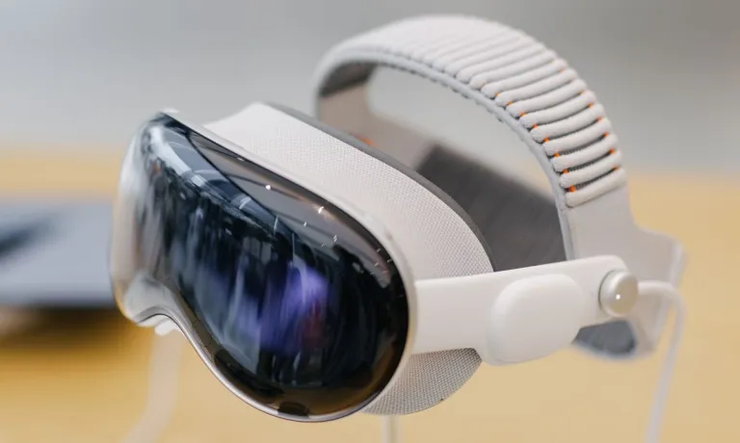
Fifteen years, seven of them on Vision Pro
Meade spent more than 15 years at Apple. Early on he ran programme management for iPad and iPhone. He joined the Vision Products Group in 2017 and spent the following seven years leading hardware engineering for Vision Pro.
Before leaving, he was heading a confidential effort to build Apple’s first display-free smart glasses, the answer to Meta’s Ray-Ban line, originally scheduled for launch at the end of 2027. His position passes to his long-serving deputy Fletcher Rothkopf, currently head of product design for Vision Pro and smart glasses.
Why OpenAI wanted him
The consensus reading is that OpenAI’s hardware strategy is moving from design concept to industrial manufacturing.
A year ago OpenAI paid 6.5 billion dollars to acquire io, the AI hardware startup founded by former Apple design chief Jony Ive and colleagues. Ive’s team leans towards form and product philosophy. Meade brings the thing OpenAI lacked most, which is hard engineering. Specifically, the ability to fit extremely complex sensors, a low latency architecture and spatial computing components into a compact consumer device.
The read from overseas analysts is that this hire proves OpenAI’s ambition was never a phone app. The company intends to put the full multimodal capability of ChatGPT into physical wearables that sit on a user’s eyes and ears.
Editor’s note: This is an adapted translation of the original Leiphone report. It has been trimmed and restructured for readability for an international business audience.