Arm China has bet its entire product roadmap on AI. At WAIC 2026 this month, the company unveiled upgrades across all four of its IP lines, NPU, CPU, SPU and VPU, alongside three newly formalised business tracks covering Edge AI, Physical AI and Cloud AI.
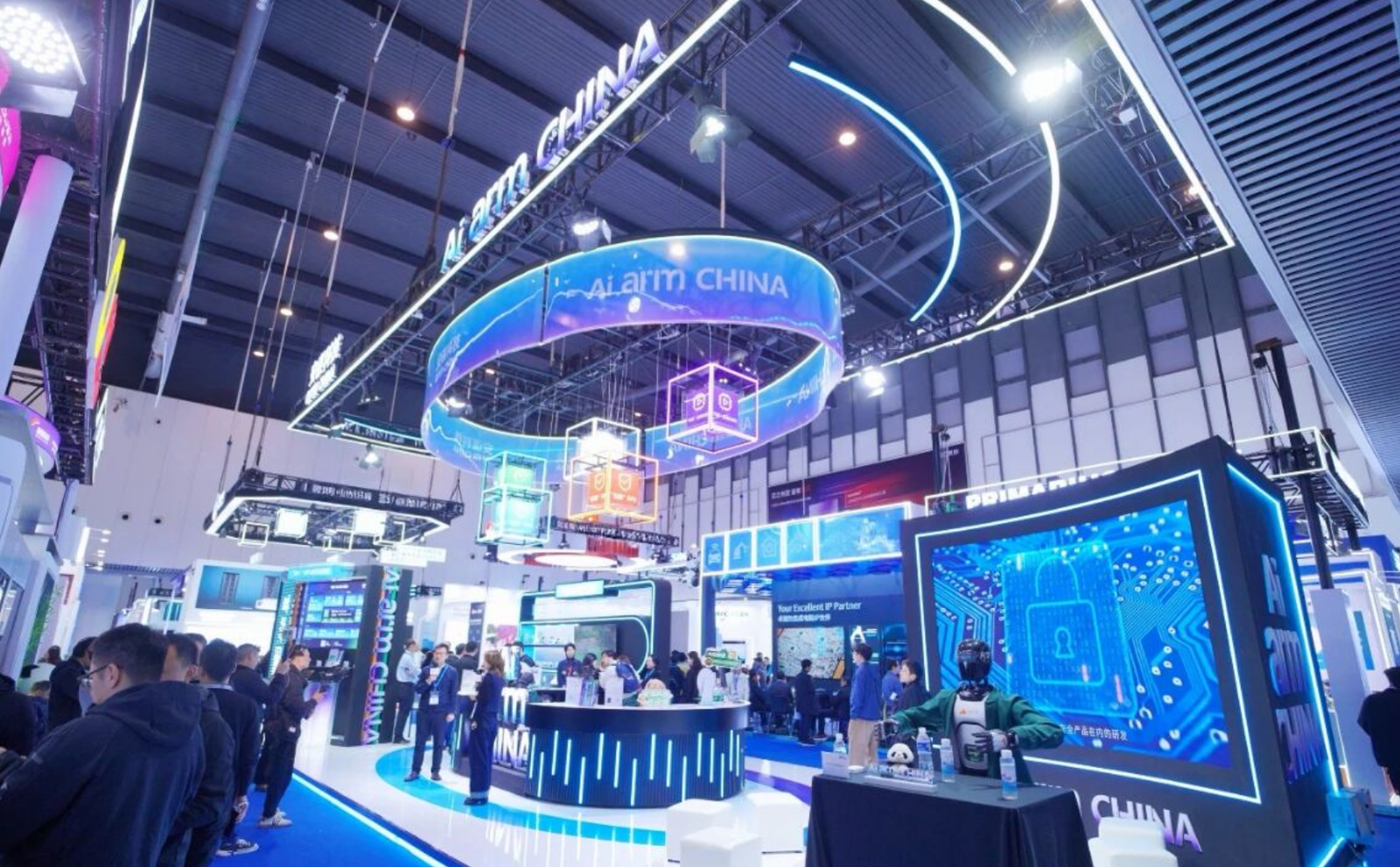
The strategic pivot was set last year under the “AI Arm China” direction and an “All in AI” product mandate. The four product lines, ZhouYi NPU, XingChen CPU, ShanHai SPU and LingLong VPU, have since been iterated around AI as both direction and method.
Edge AI: the XingChen 300 platform

The XingChen 300 AIoT prototype platform combines Arm China’s self-developed XingChen CPU, Arm Helium vector extension technology and Arm Ethos NPU into a single heterogeneous computing architecture purpose-built for embedded AI scenarios. Helium acts as a software-programmable accelerator, letting the CPU handle vector computation far more efficiently. The platform supports mainstream small models and extends AI compute into MCU-class devices.
ZhouYi X3-Pro: agentic AI compute base
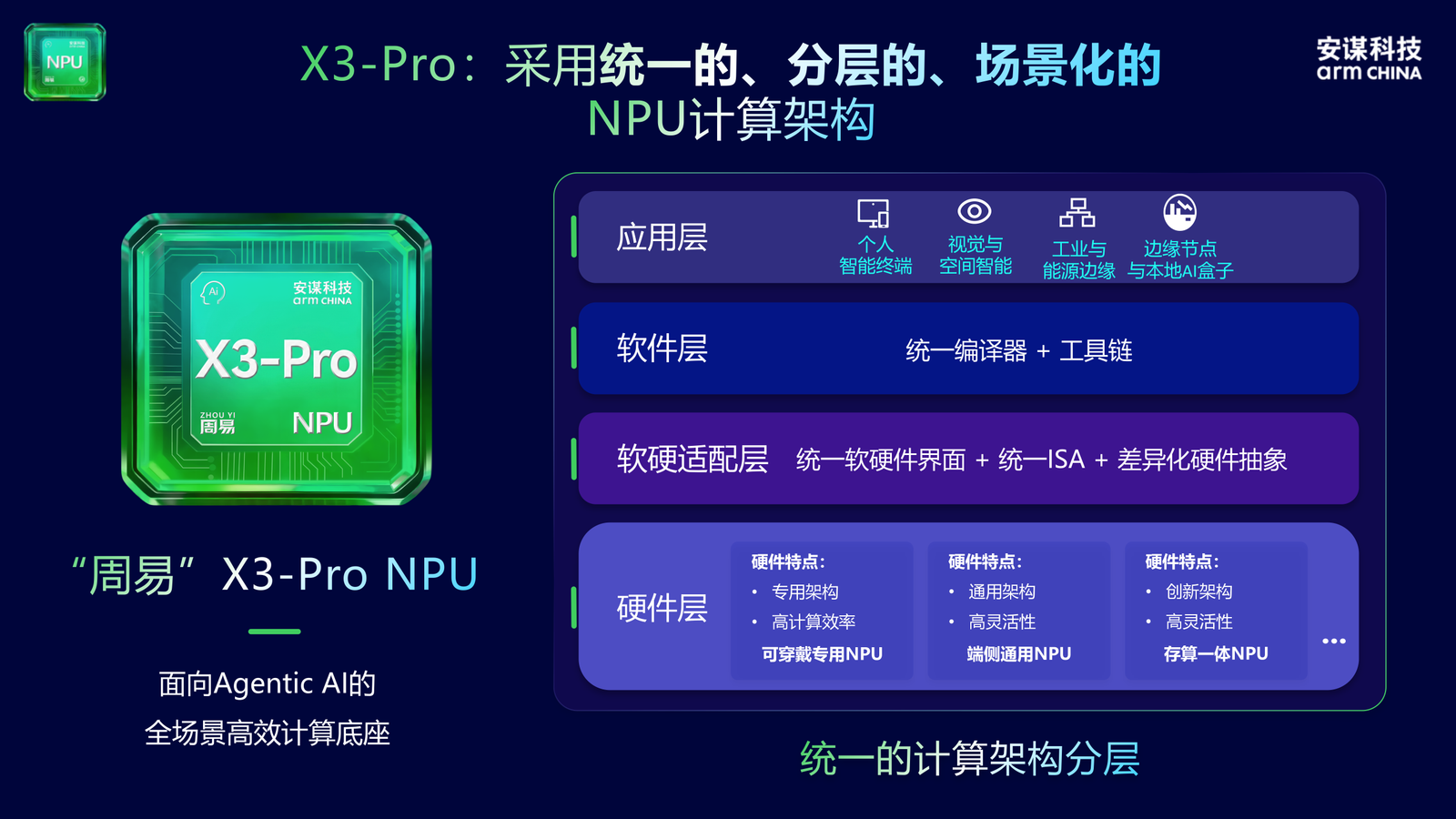
The ZhouYi X3-Pro NPU, revealed for the first time at WAIC, targets agentic AI deployments with a programmable, high-efficiency, future-extensible architecture. It uses a unified, layered, scenario-based NPU computing design that adapts once and deploys across multiple chip configurations, covering everything from low-power IoT devices to high-performance edge servers. The goal is to lower the deployment barrier for AI agents on edge devices while significantly lifting R&D efficiency.
LingLong VPU and ShanHai S30 security processor
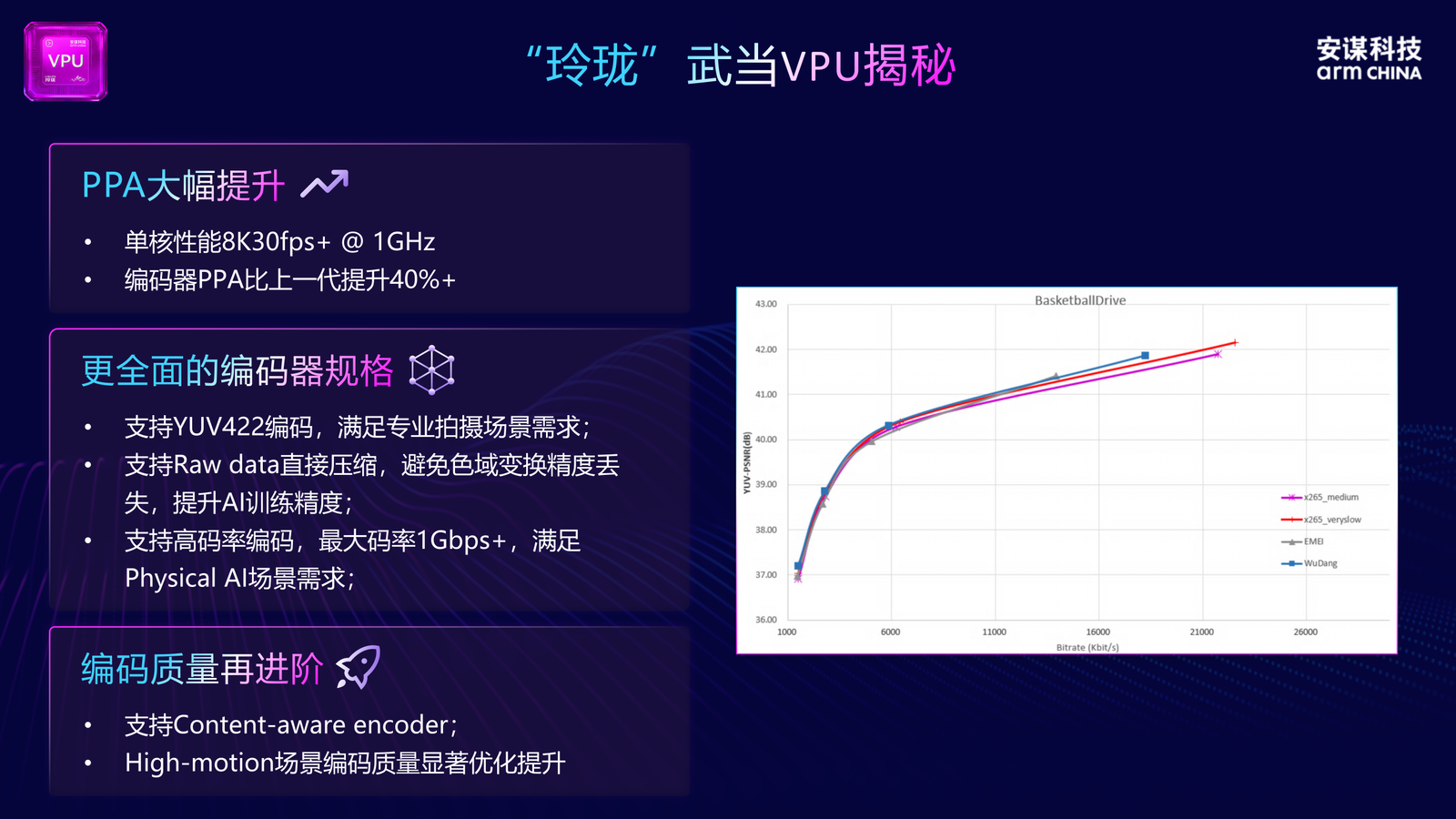
The next-generation “WuDang” AI VPU addresses surging demand for high-quality video processing in AI applications. It inherits the previous CAE technology, delivers over 40 per cent better PPA than its predecessor, supports comprehensive encoder specs including YUV422 and raw data compression, and uses a new AI training framework for end-to-end global optimisation with measurable bitrate savings.
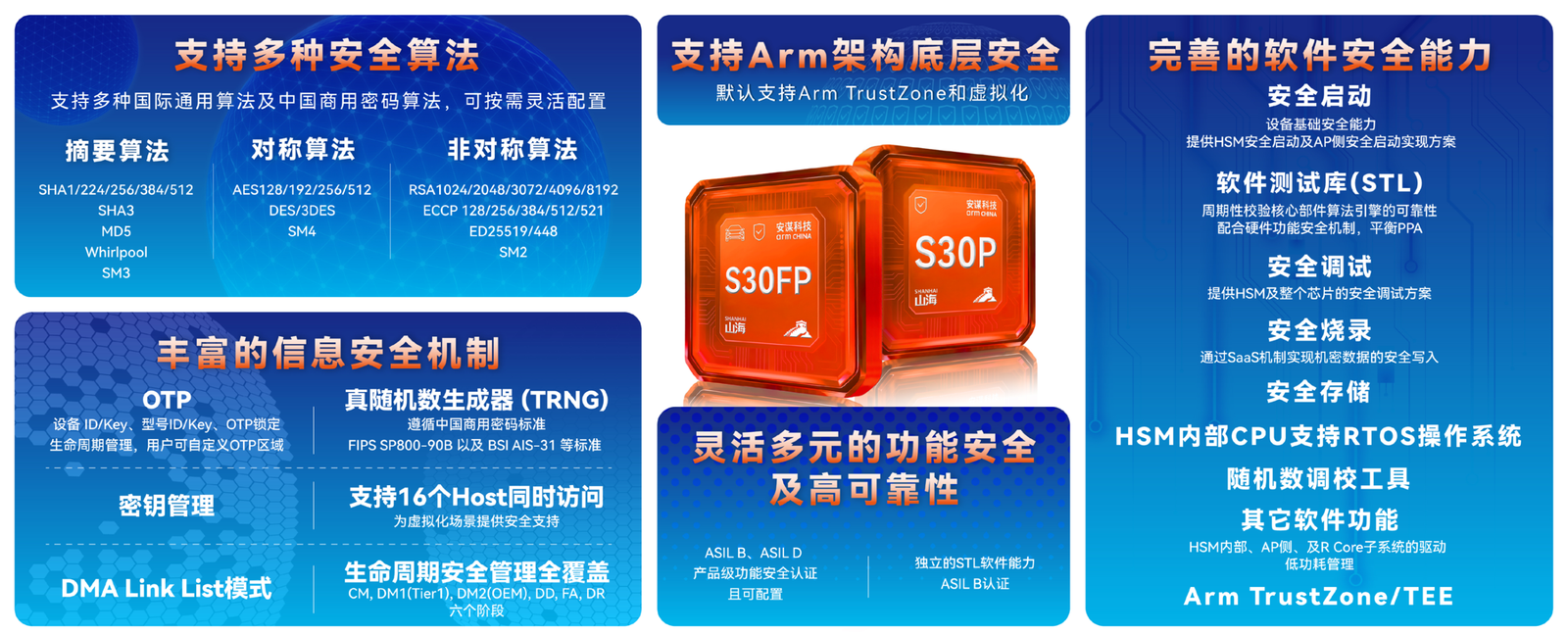
The ShanHai S30 SPU line received a major update late last year. The new S30FP/S30P, code-named “White Horse”, achieves ASIL-D, the highest functional safety level, positioning it as a full-stack security solution for high-performance AI computing chips.
Three business lines, one AI thread
Arm China formally established three business lines this year: Edge AI for endpoint and embedded devices, Physical AI for embodied intelligence and smart vehicles, and Cloud AI for datacentre and cloud infrastructure. Across all three, Arm technology and self-developed IP work in tandem.
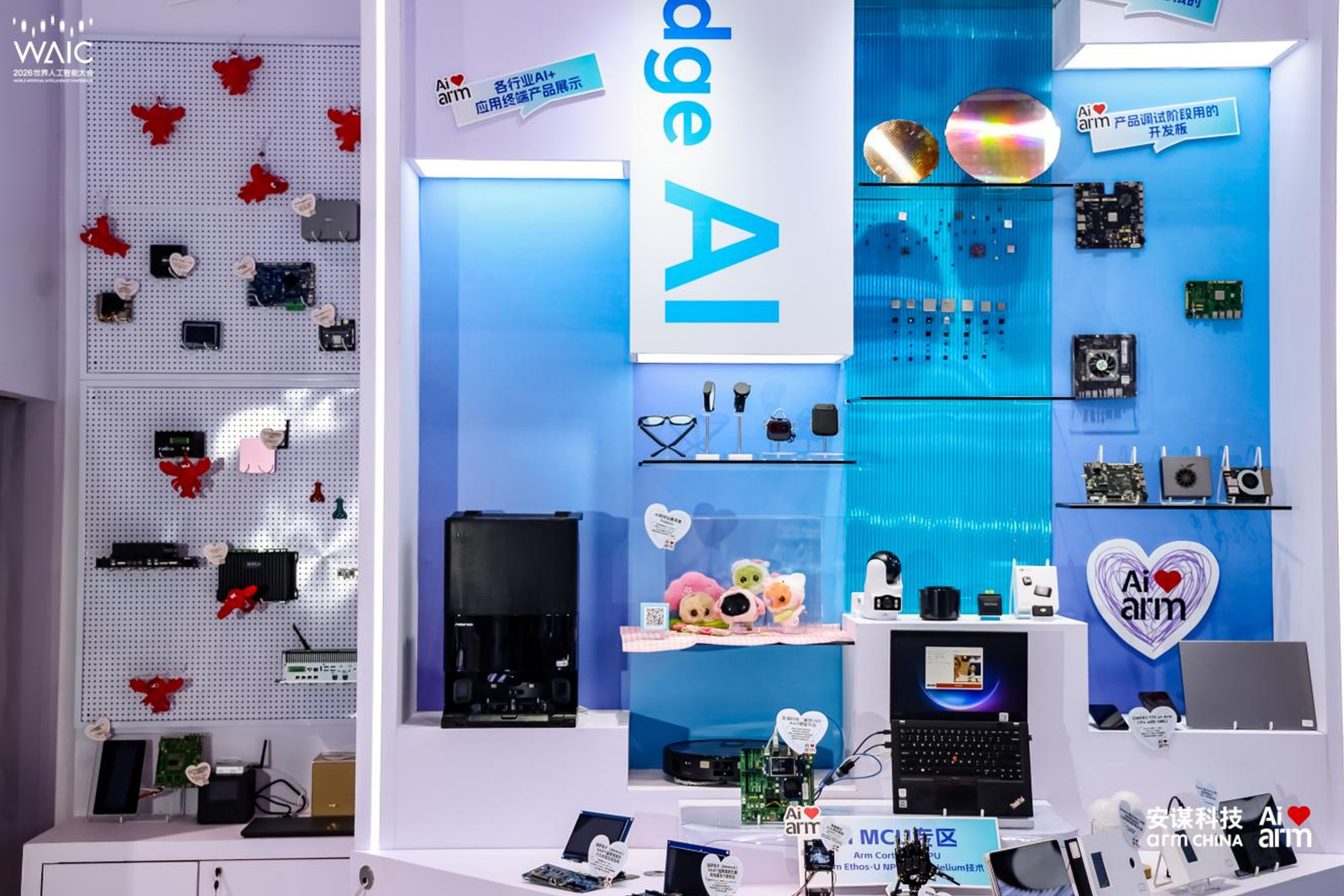
In edge AI, beyond the XingChen 300 platform, Cortex-M CPU plus Helium plus Ethos NPU solutions already cover vehicle monitoring, traffic surveillance, AI companion toys, visual tracking, gesture recognition and industrial predictive maintenance. In phones and PCs, Arm Lumex and Kleidi software stacks play supporting roles.
In Physical AI, Arm technology runs through every layer of robot systems, from central compute brains and interaction processing to battery management, local control, sensors and actuators. Smart vehicles draw on the same stack across powertrain, chassis, body, cockpit and autonomous driving.

In Cloud AI, where efficiency, cost and safety dominate buying decisions, the Arm Neoverse compute platform has become a foundational element. Nearly 50 per cent of compute shipped to hyperscale cloud providers is now based on Arm architecture, spanning DPUs, smart NICs, SuperNICs and server form factors from 2U to 6U.
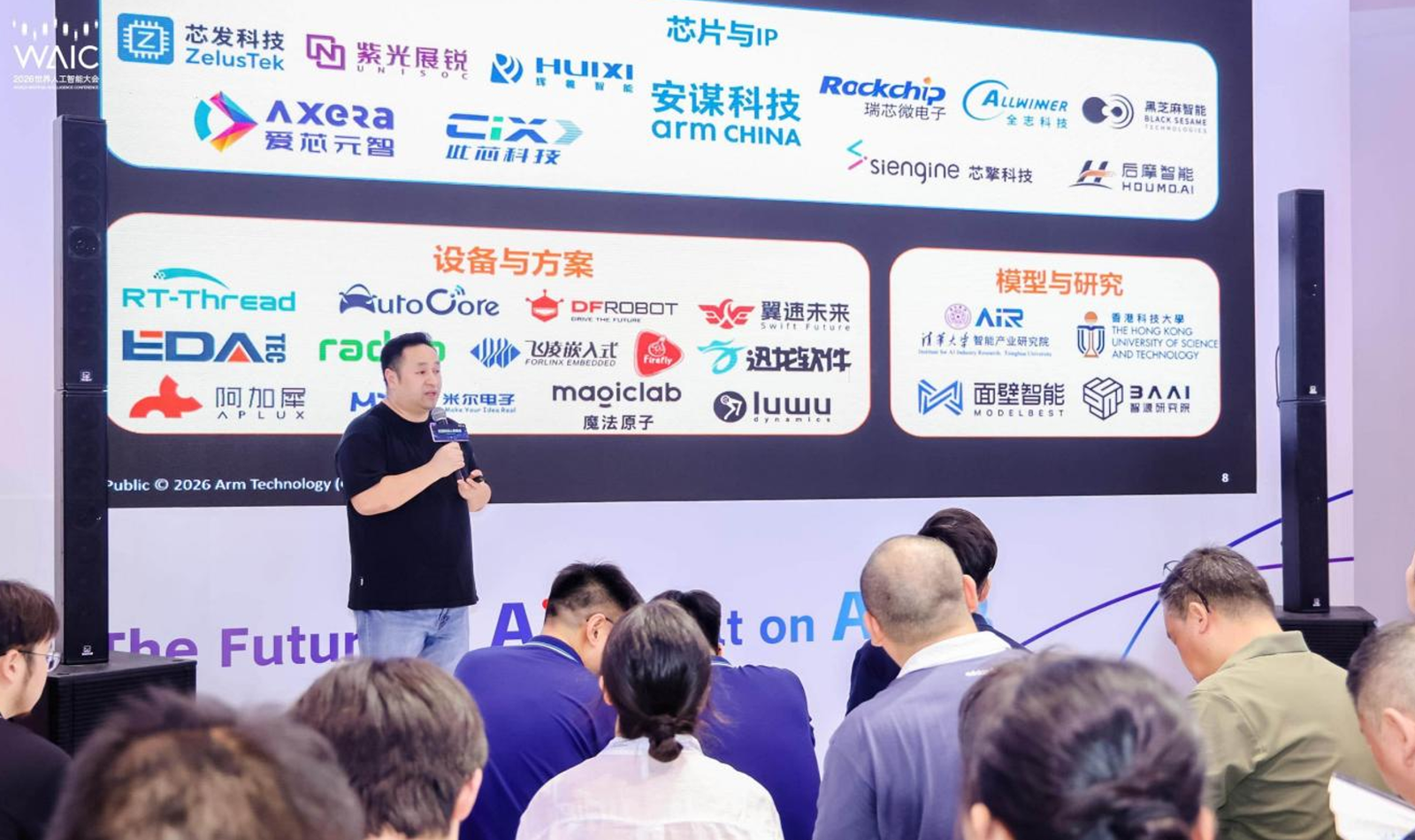
Arm China also convened the Open AIOS Alliance at WAIC, bringing together chip companies, large model developers and university research institutes to push AI operating system adoption across emerging intelligent terminal form factors.
Two years into its All in AI pivot, Arm China has built a genuine full-stack, full-scenario AI infrastructure capability. For China’s domestic chip industry, which faces export control pressures on advanced process nodes and design tools, having a home-grown IP provider that speaks fluent AI is not a convenience. It is a strategic dependency being filled.
Editor’s note: This is an adapted translation of the original Zhiidx report. It has been trimmed and restructured for readability for an international business audience.