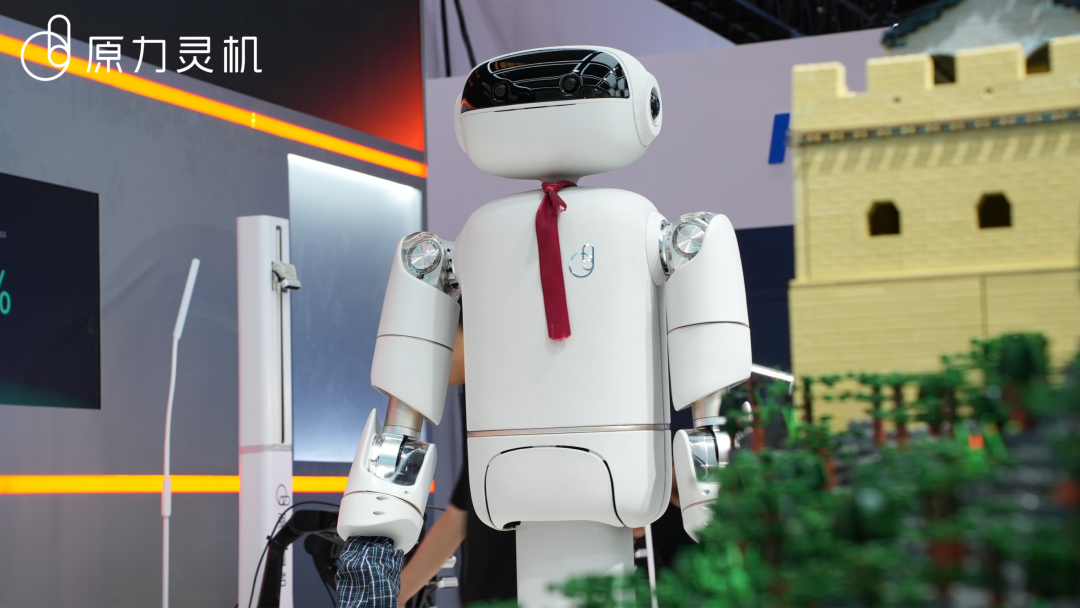
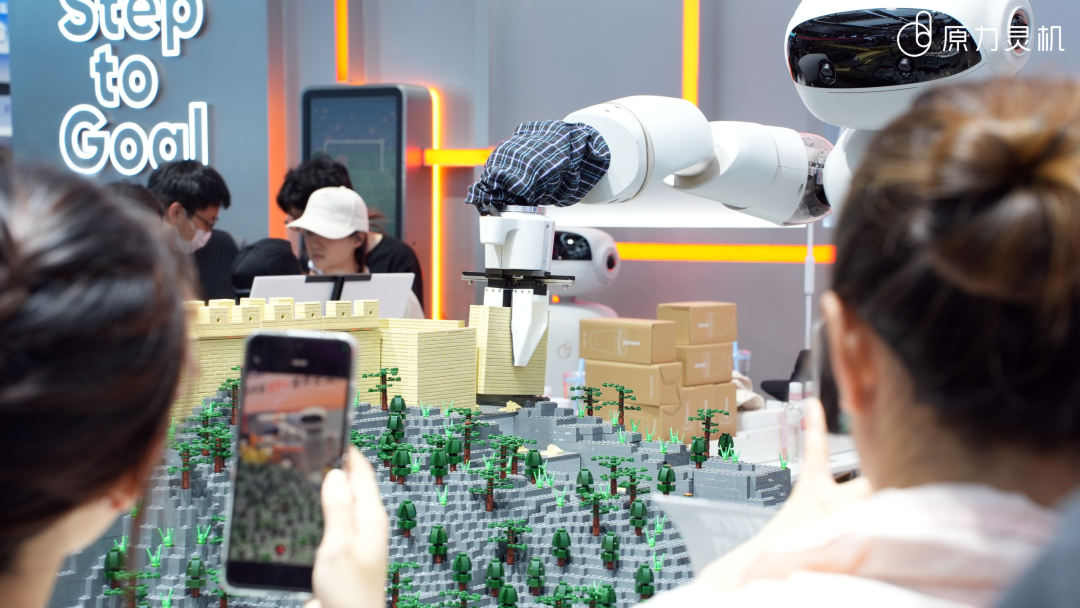
Four desktop arms and two wheeled robots spent 15 hours assembling a 3.5-metre Great Wall from 82,000 micro building blocks at WAIC 2026. The team behind it, Force Machina, used the demonstration to prove something less visible but more important: a complete system that can run fine manipulation, error recovery and multi-robot coordination continuously for hours.
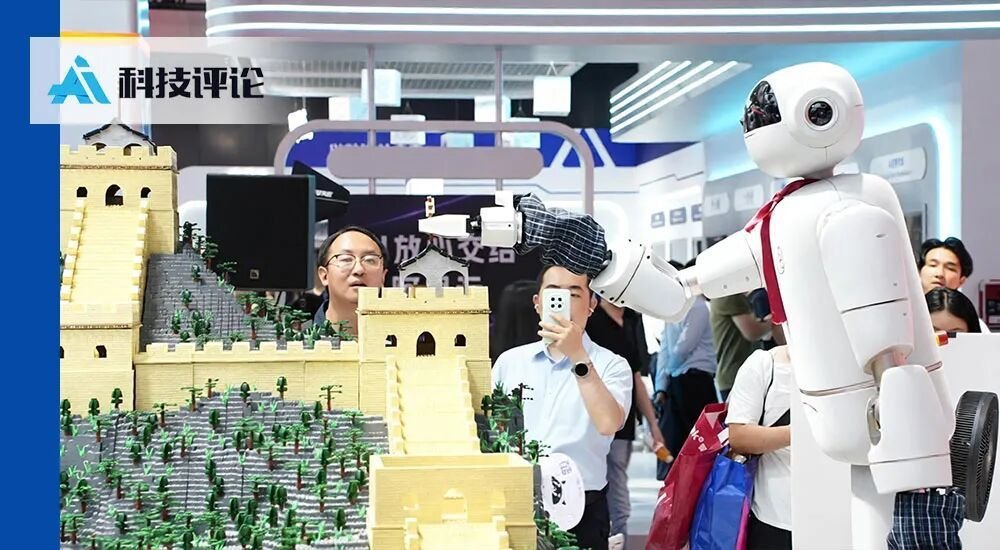
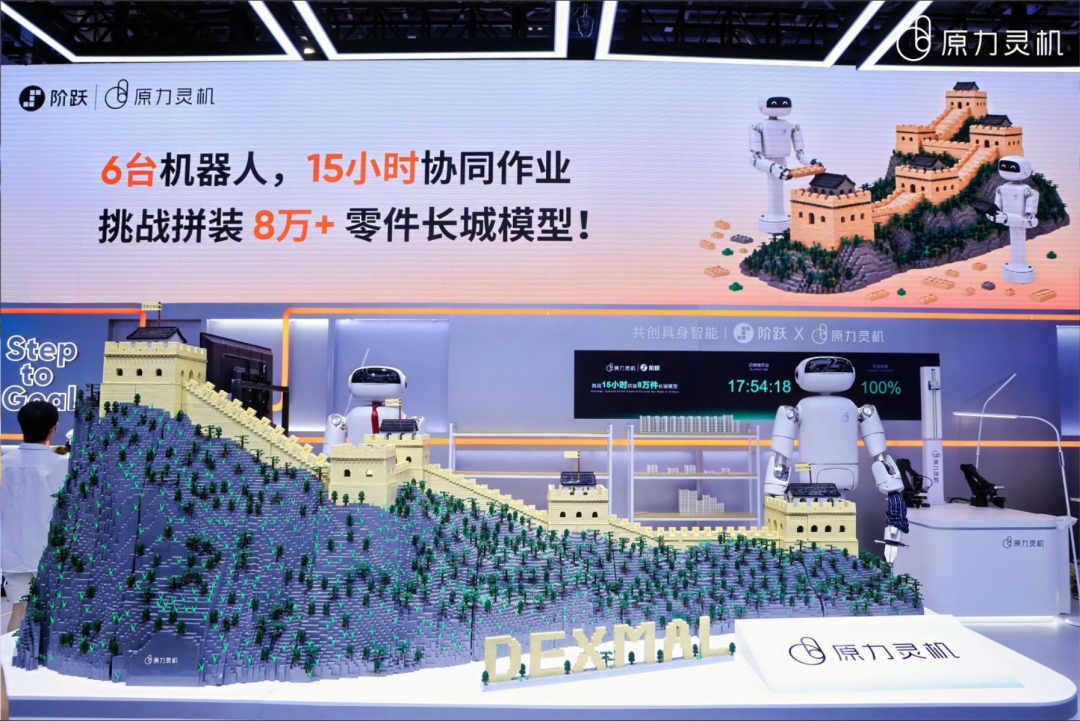
The smallest components measured under one centimetre wide. Assembly tolerance sat in the sub-millimetre range, beyond the natural tremor limit of a human hand. When deviations occurred, the robots sensed them autonomously and corrected in real time, repositioning and retrying without stopping the line.
Error recovery matters more than perfection
There is a counter-intuitive truth about industrial automation that the demonstration was designed to illustrate. Production lines do not need robots that never make mistakes. They need robots that recover from mistakes without halting. A few per cent scrap rate is acceptable. An hour of line stoppage is not.
Force Machina’s approach collects real failure scenario data at scale, then uses reinforcement learning to let the model learn from its own operational distribution. Training data comes primarily from real teleoperation, tens of thousands of hours collected monthly from a fleet of around 100 robots running simultaneously.
The company’s view on simulation is pragmatic. Running one simulation cycle inside a GPU can cost more in money and energy than doing it once for real. “Earth is the best simulator,” as co-founder Fan Haoqiang put it.
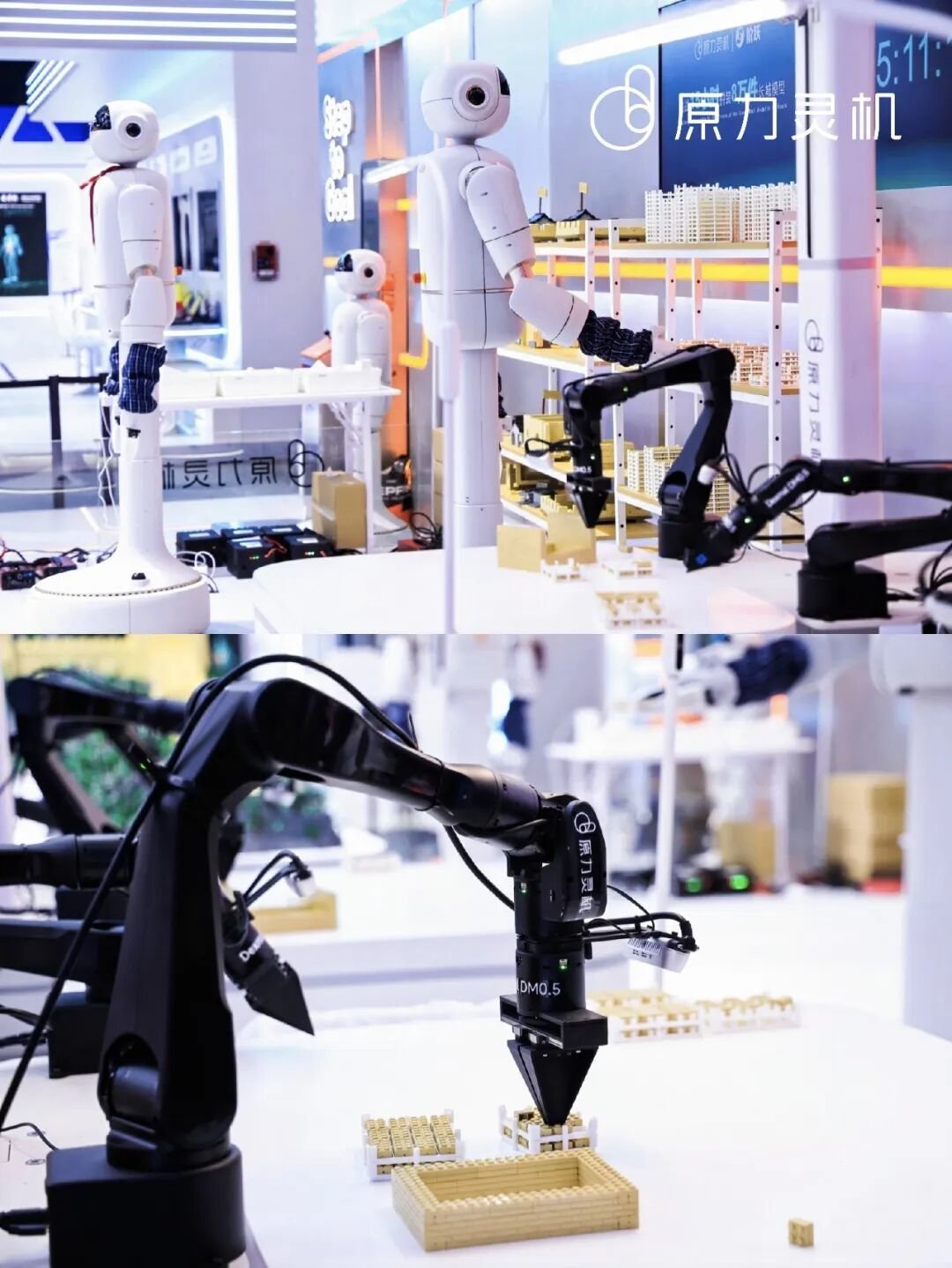
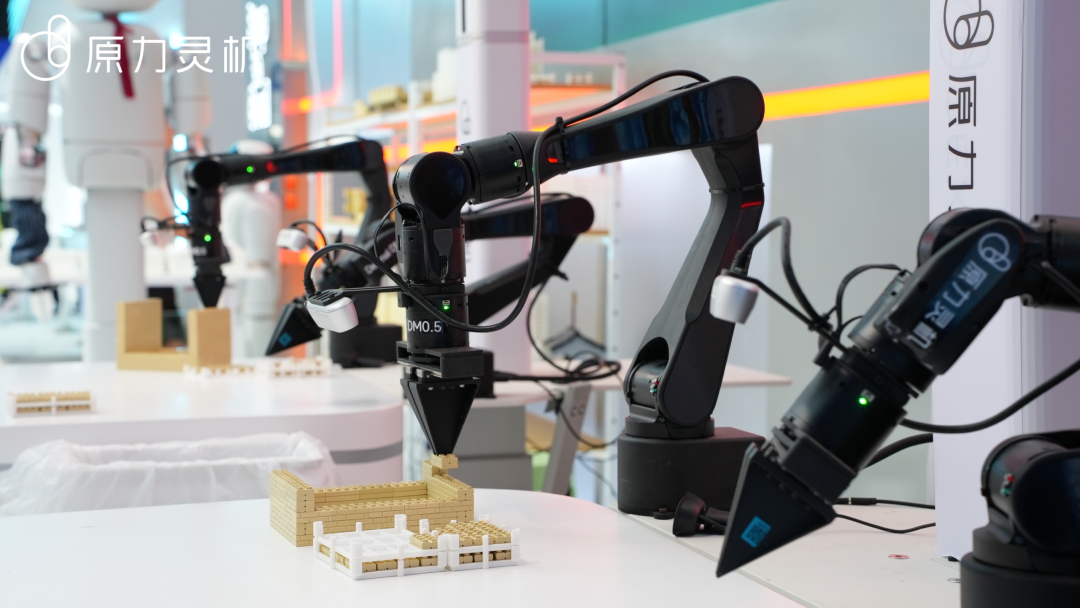
Six robots, one scheduling agent
All six machines were coordinated by a single agent powered by StepFun’s latest large language model. The agent monitored material shortages, component completion status and overall progress, decomposing goals into atomic skill calls for each robot. Desktop arms handled precision assembly. Wheeled Apex units managed feeding, removal and patrol.
That architecture maps directly onto factory layouts where one operator oversees several automation cells. Building a toy Great Wall and building a production line turn out to use the same logic.
Team and philosophy
Force Machina was founded by Tang Wenbin, co-founder and former CTO of Megvii, with a core team drawn entirely from Megvii’s central research institute and business units. The group traces its lineage back to ResNet-era computer vision research, carrying forward a reductionist engineering philosophy: identify what makes a technique work at its essence, then apply it.
On the VLA-versus-world-model debate, Force Machina declines to pick a side. Its term is “embodied native model”, meaning use whatever works. CNNs with the right config can do what Transformers do for certain vision problems. The company proved that once during the Transformer transition. The same logic applies here.
Data has been treated as a first-class citizen from day one, a carry-over from the Megvii era where “data, algorithm, system” was the founding trinity, with data ranked first. Algorithm determines whether ability can be extracted when data is sufficient. System determines whether that ability can be delivered in practice.
The product matrix is now complete. February brought DM0. July’s Action2026 developer conference released DM0.5, the Apex hardware platform, DFOL 2.0, MaaS services and DexOS in one session, covering model, body, dev tooling and cloud service. Open-source releases include Dexbotic 2.0, the DM0/DM0.5/DW0.5 model weights and training/inference code.
WAIC’s Great Wall is finished. The embodied AI journey is not. The companies that can push model, system and scene simultaneously toward their limits are the ones that will survive both the technology cycle and the industry cycle. Force Machina has positioned itself at exactly that intersection.
Editor’s note: This is an adapted translation of the original Leiphone report. It has been trimmed and restructured for readability for an international business audience.