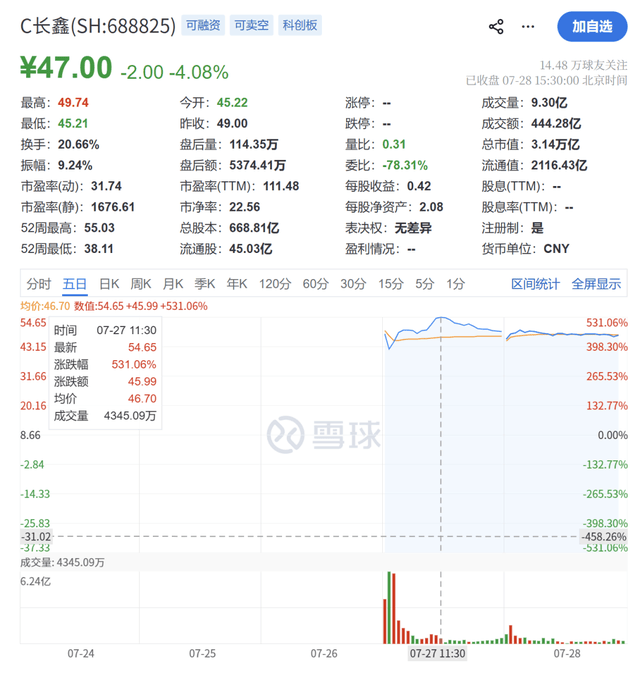
On 27 July 2026, a ten-year-old memory-chip maker from Anhui province briefly became the most valuable listed company in China. CXMT, the country’s only domestic supplier of mass-market DRAM, closed its first day of trading with a market capitalisation of 3.28 trillion yuan. The stock rose 465.82 per cent from its issue price.
The float delivered a paper profit of more than 1 trillion yuan to Hefei, the city that bankrolled CXMT through years of losses. It is the largest example yet of what Chinese investors call “delay gratification” industrial policy: a local government tolerates a decade of red ink in exchange for strategic control of a chokepoint technology.
From panel subsidies to memory chips
Anhui was not an obvious candidate for this role. In 2016 the province’s GDP was roughly 2.4 trillion yuan, ranking in the lower half of Chinese regions. But Hefei had already shown its appetite for patient capital when it raised billions of yuan for BOE, the display-panel giant. Local lore says the city paused metro construction to fund that bet.
The same playbook was applied to CXMT. The company absorbed hundreds of billions of yuan in state-backed funding while losses mounted, because DRAM is a classic bottleneck in China’s semiconductor supply chain. Samsung, SK Hynix and Micron together controlled more than 90 per cent of the global market before Beijing made domestic memory a national priority.
The article’s author, writing under the name Zhou Tian Industry Analysis, frames the outcome as a clash of cultures. Southwest China, the author argues, lives in the present: a shop assistant on 5,000 yuan a month might spend 10,000 yuan in a single night. Anhui, by contrast, saves, educates and reinvests. The province’s Taihu county, at the foot of the Dabie Mountains, sends more than ten students to Tsinghua or Peking University every year.
The Ant Group parallel
The author compares CXMT’s listing to the suspended Ant Group IPO of 2020, which was also targeting a valuation of around 3 trillion yuan. Ant represented consumer finance, instant gratification and household leverage. CXMT represents capital goods, delayed gratification and industrial upgrading.
The argument is that China’s regulatory crackdown on property, consumer credit and platform economics after 2020 was a deliberate shift of resources from debt-fuelled consumption to manufacturing. The comparison with Japan’s 1990 bubble burst is raised and rejected. Japan had no CXMT, no DeepSeek and no CATL or BYD waiting in the wings when its asset prices collapsed. China, the author contends, does.
That reading is optimistic, but the numbers are real. CXMT is now priced as if it can challenge the global memory oligopoly. Foreign investors will decide whether the 465 per cent debut surge is a vote of confidence or a sign of a domestic market starved of alternative semiconductor assets.
Editor’s note: This is an adapted translation of the original Sohu Tech report. It has been trimmed and restructured for readability for an international business audience.