Reuters reports that Apple is training a China-specific large language model with Alibaba, which supplies compute and localisation support. The model is trained independently for the China market rather than translated from an overseas version, a notable shift in Apple’s China AI strategy.
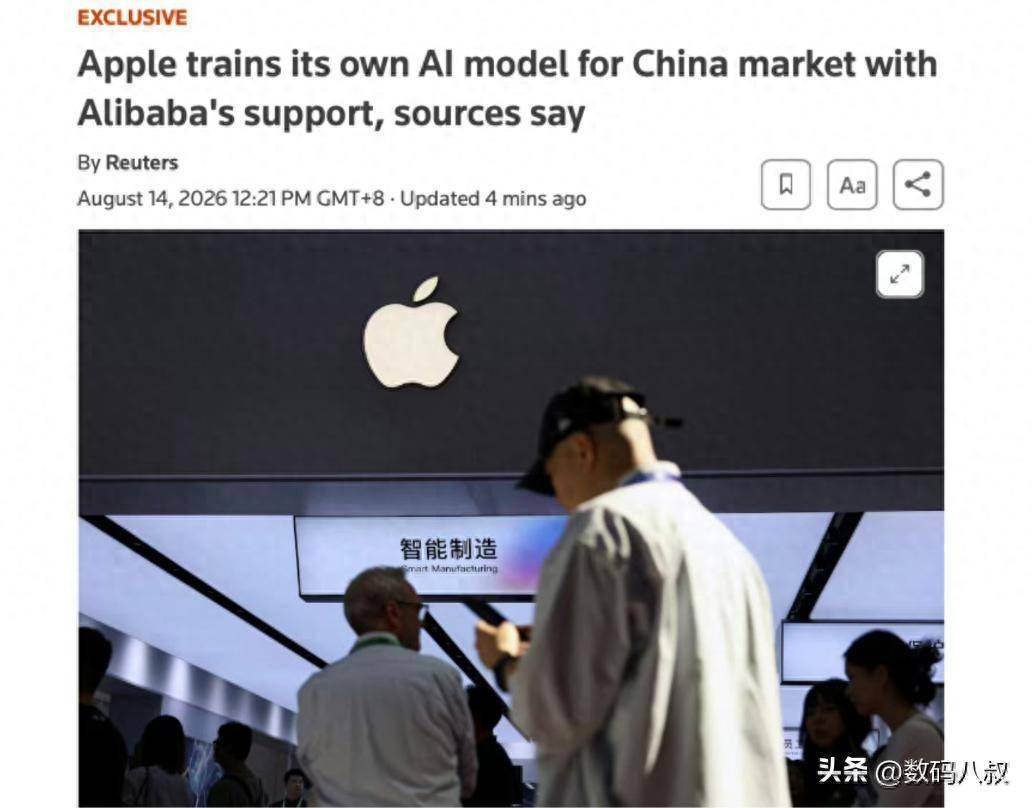
For years Apple Intelligence landed overseas while the China iPhone lagged, held back by weak Chinese-language understanding, compliance, data-security rules and network limits. Apple leaned on third-party plug-ins with a clear experience gap. Under the reported deal, Apple owns the core architecture and algorithms; Alibaba brings a mature training cluster, Qwen’s Chinese-scene experience and familiarity with local regulation.
If it lands, Apple would be one of the few foreign firms with an onshore model in China, a milestone given the filing and compliance bar. Hundreds of millions of China devices could unlock native Siri, notes, messages and mail features in a later iOS update, with on-device processing for privacy.
The report also signals how much the China market weighs. Even with external friction, global firms still bend to local rules to keep users, and Apple’s play is to adapt to China rather than force in a foreign product. Neither side has publicly confirmed the Reuters account.
Editor’s note: This is an adapted translation of the original Sohu report. It has been trimmed and restructured for readability for an international business audience.