On 28 September in Yichang, Hubei, the world’s first embodied robot built on a fully domestic electronic architecture was unveiled. The architecture, its backers argue, is the machine’s “intelligent nervous system”, and building it at home changes who controls the robot’s safety boundary.
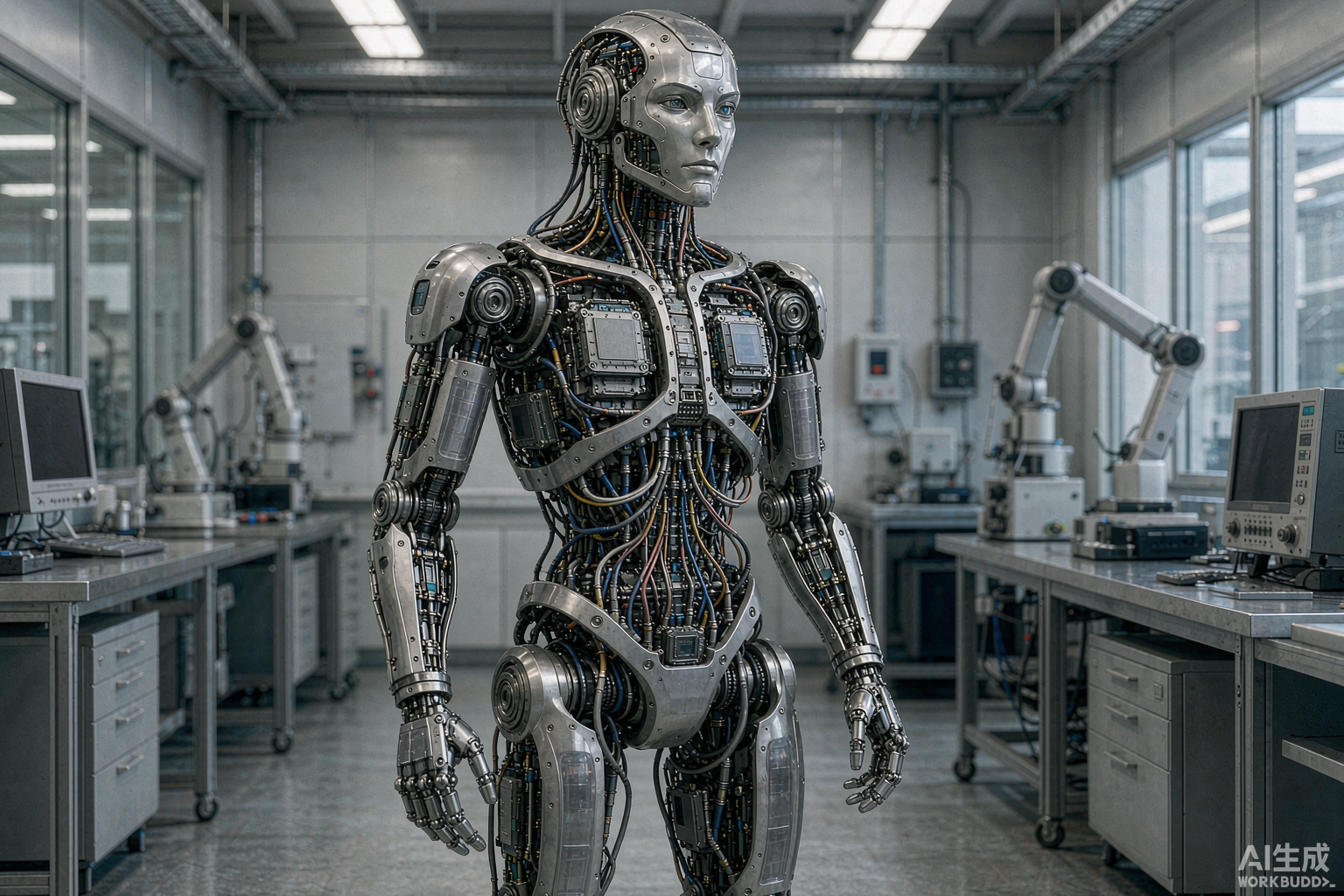
The electronic architecture spans operating system, network, tool software and the AI compute chip. Kyland Technology’s domestic stack rests on deterministic computing and deterministic networking, knitting together the Intewell industrial operating system (with international functional-safety certifications), the AUTBUS standard (a China-led IEC international standard for two-wire broadband industrial buses based on TSN), the MaVIEW agent tool software, and a home-grown AI processor. Control and AI inference run isolated yet fused, offering a complete substitute for foreign designs.
Why it beats Linux plus ROS
Against Linux/ROS and CAN/EtherCAT, the pitch is integration: one deterministic base carries both industrial protocols and AI inference, vision and control sync at millisecond scale, and low-level motion responds in microseconds, with endogenous security rebuilt from the ground up. Kyland notes the direction lines up with MIT’s recent physical-AI thesis, pushing intelligence from model output to deterministic physical action.
A national lab put it to the test. Under joint destruction, network attack and virus injection, a traditional-architecture robot failed its lines, shut down instantly or lost control. The Kyland machine passed and kept running, demonstrating real-time control, fast response, fault isolation and attack resistance.
From parts to an ecosystem
Kyland started the work in 2016. Intewell carried a national robot-OS programme; AUTBUS became a China-led IEC standard; MaVIEW shared a 2020 WAIC innovation award with Siemens’ MindSphere. In April 2026 Kyland joined UBTECH and the Beijing Humanoid Innovation Centre to build a domestic-architecture alliance, and in September it convened Tsinghua, AgiBot, LimX and Moore Threads into a broader coalition. The leap, the company says, runs from single-component breakthroughs to system fusion to a full industrial chain.
Editor’s note: This is an adapted translation of the original OFweek report. It has been trimmed and restructured for readability for an international business audience.