At the 2026 World Robot Conference in Beijing, Shenzhen’s AI2Robots brought AlphaBot 2 (Aibao), powered by its newest brain-like embodied model, to make one point: the robot should not just mount the stage, it should clock in for work.
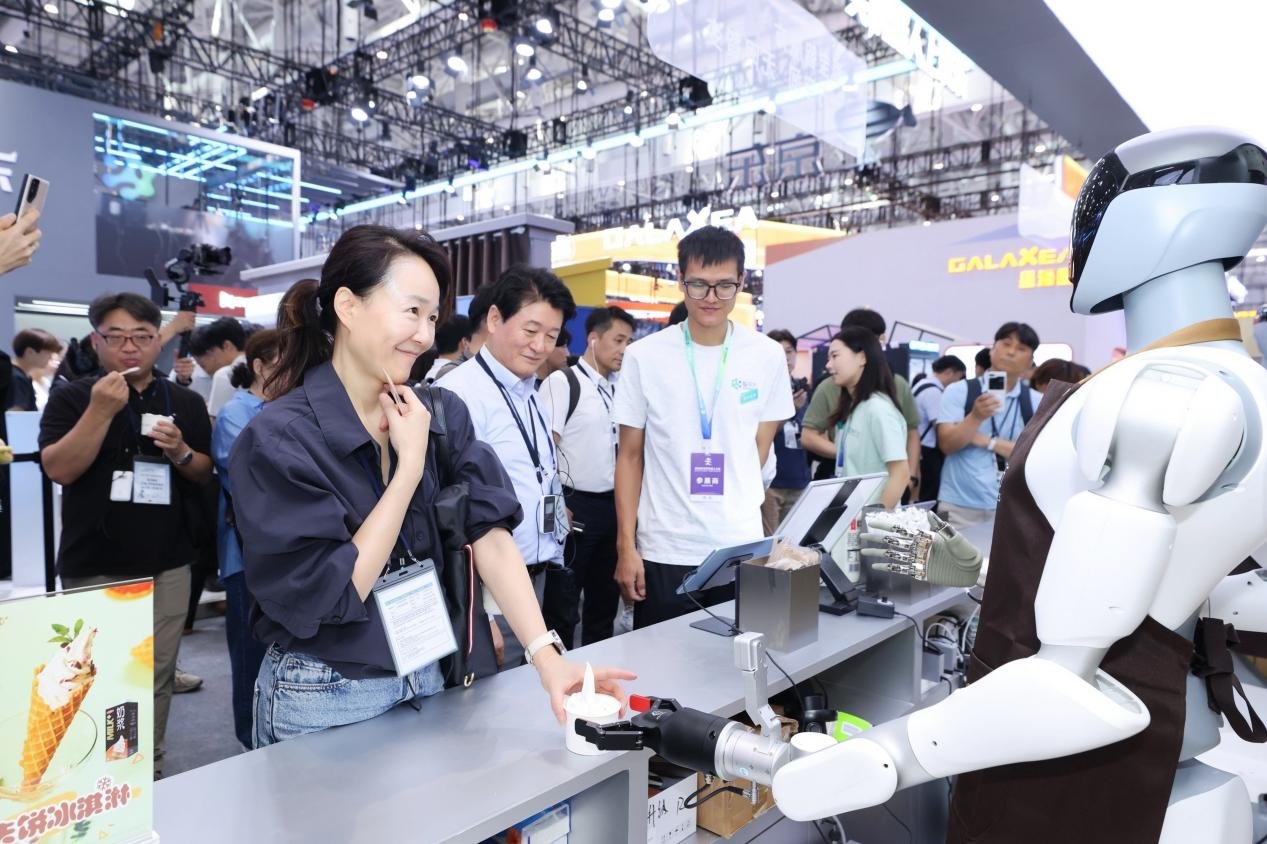
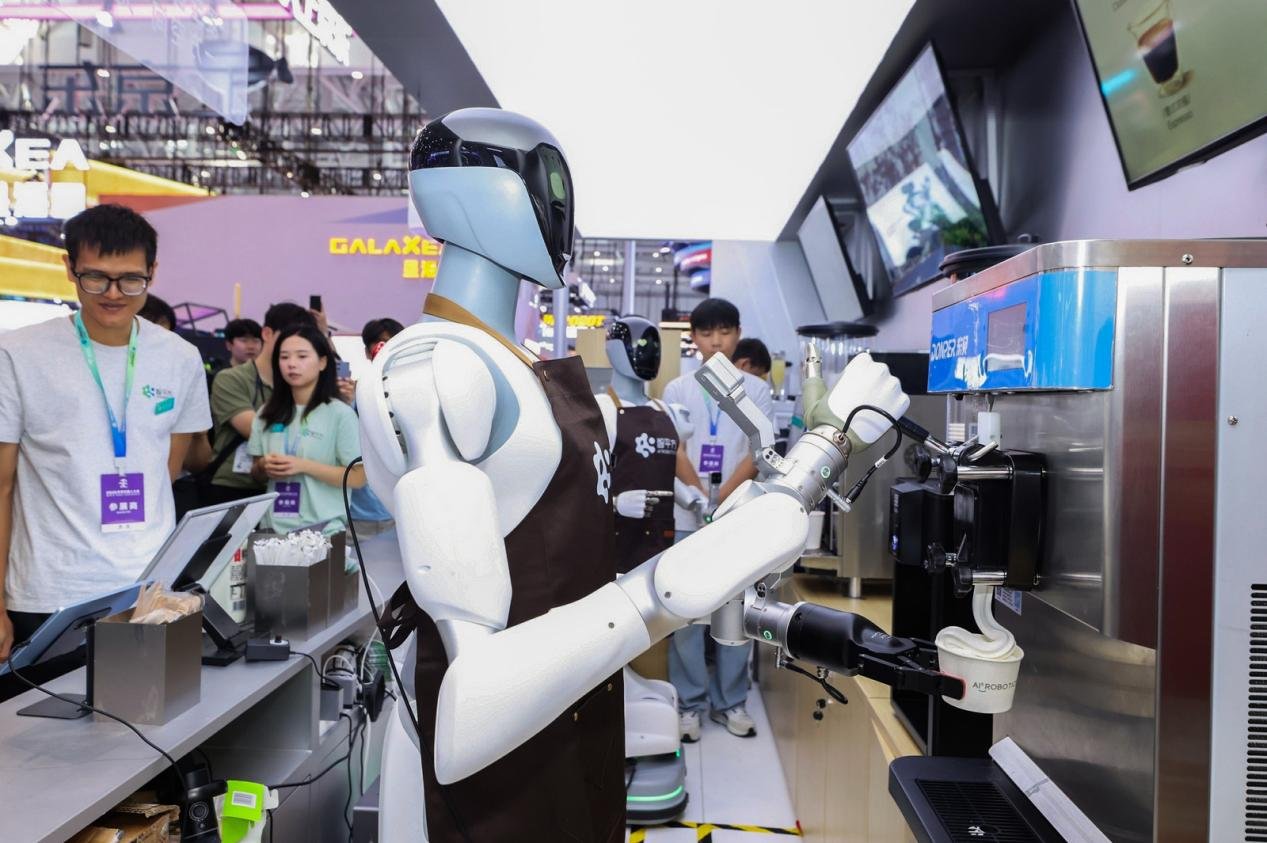
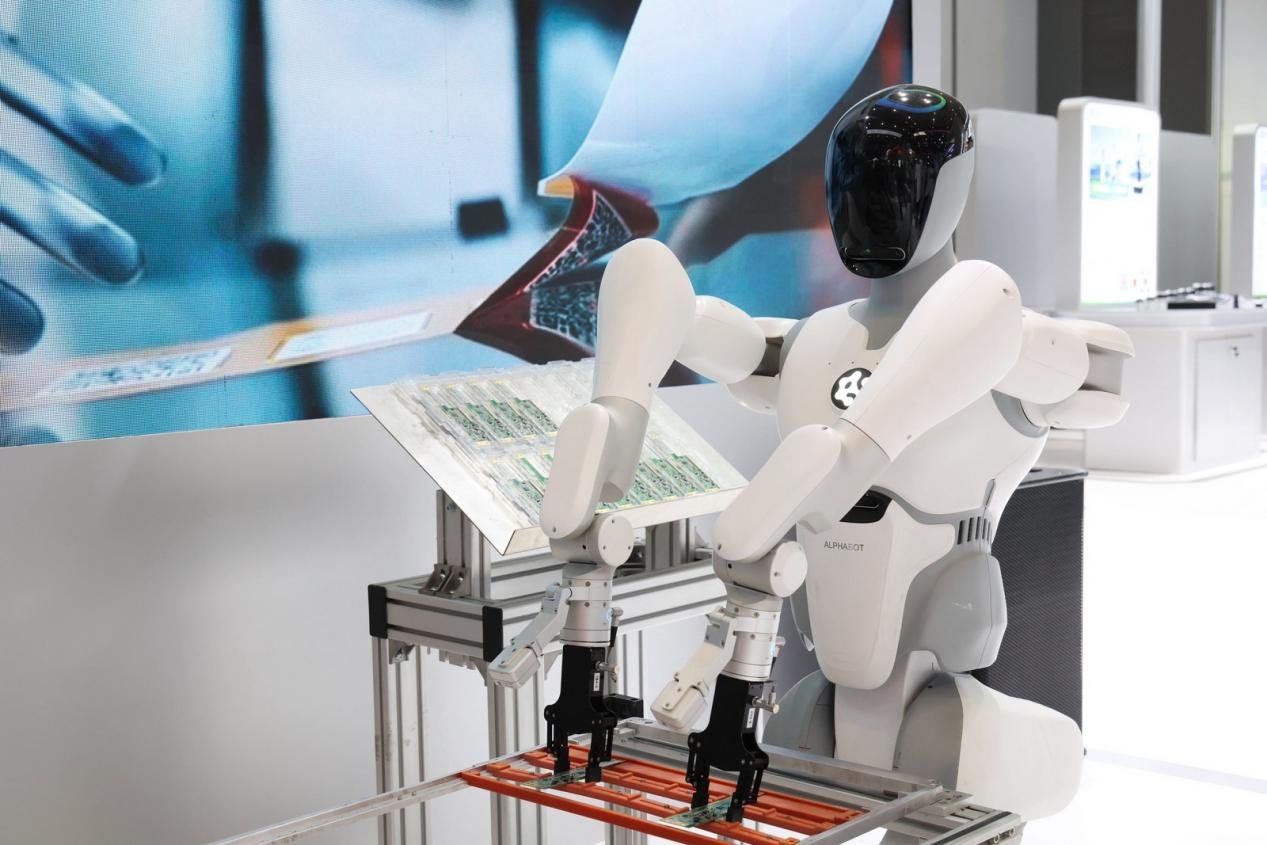
On the stand, Aibao makes coffee, ice cream, and cocktails as a genuine on-duty ‘all-round clerk’, picks PCB boards as a line ‘worker’, and staffs the event’s official gift shop. Off the stand, it already runs in real commercial space, industrial lines, and public services, from parks to airports. The signal of this WRC, the company argues, is that the contest has moved from ‘a few minutes on stage’ to ‘real shifts on the floor’.
That matters because demo minutes are scripted. Real work shifts: orders change, objects move, the environment interferes. A productive robot must enter the messy world and keep doing the task well. At the stand a visitor orders and Aibao identifies the cup, operates the machine, and pours, end to end. More telling, the ‘ZhiMagicCube’ service system behind it already runs routinely across more than ten provinces, making coffee, ice cream, matcha, beer, and cocktails. The stage is just a live replay of commercial reality.
In industry, Aibao handles PCB boards of varying model, size, and colour, even transparent or reflective trays, with two-arm coordinated loading and unloading. The same core skill, from drinks to factory, is the ability to read the environment, adapt to change, and execute steadily. In a joint lab with Peking University, the robot adds touch: it feels shape, weighs load, and senses material, giving it something closer to human ‘hand feel’.
A brain that behaves more like a brain
Driving it is AI2Robots’ brain-like embodied model NeuroVLA, which borrows the brain’s cortex-cerebellum-spinal layered coordination so the robot can plan, learn online, react in real time, and reflex for safety. Founder and CEO Guo Yandong, formerly XPeng’s chief scientist, says the aim is to convert the brain’s energy-efficient mechanisms into architecture, giving robots intuition and scene memory like a person.
In April the firm opened AlphaBrain Platform, a data-training-model-evaluation link it shares with the industry. Across semiconductor display, car manufacturing, biotech, and retail, Aibao has already landed and been reordered. The flywheel is simple: a generalising model earns more scenarios, and more scenarios push the model further ahead. For AI2Robots, the city is the bigger showroom, and the daily grind is the real arena.
Editor’s note: This is an adapted translation of the original Shenzhen News report. It has been trimmed and restructured for readability for an international business audience.