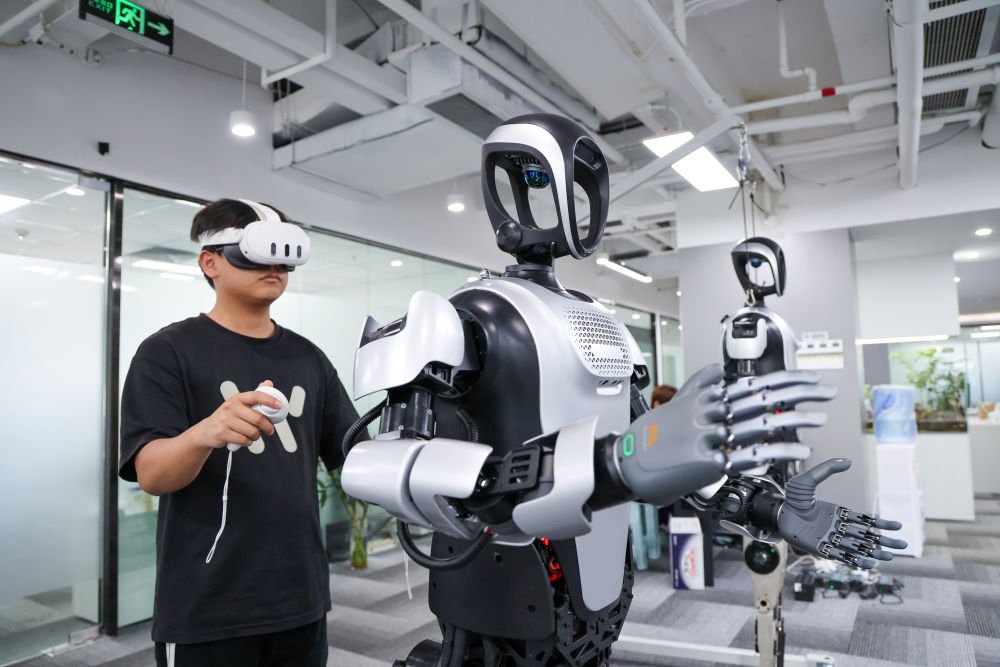
China now fields more than 400 whole-body humanoid models, over half the global total. In the first half of 2026 alone, 116,000 new companies registered in the humanoid space, up 9.5 per cent year on year. Nowhere is the momentum sharper than in Guangdong, where ten technically distinct humanoid makers have converged into what local observers call the ‘Ten Steeds’.
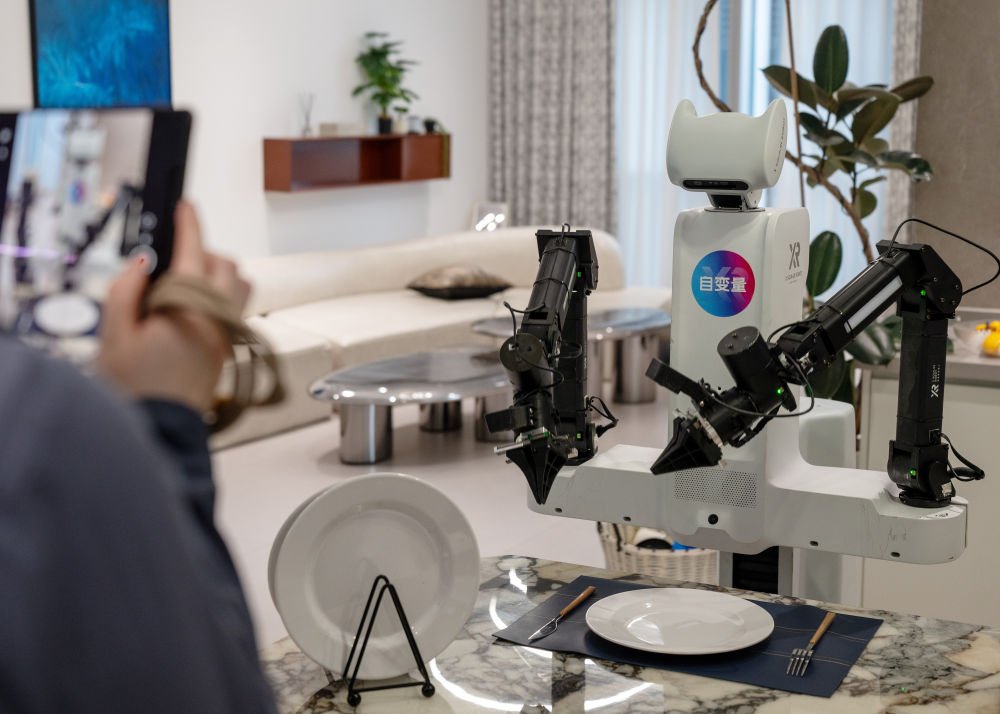
The Ten Steeds
The ten, all rooted in the Greater Bay Area, are LimX Dynamics, Zhipingfang (AutoPro), AI2Robots (Zhiping), Leju, Zhongqing, Midea, XPeng, Honor, UBTECH, and Dobot. They pull in different directions but share one race: moving humanoid robots from labs to real work.
LimX Dynamics bets on fusing ‘cerebellum’ and ‘brain’ rather than either alone, the path its founder Zhang Wei calls the key to physical-world AI. Its full-size humanoid and TRON bipedal movers have already taken thousands of orders, more than half for export, across research, commercial service, and all-terrain inspection.
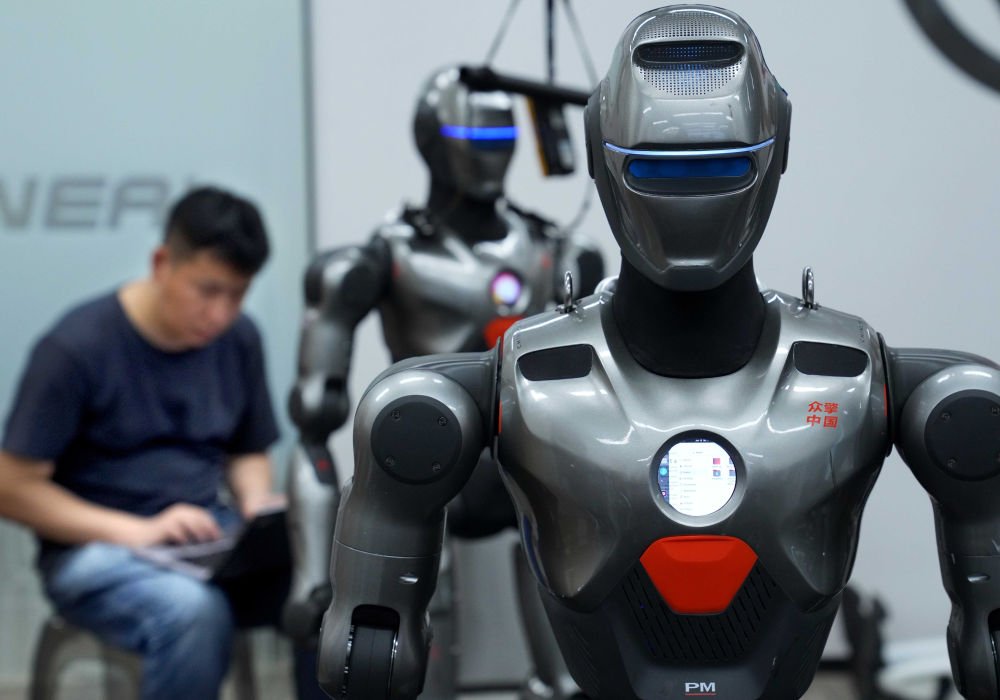
Zhipingfang (AutoPro) builds the embodied large model, the robot’s ‘AI brain’, on a self-built data factory that has accumulated tens of thousands of hours of multimodal embodied data. AI2Robots reached Shenzhen unicorn status within a year of founding on its NeuroVLA brain-like model with active perception, self-recovery, and temporal memory.
On the body side, Leju’s ‘Kuafu’ full-size humanoid runs 95 per cent localised components and has appeared at the National Games torch relay and the Asian Winter Games. Zhongqing made its name with straight-knee walking and a front flip, then launched a global humanoid fight league to force faster iteration.
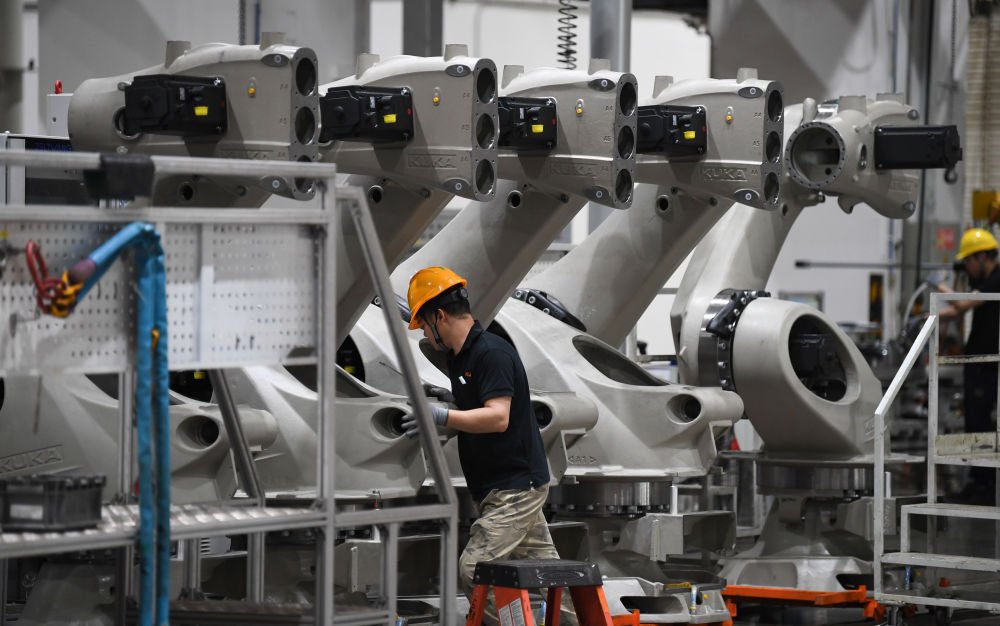
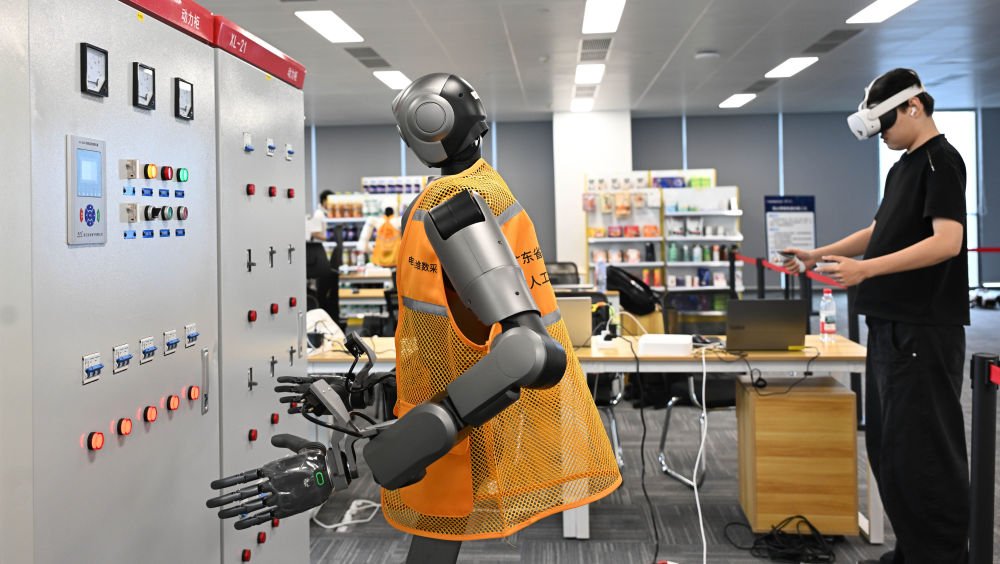
Cross-industry entrants bring manufacturing DNA. Midea’s ‘MeiLuo’ industrial series has entered several production bases and fastened more than 100,000 screws as a line ‘worker’; its ‘MeiLa X2’ handles stores and guidance. XPeng reuses its auto mass-production playbook, supply chain, and quality control on robots. Honor’s humanoid won a Beijing half-marathon on the back of liquid cooling and hinge tech from consumer electronics.
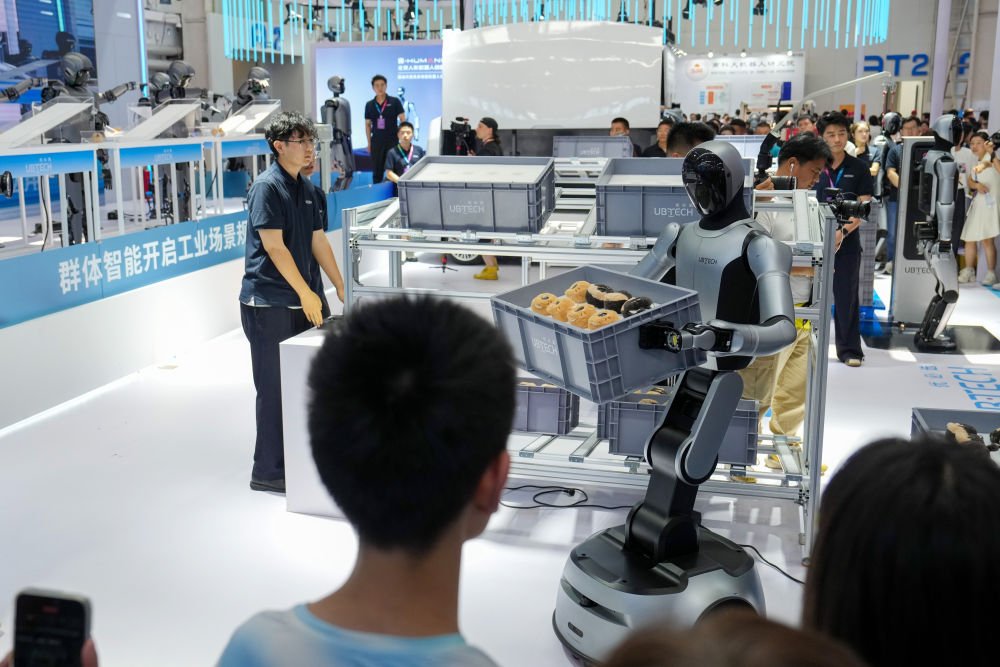
UBTECH listed in Hong Kong in 2023; its Walker series trains at BYD and Geely and serves government and education. Dobot, also Hong Kong-listed and born from desktop collaborative arms, now sells to more than 100 countries and is climbing toward a full-scene humanoid platform.
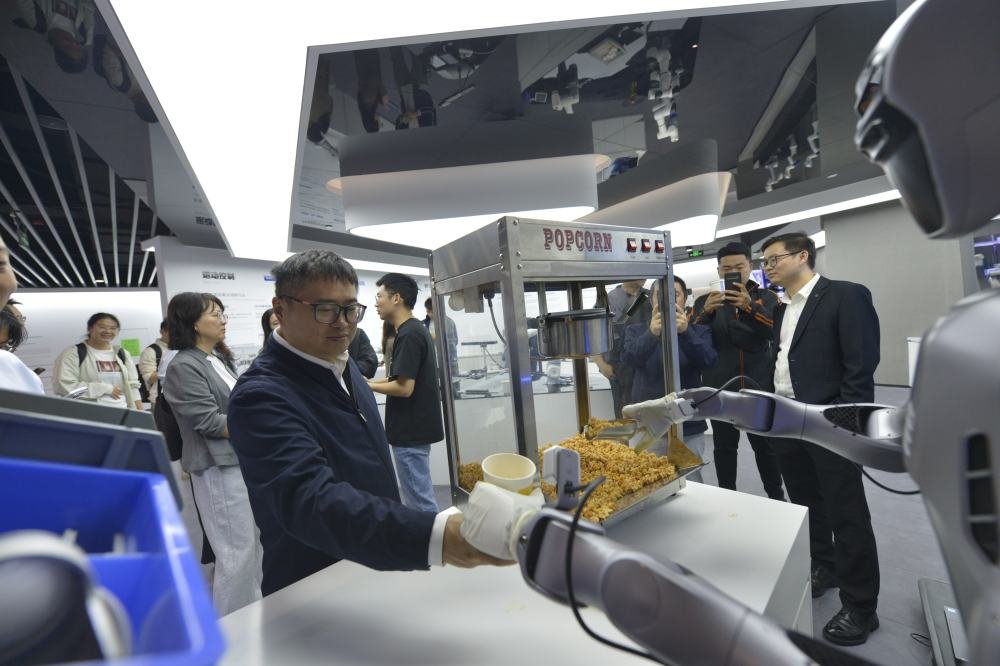
Why Guangdong, why now
The cluster is no accident. Precision manufacturers like Lens Technology and Lingyi have ported micron-level craft onto robots, cracking the ‘easy to research, hard to mass-produce’ pain. A local component supply system now covers sensing, computing, and actuation: Horizon’s D-Robotics chips, Orbbec 3D vision, RoboSense lidar, and PaXini tactile sensors. A Shenzhen Robotics Association study says the city’s ’15-minute industry circle’ compresses iteration from months to weeks or days.
A 23-square-kilometre ‘Embodied Intelligence Port’ on Shenzhen’s western coast already gathers more than 130 upstream and downstream firms. The direction of travel is clear: software and hardware converging, data flying the loop, and a ‘legion effect’ pushing Chinese embodied intelligence up the global value chain.
More images
Editor’s note: This is an adapted translation of the original Shenzhen News report. It has been trimmed and restructured for readability for an international business audience.