Unitree’s listing lifted attention on the robot industry, and 2026 is widely called the year of humanoid mass production. Yet behind the conference glow, most industrial robots are still ‘interns’ on the floor, not reliable ‘full staff’. Deployment sits at single-point tests and showcase pilots, moving boxes, loading parts, and simple patrols, while full-line replacement stays rare.
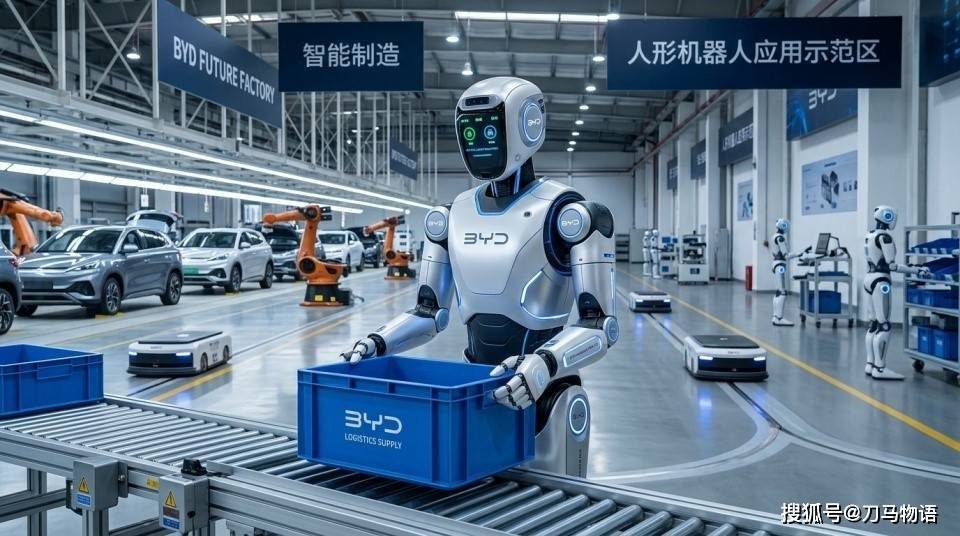
The real gap is not walking
A common mistake is to equate mature walking, navigation, and obstacle avoidance with mature industrial skill. Those basics are solved. Factory value is precise, stable, repeated work: grasping, screwing, assembling, sorting, and handling flexible materials. That is the hard shortfall.
Labs are clean and controllable; real factories are noisy and chaotic, with metal glare, dust, vibration, size drift, and shifting light. A model at near-100 per cent success in simulation can fall to half in the plant, and any small offset breaks it. Industry demands millimetre tolerance and zero failure. One missed beat stops the line.
Cost is the wall
The awkward truth: scale rose but cost did not fall. The mainstream industrial humanoid still carries a bill of materials near 400,000 yuan, double the target price for scale. Payback stretches past three years while most makers depreciate equipment over two to three. Three core parts, the planetary roller screw, the harmonic reducer, and the six-axis force sensor, make up 70 per cent of joint cost, and 70 per cent of the global share sits with Japanese and German suppliers. No local substitution, no cost dividend.
Factories are highly customised and iterate fast, switching products monthly, and robots must link deeply with MES, PLC, safety, and warehouse systems. Maintenance is the quiet blocker: today’s technician cannot tune algorithms or fix smart modules, and vendor engineers are too few to cover the country. A fault can mean a cross-city visit and days of downtime. Without a maintenance ecosystem, the whole push is built on air. Robots enter factories fast. The talent, service, and upkeep to keep them there do not.
Editor’s note: This is an adapted translation of the original Sohu report. It has been trimmed and restructured for readability for an international business audience.