Shenzhen has switched on China’s first “five-party co-operation” autonomous-delivery framework, a model that splits responsibility for self-driving logistics across technology, assets, operations, commerce and regulation. The pilot went live in Longgang district, with Neolix (Xinshidai) brought in as the core technology provider.
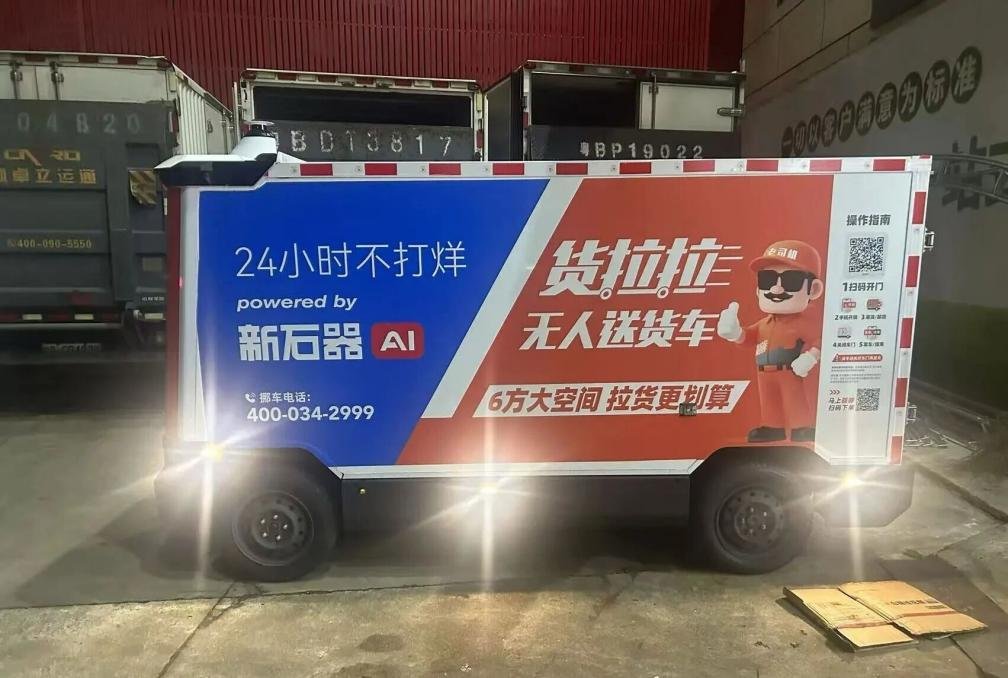
The scheme upgrades the city’s self-driving sector from single-vendor testing to ecosystem-level operation. Under the “4123” plan Shenzhen laid out in 2025, the goal was to scale functional unmanned vehicles from the hundreds to the thousands, and the five-party model turns that plan into five accountable actors: the technology party (Neolix) supplies vehicles and algorithms and carries primary safety responsibility; the asset party (DST) owns the fleet; the commerce party (Huolala) matches orders; the operations party (Shenzhen Eastern Bus) runs safety control and full-chain maintenance; and the regulator (the local government) monitors vehicle data in real time.
Why a five-party model
The design fixes a known weakness in autonomous delivery: scattered operations, fragmented oversight and an ecosystem too broken to reach small merchants. Previous services targeted large logistics firms; smaller businesses lacked the means to run and maintain vehicles. The new framework pushes maintenance and safety control down to the merchant level, so the technology dividend reaches beyond the headline accounts.
Safety is built into the contract. The manufacturer bears primary responsibility under a “who builds it, who backs it” chain, regulators get live monitoring instead of after-the-fact audits, and grid safety officers must reach any incident site within 15 minutes. Night vehicles carry reflective markings and a complaint hotline. The pilot also bans destructive low-price competition and steers demand toward off-peak night hours to rebalance urban freight.
Longgang was chosen first because it already holds the city’s largest functional-unmanned-vehicle fleet and has night-operation experience. Night roads are quieter and simpler, a safe window to prove the technology and the multi-party workflow before the model extends to daytime and, eventually, the whole city.


Editor’s note: This is an adapted translation of the original Sznews (Shenzhen News) report. It has been trimmed and restructured for readability for an international business audience.
Translated and adapted from Sznews (Shenzhen News) (https://www.sznews.com/news/content/2026-08/06/content_32142157.htm).