XiYuan Zhisuan (Shanghai) Technology has been registered, with corporate records showing it is wholly owned by Zhiyuan Innovation (Shanghai) Technology, the core entity behind Agibot Robotics. Its stated business scope covers AI theory and algorithm software, AI foundational software, AI application software and general AI application systems. No data-centre operations category has appeared yet.
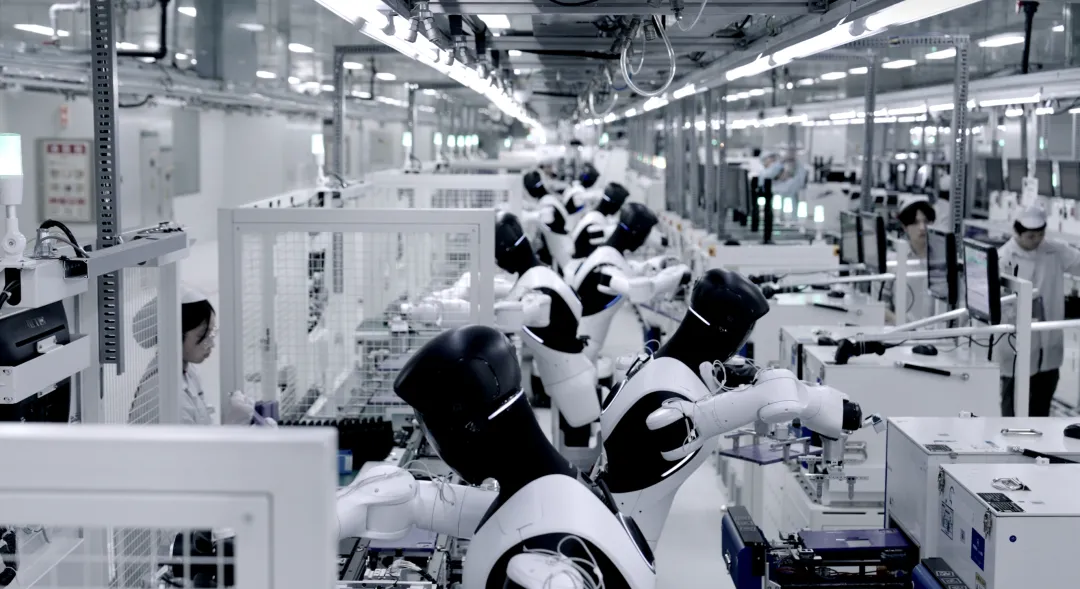
Agibot itself carries a strong Huawei imprint. Chairman Deng Taihua is a former Huawei vice president, and co-founder and CTO Peng Zhihui, better known online as ZhiHuiJun, is a former Huawei “genius youth” recruit. At least six of the nine founding partners came from Huawei. The company shipped more than 5,100 general-purpose humanoid robots in 2025, a volume it calls the world’s largest, and opened its Hong Kong IPO process on 24 July after taking control of the A-share firm Shangwei Advanced Materials.
Agibot prefers to split its business into separately financed subsidiaries, a map often summarised as “1 plus 5 plus N”: dexterous hands, data, leasing, cleaning and quadrupeds each sit in their own company. XiYuan Zhisuan is the newly added compute member.
What “intelligent computing” actually means here
Intelligent computing is compute built for AI tasks. The official definition describes an intelligent-computing centre as an AI compute architecture that supplies the compute, data and algorithm services AI applications need. The difference from a general data centre is the chip: what runs on top is GPU-backed large-model training and inference, not ordinary web pages and databases.
The rush of companies with “Zhisuan” in their names is recent, and Agibot is only one of them. On 1 September, Xiamen ITG Zhisuan Technology was registered with RMB 50 million in capital, 95 per cent held by the A-share listed Xiamen ITG. Guangzhou and other cities have since registered new entities as well.
The demand behind the registrations
National daily token calls crossed 140 trillion in March, more than a thousandfold above early 2024, and beyond training, inference is now driving the real compute squeeze. On the policy side, after the “East Data West Computing” programme, the compute network entered the national infrastructure list. local governments have published intelligent-computing scale targets, and listed companies are taking infrastructure orders and riding capital-market expectations.
For Agibot specifically, when its Chengdu training centre opened in May it was still hooked to an external intelligent-computing centre. Once humanoids rolled off the line in volume, training demand ballooned. Rather than rent indefinitely, it made sense to stand up its own entity. Compute is shifting from a public resource into a corporate asset, and that is the common thread behind this wave of new companies.
The noise in the signal
Not every “Zhisuan” company is really about AI compute. National intelligent-computing-centre utilisation sits at roughly 71 per cent, so capacity is not tight. Hailan Zhisuan (Guangzhou) registered a business scope of new materials and energy storage, with no link to AI compute. A name that says Zhisuan is not proof of Zhisuan business. each case needs its operating scope examined. XiYuan Zhisuan has so far registered only software categories. what it will actually do depends on future capital increases and orders.
Editor’s note: This is an adapted translation of the original OFweek Robotics report. It has been trimmed and restructured for readability for an international business audience. The full original (in Chinese) is at https://robot.ofweek.com/2026-09/ART-898890-12003-30702170.html.
Translated and adapted from OFweek Robotics (https://robot.ofweek.com/2026-09/ART-898890-12003-30702170.html).