At the Aggregated Intelligence Industry Conference on 9 September, Jin Bing, former deputy director of the State Post Bureau’s policy office, cited a striking figure: China’s humanoid exports and manufacturing account for 97 per cent of the global total.
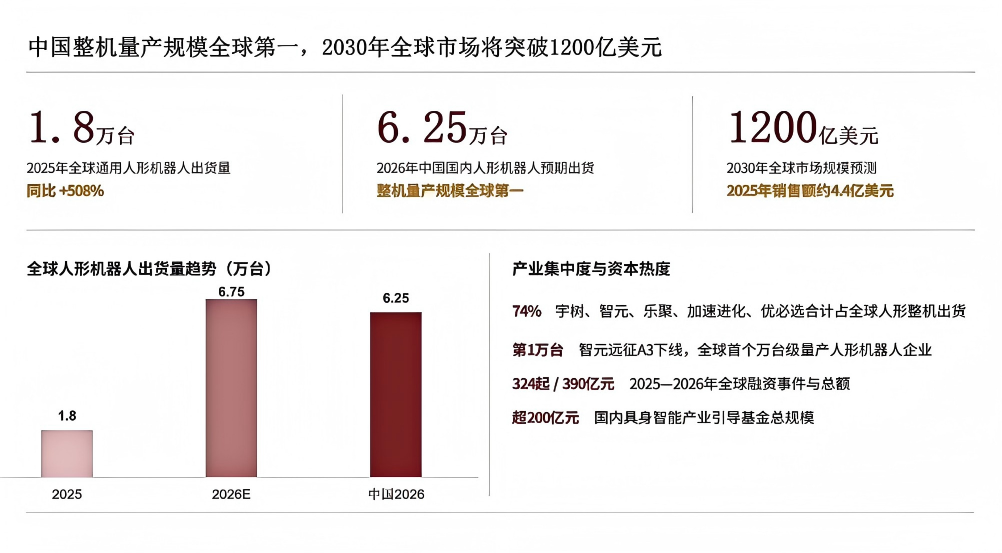
Just years ago the industry proved it could build the thing at all, that it could walk, run, jump and that a dexterous hand could grip. By 2026 the question has changed. Jin’s slide showed about 18,000 general humanoids shipped worldwide in 2025, with China’s domestic shipments forecast at 62,500 in 2026. Ten-thousand-unit lines now exist, and leading firms are moving from hundreds to thousands of deliveries.
The mass-production wall is being crossed
Jin calls 2025 to 2026 the mass-production years and 2027 to 2028 the scale-penetration years. Tax data backs it: in the first five months of 2026, embodied-intelligence firms’ sales rose 22.4 per cent, with robot body and assembly makers up 30.1 per cent, AI algorithm and software integrators up 24.5 per cent, and system integrators and application firms up 27.9 per cent. Upstream, makers of motors, batteries, reducers, screws, sensors and structures, long serving cars, 3C and automation, are extending into humanoids, and China’s accumulated manufacturing base is absorbing the new industry fast.
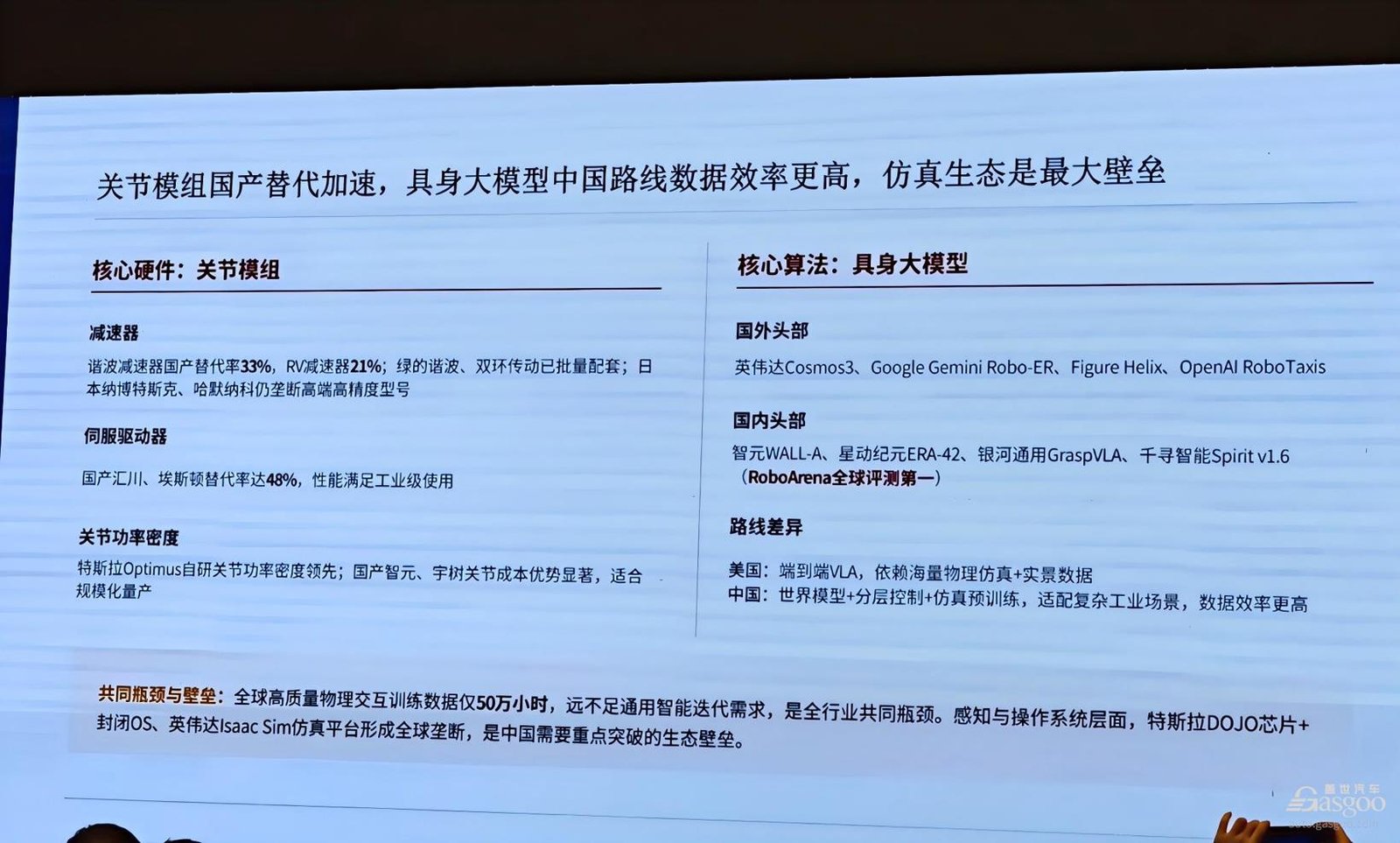
Jin sums China’s edge as whole-machine production, full supply chain and scenario validation. Some domestic five-finger hands now match overseas rivals on degrees of freedom, at about one-third the cost. The path is familiar from consumer electronics and EVs: scale first, then cost down via supply chain and efficiency, then more volume. But humanoids differ in one way. Building more does not automatically create more demand.
From performing to working
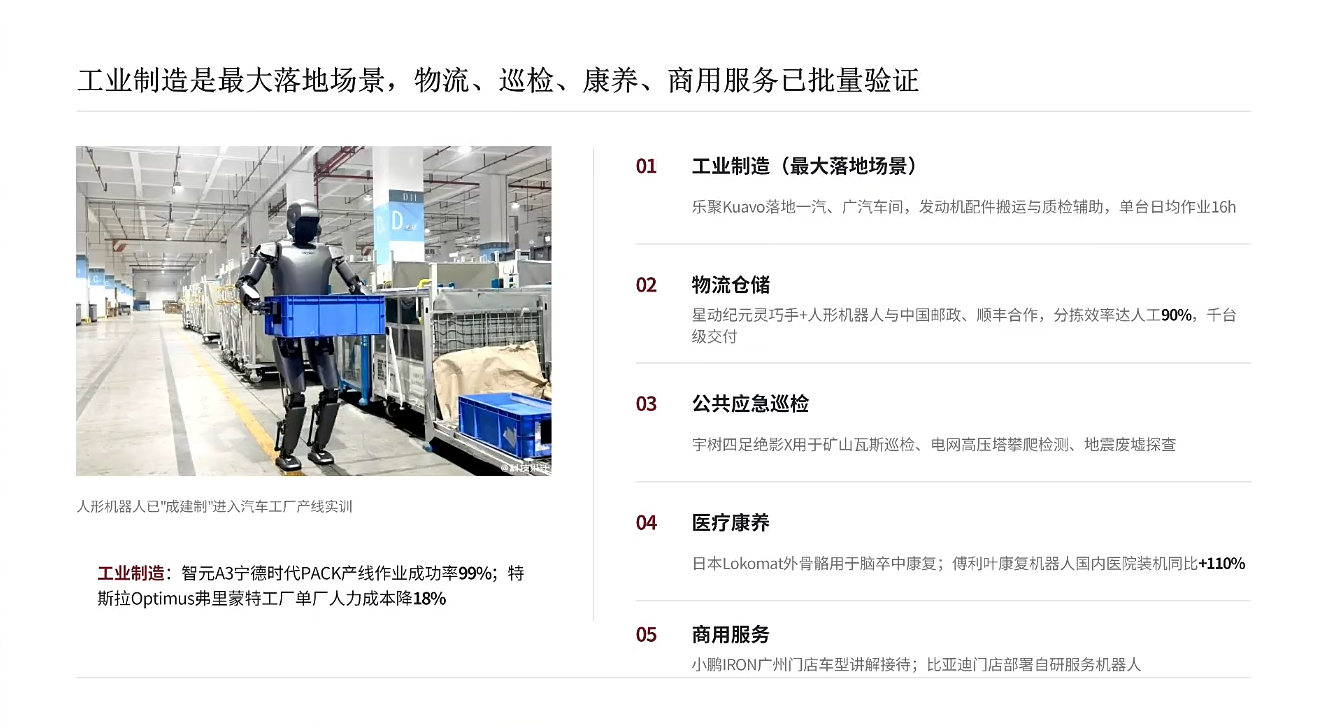
In June, the Ministry of Industry and Information Technology and the State-owned Assets Supervision Commission launched the 2026 humanoid and embodied-intelligence real-scenario training programme, pushing robots from demos into real production and living as work mode, with a goal of over 100 high-value scenarios and ten-thousand-unit landing ability by year end. Performance and work are different standards. Buyers ask how long it runs a day, how often it succeeds after 10,000 repeats, whether it still grabs when the item shifts centimetres, how long a station change takes to retrain, who fixes it, and whether the maths beats labour or legacy automation.
Those questions are not fully answered. Entertainment, education and data capture still take a large share of shipments, while smart manufacturing and warehousing grow but are not yet dominant. Unitree founder Wang Xingxing has said a robot trained in a fixed scene can score high, but change the environment or object and it can drop fast. The hard part is not doing one task, but doing it in a scene it has never seen. That is also the gap from traditional automation, where a fixed arm optimises one routine.
Scenes must become usable data
Solving generalisation loops back to data. China’s 97 per cent share is a manufacturing fact, not a demand fact. The next contest is who turns real scenarios into the training data that makes robots keep working after they leave the stage.
More images from the source report:
Editor’s note: This is an adapted translation of the original Gasgoo report. It has been trimmed and restructured for readability for an international business audience.
Translated and adapted from Gasgoo (https://www.gasgoo.com/apps/50640d4b55d5cba175fb84f15d679f19/robot/news/70471573-%E9%80%A0%E4%BA%86%E5%85%A8%E7%90%8397-%E7%9A%84%E4%BA%BA%E5%BD%A2%E6%9C%BA%E5%99%A8%E4%BA%BA-%E4%B8%AD%E5%9B%BD%E8%BF%98%E5%B7%AE%E4%BB%80%E4%B9%88/).