Guangdong Tianji Intelligent Systems recently closed a RMB 1 billion Series B and B-plus round at a post-money valuation near RMB 10 billion. Hillhouse Venture and Meituan’s strategic arm co-led, with Tencent, Gaorong Venture, Photosynthesis Venture and GGV Capital following.
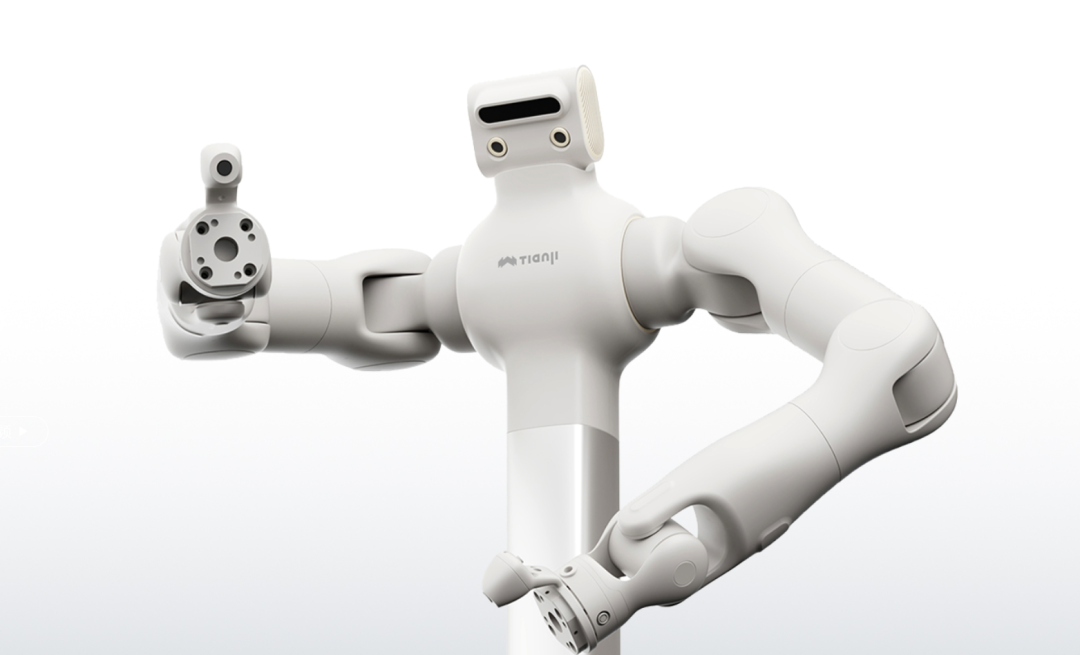
Tianji does not make just one kind of robot. Its products span collaborative robots, horizontal and vertical articulated robots and humanoids, plus a self-developed Fusion control system and underlying capabilities like force-controlled dual arms and joint torque sensing. In plain terms, it wants to sell both the robot’s body and its nerves and brain.
So the RMB 1 billion is interesting less for the valuation and more for a harder question: where will the money go, and who turns this expansion into their own revenue?
The order book looks sexy, but profitability needs a second pass
Tianji’s headline attraction is its order book. Multiple media citing company information say that in 2025 it delivered more than 2,000 force-controlled humanoid dual-arm units in roughly four months, and that by the first quarter of 2026 its backlog exceeded 10,000 units, covering 45 humanoid OEMs and embodied-AI firms worldwide.
Ten thousand sounds like a move from lab project to mass production. But the robot industry manufactures illusions around orders more than any other number, because four different figures sit in between: order, delivery, revenue and profit.
A customer signing 10,000 units does not mean 10,000 ship. Delivery does not mean cash arrives. Recognised revenue does not mean profit. Robotics is a heavy-delivery business. If a buyer takes 100 units but each needs software tweaks, parameter changes, re-commissioning and even on-site engineers, selling more can raise labour cost. What decides profitability is not sales volume but standardisation.
If a robot replicates like a car, building 100 today and 1,000 tomorrow uses nearly the same process, so scale lowers cost. If every customer is a new project, the firm becomes a high-tech engineering shop: big revenue, big headcount, thin margin. Tianji’s real exam is how many of those 10,000 orders are copyable standard products, and what survives per unit after delivery.
Some whole-machine makers already make money
The industry has long been good at talking financing and technology and bad at answering for profit. That is changing. Unitree is a case in point: 2025 revenue about RMB 1.699 billion and net profit about RMB 278 million, against under RMB 100 million net profit in 2024 and a loss in 2023. Whole-machine robotics is not inherently a loss-making business.
But the contrast is sharp. Ubtech posted 2025 revenue around RMB 2 billion, with full-size embodied humanoid revenue above RMB 800 million, and still lost close to RMB 800 million for the year. One firm earns nearly RMB 300 million on RMB 1.7 billion in revenue. another loses nearly RMB 800 million on RMB 2 billion. Judging a robot company by units sold is no longer enough. The question is whether each extra unit adds profit or adds loss.
The steadier money is in “selling shovels”
Upstream components have a simpler logic. A robot taken apart is a long procurement list: motors, reducers, encoders, torque sensors, controllers, drives, bearings, cables, structures. Every time a robot maker scales, the upstream must supply. So a real opportunity is not digging for gold yourself but selling the shovel. Inovance is not a pure robot firm but has long made servos, controllers and drives for industrial automation. 2025 revenue passed RMB 45 billion with net profit above RMB 5 billion. Ruidi Intelligent Drive posted 2025 revenue about RMB 646 million and net profit about RMB 105 million, with harmonic-reducer revenue up close to 60 per cent.
The most valuable parts are those hard to swap once in the supply chain: high-precision torque sensors, encoders, reducers, joint modules. Switching suppliers is not changing a screw. it can mean re-testing, re-calibrating, re-certifying. Once certified, a single order can become years of business.
The ROI logic that actually closes deals
An easier business than building robots is helping customers cut headcount. A factory owner rarely cares about degrees of freedom or whether the machine can dance. He cares about annual savings. If a process needs six people at RMB 100,000 each, that is RMB 600,000 a year. A RMB 1 million robot system that cuts it to two people saves RMB 400,000 a year, paying back in about two and a half years. That is when the owner opens his wallet. What he buys is ROI, not a robot.
Into the factory come fixtures, vision, software, line retrofit, safety, commissioning, training, service. Each step can be billed. For an ordinary founder, system integration is often more realistic than building a whole machine.
The real money may hide after the 10,000th unit
At 10,000 units the game changes completely. Twenty key joints per robot is 200,000 joints. two hours of testing each is 20,000 test-hours. a 1 per cent rework rate is 100 units stripped and re-checked. New opportunities appear: automated test equipment, sensor calibration, quality-tracking software, robot MES, life-cycle testing, diagnostics, automated lines. And overseas service: selling into Europe, Southeast Asia and the Middle East means install, training, repair, spare-parts warehouses and local engineers. Equipment may sell once. service bills for five or ten years.
So the RMB 1 billion is interesting not because Tianji’s account grew by a billion. It is because that billion will cascade: makers take financing, upstream takes orders, integrators take projects, test firms take expansion money, overseas service firms take after-sales fees. The robot industry worth watching is no longer the funding leaderboard but the profit leaderboard.
Editor’s note: This is an adapted translation of the original OFweek Robotics report. It has been trimmed and restructured for readability for an international business audience. The full original (in Chinese) is at https://robot.ofweek.com/2026-09/ART-8321201-8420-30702227.html.
Translated and adapted from OFweek Robotics (https://robot.ofweek.com/2026-09/ART-8321201-8420-30702227.html).