On 27 August, Hugging Face and its French robotics unit Pollen Robotics released Microduck, a bipedal robot duck priced at US$399, 25 centimetres tall, under 800 grams and fitted with 15 motors. Orders passed US$1 million in six hours and US$2.6 million within 24 hours, roughly 6,500 units, at a peak of one sold every four seconds. New orders now carry a shipping wait of four to six months.
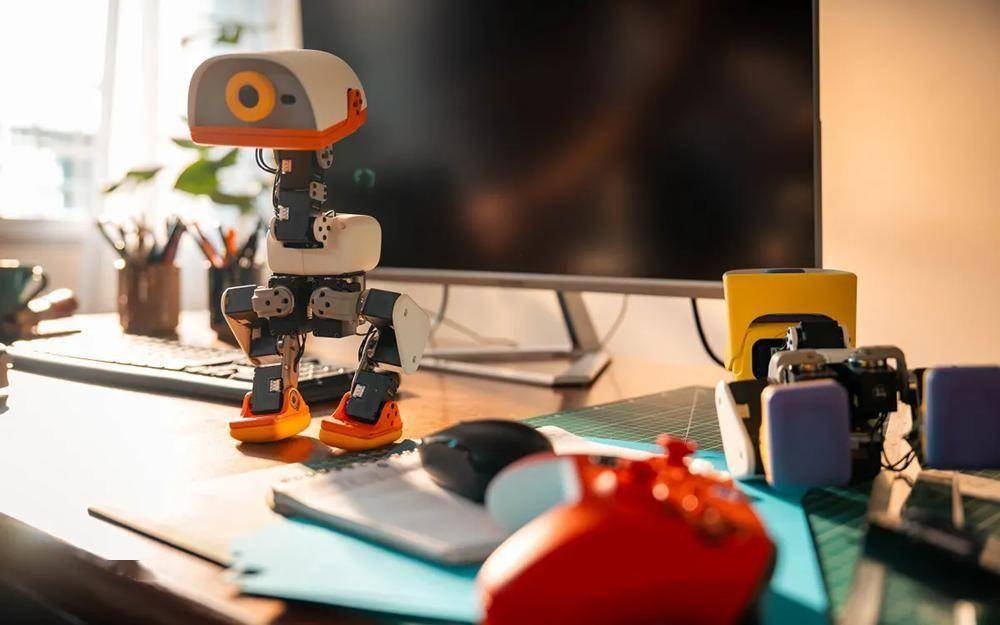
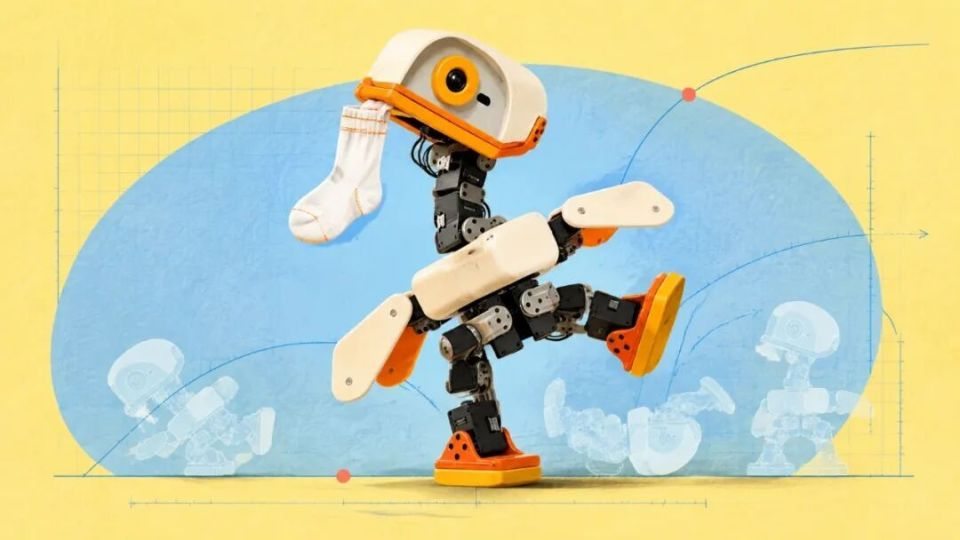
The duck stands 25 centimetres high and carries 15 motors across its legs, neck and head, plus a wide-angle camera, a small LiDAR unit, two inertial sensors, a microphone, a speaker, near-field communication tag reading and both WiFi and Bluetooth. Its hinged beak doubles as a small gripper able to lift objects close to its own weight. Out of the box it runs seven behaviours: walk, sit, squat, kick, grasp, roller-skate and self-right from a fall. Each unit generates a unique voice on first boot, permanently bound to that duck.
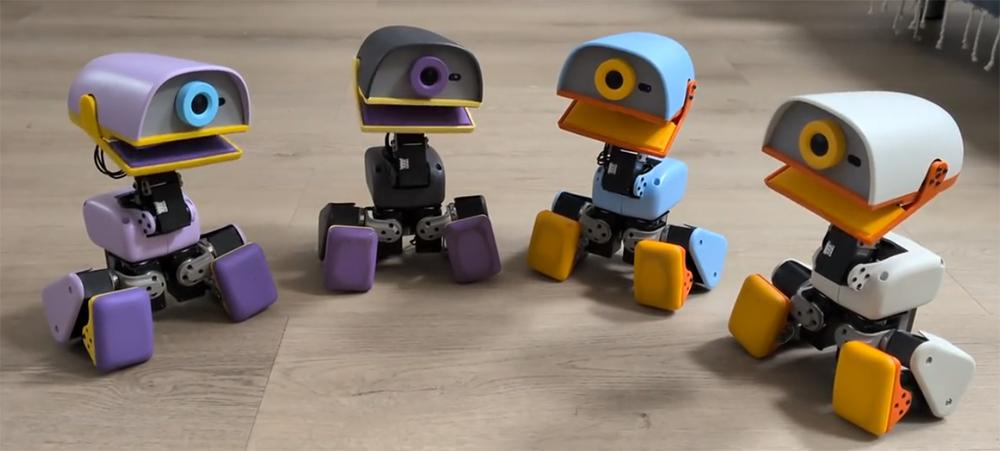
The software is the real bet. The development kit, a MuJoCo simulation environment and a complete reinforcement-learning training stack are all released under the Apache-2.0 licence. The whole machine is manufactured by Shenzhen’s Seeed Studio, an open-source hardware maker, under an overseas-design, Chinese-supply-chain split that pushes the bill of materials to a level overseas local manufacturing cannot match.
Hugging Face co-founder Thomas Wolf put the aim plainly: ‘We want to show that artificial intelligence does not have to be expensive or scary, but something anyone can build and use.’ Raspberry Pi taught a generation to code with a US$35 board. Microduck is doing the same for robot movement, pulling the cost of a real hardware closed loop from tens of thousands of dollars to under four hundred.
For an industry where humanoid prototypes often cost tens of thousands or even hundreds of thousands of dollars and stay out of reach of students and small teams, a US$399 open-source duck resets the entry price. The developers writing code for it become the channel, the content and the research base at once, and the next wave of embodied-intelligence builders may start not with a demo film but with a duck on the desk.
Editor’s note: This is an adapted translation of the original OFweek Robotics report. It has been trimmed and restructured for readability for an international business audience. The full original (in Chinese) is at https://robot.ofweek.com/2026-09/ART-8321206-8110-30700961.html.
Translated and adapted from OFweek Robotics (https://robot.ofweek.com/2026-09/ART-8321206-8110-30700961.html).