For 79 days, SK Hynix tried to sell a piece of itself to American public markets. On 23 October it stopped trying, and the share price rose 4.42 per cent.
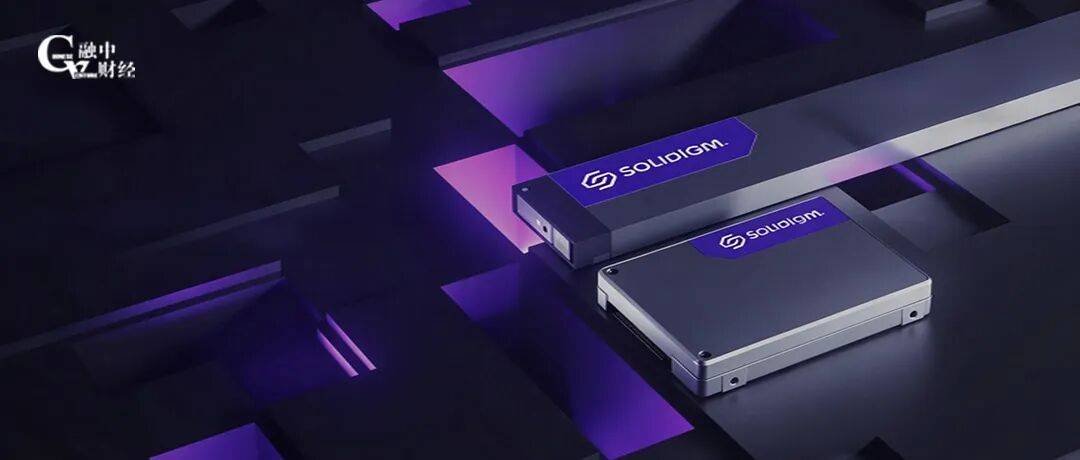
At three in the morning that day, the Korea Economic Daily reported on its paid platform that SK Hynix had accepted shareholder demands and withdrawn the listing plan for Solidigm, its US subsidiary. A few hours later the company filed an official notice on Korea’s electronic disclosure system terminating both the pre-IPO financing and the IPO assessment.
According to earlier reporting by Reuters and Bloomberg, this was in line to be one of the largest semiconductor listings in US history: a raise of USD 10 billion to USD 15 billion, at a valuation of up to USD 150 billion.
The stock voted the other way
SK Hynix opened at KRW 1,171,000, then reversed and climbed all session, closing 4.42 per cent higher at KRW 1,277,000. A company announces it is abandoning a ten-figure fundraising and the market marks it up. Shareholders had made their view plain well before the filing did.
The asset at the centre of it has an unusual history. Solidigm is the NAND flash and SSD business SK Hynix bought from Intel, announced in 2020 at roughly KRW 10 trillion, with the entity set up in California the following year. Payment came in two tranches, about USD 7 billion and about USD 2 billion, both settled before the end of March 2025.
The logic at the time looked clean. SK Hynix was strong in mobile NAND. Intel was strong in enterprise SSDs. Put them together and the Korean company patches the one part of its memory portfolio that lagged DRAM.
Then the memory cycle turned. Solidigm lost money for several years running, with cumulative losses above KRW 7 trillion. Korean analysts treated it as a liability the group could neither fix nor walk away from. In September 2024, SK Group chairman Chey Tae-won personally joined the Solidigm board.
What AI did to a stranded asset
The rescue came from data centres. In the second quarter of 2024, Solidigm posted its first profit in twelve quarters. AI training and inference clusters need somewhere to put enormous volumes of data, and high-capacity QLC enterprise SSDs became the obvious replacement for spinning disks. Solidigm happened to own that product line. Enterprise SSDs and HBM then became the two pillars of SK Hynix’s AI memory business. In September this year, Korean SSD exports rose 532 per cent year on year.
Early in 2026 the group restructured around the opportunity. The original Solidigm entity was renamed AI Company, and the enterprise SSD business was moved into a newly created Solidigm. On 28 January, SK Hynix committed up to USD 10 billion to the structure, with SK Inc, SK Innovation and SK Telecom adding USD 1.1 billion between them. Solidigm went from subsidiary to sub-subsidiary. Almost nobody outside the company read that detail carefully at the time.
The valuation followed. In late September, Reuters reported that Solidigm had met banks competing for underwriting roles, with a valuation of up to USD 150 billion and a raise of about USD 15 billion. In early October, Bloomberg reported that Goldman Sachs and Morgan Stanley had been appointed lead underwriters for a raise of about USD 10 billion, with a listing as early as 2027. Korean press calculated that Solidigm accounted for roughly 13 per cent of SK Hynix’s market capitalisation.
SK Hynix later explained the rationale. Existing capacity cannot meet AI demand, so Solidigm needs new US fabs. External capital lifts consolidated cash flow, which can go to capex, dividends and buybacks. A separate listing would also let the market put an independent price on the business.
On paper it was a clean trade. The shareholding chart is where it broke.
Four prices for one pool of profit
On 5 August, the Korea Economic Daily reported that Solidigm was pursuing a pre-IPO round of KRW 5 trillion to KRW 10 trillion with Nasdaq as the destination. SK Hynix issued a clarification saying it was studying several options and nothing was decided. Shareholders were not persuaded. The stock fell about 10 per cent the next session.
The objection was structural. The group’s semiconductor ownership chain runs SK Inc, SK Square, SK Hynix, AI Company, Solidigm. The first three already trade in Seoul, and SK Hynix added a New York ADR in July at a size that set a record for a non-US issuer. Adding Solidigm on Nasdaq would create what Korean media called a quadruple listing. Solidigm is wholly owned by AI Company, so its profit consolidates into SK Hynix almost in full. Bring in outside shareholders and that profit has to be shared.
One brokerage research head put it more bluntly: the company did not need the money. He pointed at group governance instead. SK Hynix’s largest shareholder is SK Square, and only about a fifth of the dividends SK Hynix pays flow up to SK Square, then further up to SK Inc.
There was another awkward detail. Korean press reported that the pre-IPO was being led by Noh Jong-won, a former SK Hynix president who left the company and set up a private equity firm in the United States. He had also run the original Intel NAND acquisition.
Opposition built through the autumn. In August the Korean Corporate Governance Forum, which represents institutional investors, publicly advised SK Hynix to drop the plan. On 21 September the minority shareholder platform ACT wrote to the board asking why external capital was necessary and what the alternatives, including retained earnings and borrowing, would cost shareholders. On 1 October ACT issued a second statement arguing that a separate Solidigm listing would transfer core growth value to outside investors and deepen the parent company discount, and formally asked the board to reconsider.
The rule that arrived first
What made the position untenable was a change in regulation. This year Korean financial authorities set a direction of principle prohibited, exceptions allowed for dual listings. The detailed rules were approved at the end of July and took effect on 3 August.
Under them, a listed company that wants to float a controlled subsidiary must run a full shareholder protection process at the parent board level, and the requirement applies equally to listings on overseas exchanges. Failure carries a fine of up to KRW 1 billion and a possible one-day trading suspension. The revised Commercial Act, effective in late July, separately states that directors owe a duty of loyalty to all shareholders.
Solidigm walked straight into it. On 19 October the governor of the Financial Supervisory Service told a parliamentary audit that the Solidigm listing raised dual-listing issues. Three days later the chairman of the Financial Services Commission said publicly that a US listing by Solidigm fell within the scope of the dual-listing guidelines.
The stock had already been voting. On 6 August SK Hynix fell more than 9 per cent intraday as US chip stocks weakened, listing rumours spread and no shareholder return plan appeared. Through October the shares were down roughly 30 per cent from the end of September.
The 23 October notice never mentioned regulators. It said that in light of recent capital market conditions and the share price trend, the company needed to re-examine whether a listing now was in the best interest of the company and existing shareholders.
The bill moves to the parent
Korean brokers applauded almost unanimously. Meritz Securities read it as a signal that existing shareholder value now ranks first, with a stronger return policy likely to follow.
Behind the applause is an old grievance. The Korea discount is a chronic feature of the market, and dual listings are its most cited example. In 2020 LG Chem spun its battery business into LG Energy Solution and listed it separately in early 2022. Many retail holders had bought LG Chem for the battery story and watched the most valuable asset get priced somewhere else. The new rules are widely read in Korea as an attempt to stop that repeating.
No company had completed a dual listing under the new regime. Solidigm was the first large group case to test it, and the largest by weight. Its outcome now draws a line for everyone behind it. Korean media have already raised the possibility that the decision chills listing plans at other conglomerates, with robotics and other new-industry subsidiaries watching closely.
The underlying problem has not disappeared. SK Hynix stressed in the notice that Solidigm’s growth potential and investment needs are unchanged, that existing capacity cannot serve AI demand and that the US fab still has to be built. The timing, scale and financing method will all be reassessed, and direct investment is on the list. The money will almost certainly end up coming from SK Hynix itself.
Time is not neutral here either. Yangtze Memory is expanding capacity and narrowing the gap with the leading suppliers, and enterprise SSDs are the most profitable part of NAND right now. Whoever brings capacity online first takes the larger share of that margin.
Editor’s note: This is an adapted translation of the original Sohu Tech report. It has been trimmed and restructured for readability for an international business audience. The full original (in Chinese) is at https://www.sohu.com/a/1092391021_413933.