The embodied-AI industry is not short of robots that nail one beautiful demo. What it lacks is robots that repeat the same task ten thousand times and stay reliable. Paxini says it has now closed a RMB 1 billion strategic round, lifting cumulative funding to nearly RMB 4 billion.
According to the disclosure, this round’s lead is a global consumer-electronics and semiconductor leader, with BOC International, the Kunpeng Fund and others participating and existing backers adding more. At the same time Paxini moved its headquarters to Beijing and completed joint-stock reform. Three moves at once point to one judgement: Paxini has grown from a technology firm into a system that can deliver predictable robot capability at scale.
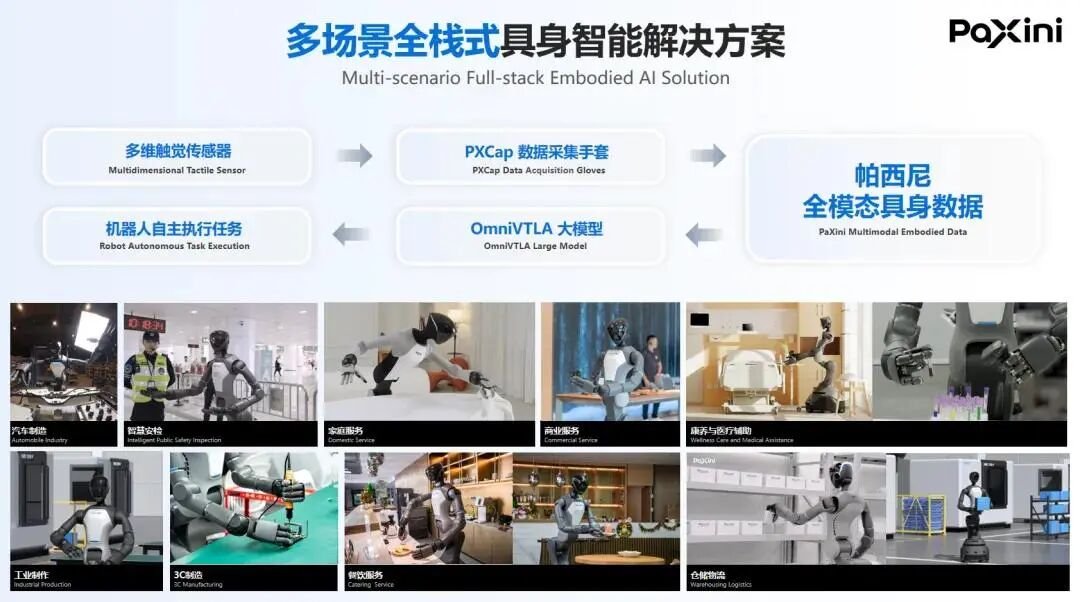
Paxini spans the full embodied chain, tactile sensing, full-modal data, dexterous hands and the robot body itself, forming a closed loop from perception to execution. Its PX-6AX GEN3 fingertip product ships up to 717 tactile channels at a maximum 1000Hz, with IP68 protection and a measurement life above 10 million cycles. Those figures matter only insofar as they cut task variance, reduce human takeovers and lengthen stable runtime.
The industry is entering a failure-pricing stage. In factories the question shifts from ‘can the robot do it’ to ‘can it do it ten thousand times without a human’. Touch sends contact changes back into the control loop so the robot corrects before it fails. Capital now weighs a new metric: the full cost per successful operation, including downtime, takeovers and scrap, not the sensor’s purchase price.
Accuracy decides whether a robot reaches the right result, repeatability decides whether it reaches a similar result under the same conditions, and long-term stability decides whether that holds through wear, temperature and handling. Together they decide whether a customer can forecast output and recoup the investment, which is why Paxini insists its sensors must understand the whole machine. The firm is competing for the predictability of the final result, not for a headline spec.
Editor’s note: This is an adapted translation of the original OFweek Robot report. It has been trimmed and restructured for readability for an international business audience.
Translated and adapted from OFweek Robot (https://robot.ofweek.com/2026-08/ART-898890-8120-30698082.html).