On 28 October, Volkswagen Group China held its first technology day in 42 years in China, in Hefei, and formally launched a locally developed integrated technology matrix called VEGA. The matrix covers three core areas, vehicle platforms, the electrical and electronic architecture and advanced driver assistance, designed to work together and respond faster to Chinese customer requirements.
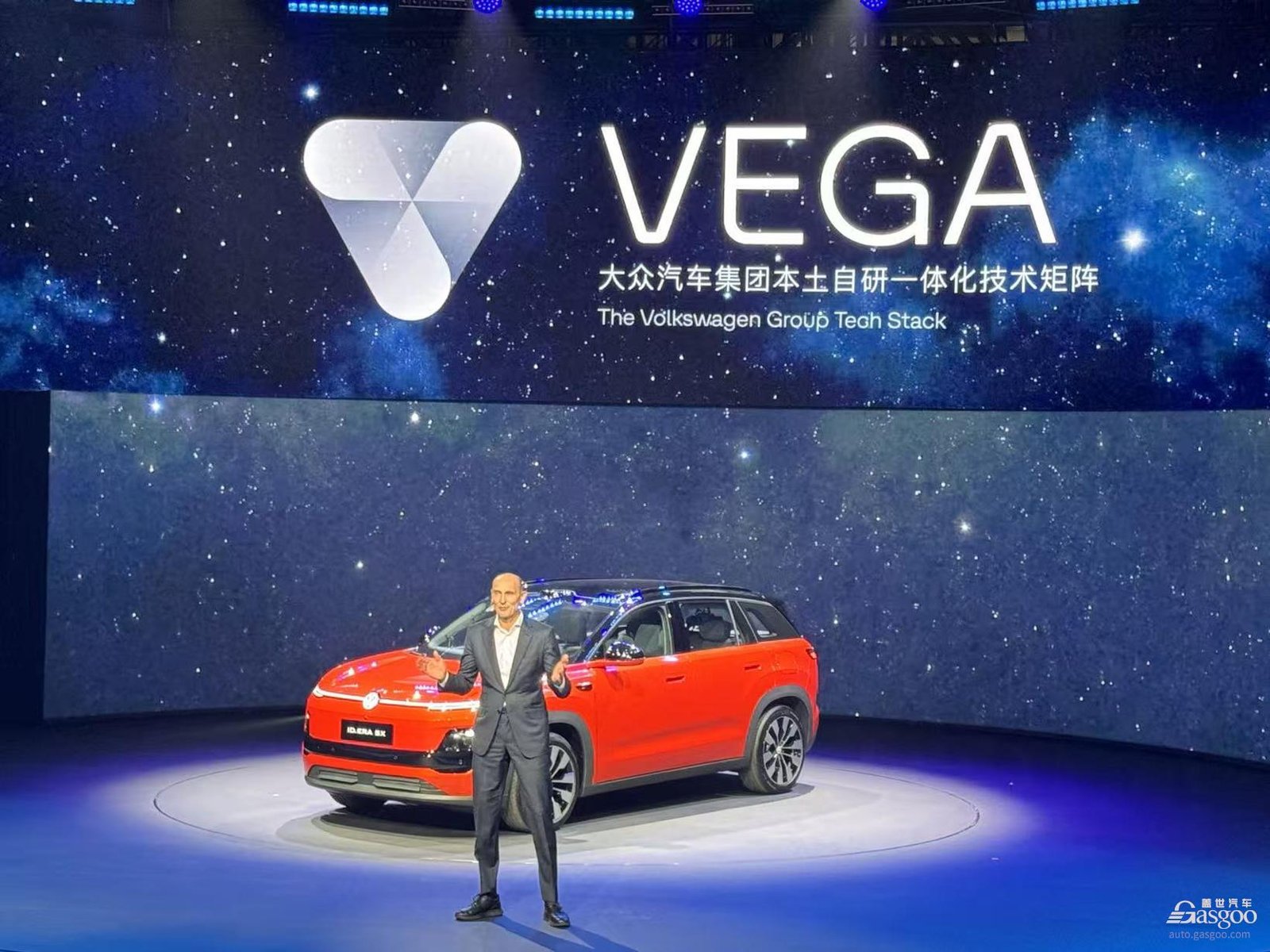
With VEGA, Volkswagen describes itself as the only foreign carmaker in China with a locally developed, self-owned technology matrix, and frames the shift as moving from building in China for China to building in China for markets beyond it.
The timing is worth noting. One day earlier, on 27 October, German Federal President Frank-Walter Steinmeier visited the Volkswagen Hefei base, toured the software and hardware integration and testing laboratories, and test-drove an ID.AURA T6 equipped with HS8. Read together, the visit and the launch show Volkswagen trying to twist previously scattered local R&D capability into a reusable, iterable and exportable technology system.
From local adaptation to local definition
Volkswagen China began its in China, for China transformation four years ago. At the time it was read mainly as faster response to the local market and a fix for weak intelligent features. VEGA suggests the goal went further, turning China into one of the group’s global technology sources.
Chief executive Oliver Blume calls China a key innovation source and an important product and technology hub for global markets. Ralf Brandstätter, chairman and chief executive of Volkswagen Group China, calls VEGA the concrete result of four years of transformation, strengthening local competitiveness while opening new business opportunities outside China. At the VEGA launch those statements have platforms, architectures and production ADAS programmes behind them.
The underlying change is in how a multinational develops products. The old model was a global platform plus Chinese localisation, with the China team handling adaptation, validation and purchasing. VEGA moves the local definition rights over platform, architecture and driver assistance software forward, taking the China team from execution toward definition. The CMP and CSP platforms and the CEA architecture were developed locally or led locally in substance, while ADAS comes from CARIZON with its HS8 system, closing a loop from base platform to software experience.
The organisational base sits in Hefei. The Volkswagen China Technology Company has about 3,000 Chinese technology specialists and about 200 international staff, with more than 100 laboratories covering software and hardware integration, battery and powertrain testing and whole-vehicle validation, giving end-to-end capability from concept to production. Steinmeier’s visit was an external look at that capability. It also shows the China R&D system has become part of a Sino-German technical network, with China supplying speed, digital innovation and hardware-software integration, and Germany contributing technical depth, quality standards and regulatory experience.
Three lines, one base
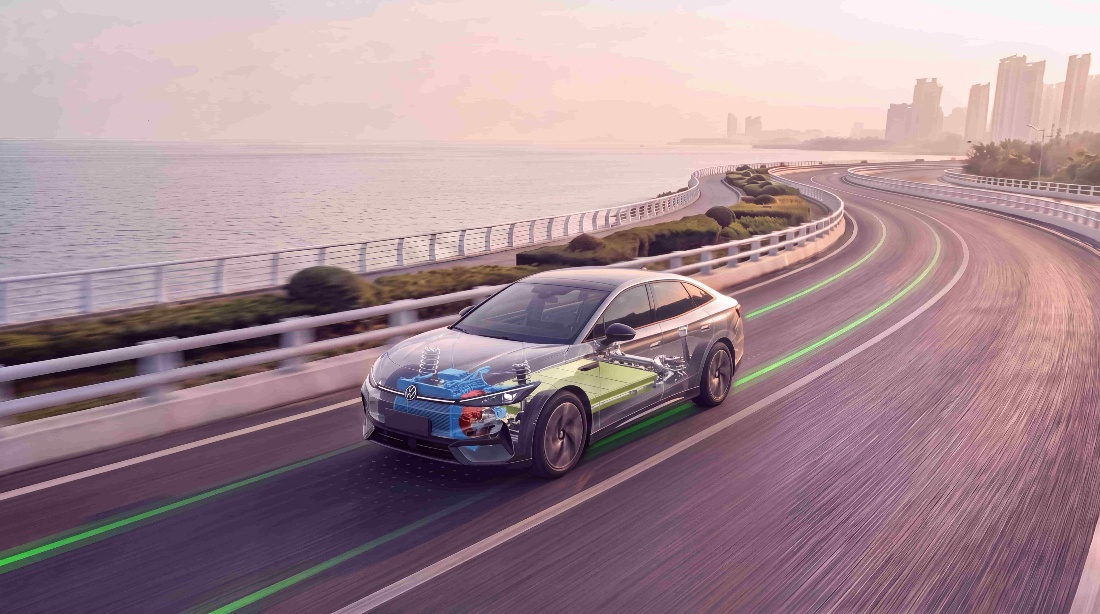
VEGA takes its name from the star Vega, and Volkswagen stresses that it is self-controlled and continuously iterated. It comprises the CMP and CSP vehicle platforms, the CEA electrical and electronic architecture and the ADAS line. Any one of the three has been claimed by other carmakers earlier. Putting all three in one matrix that iterates together is the differentiation.
On platforms, CMP covers the mainstream A-segment with battery-electric and plug-in hybrid support, while CSP serves full-size and flagship battery-electric and range-extended models. CMP uses a 54:46 front-to-rear weight distribution and a multi-link rear suspension to bring B-segment handling down to the A-segment. CSP gives full-size flagships a turning radius under 5.5 metres and a 0 to 100 km/h time of 4.1 seconds. On efficiency, CMP models exceed 600 km of CLTC range, with the efficient version at about 11 kWh per 100 km and a 30 to 80 per cent charge in 25 minutes. CSP targets more than 800 km of electric range, a minimum of under 13 kWh per 100 km, and more than 1,500 km combined range for the range-extended version.
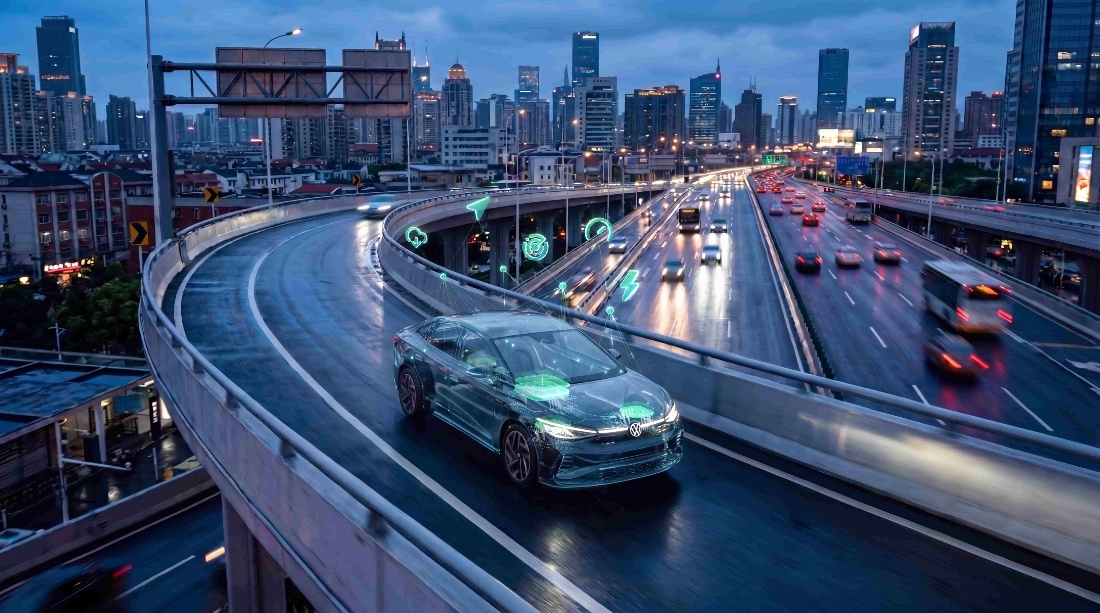
On architecture, CEA is Volkswagen’s first zonal control architecture, developed in only 18 months and in production since the end of 2025. In 2026 it is fitted to five locally built Volkswagen brand electric models, and it iterates on a rhythm of major software feature updates every three months and a full architecture upgrade every two years. In 2027 it extends to plug-in hybrid and combustion models, with the first major upgrade integrating cabin and driver assistance central computing to prepare for L3 readiness and agentic AI. CEA 3.0 in 2029 is intended to support whole-vehicle intelligence.
On ADAS, CARIZON has launched HS8, a full-scenario L2++ system, to be fitted in 2026 to seven new electrified products across three joint ventures, supporting urban and highway navigation plus full-scenario parking. HS8 is built on the HSAI foundation model and a one-stage end-to-end architecture, offering a pure vision route at 128 TOPS and a lidar route at 420 TOPS, both already in production. Volkswagen plans L3 readiness in 2027 and is developing C7H, a self-developed system-on-chip supporting L4. Volkswagen China already holds an L3 road testing licence in Hefei.
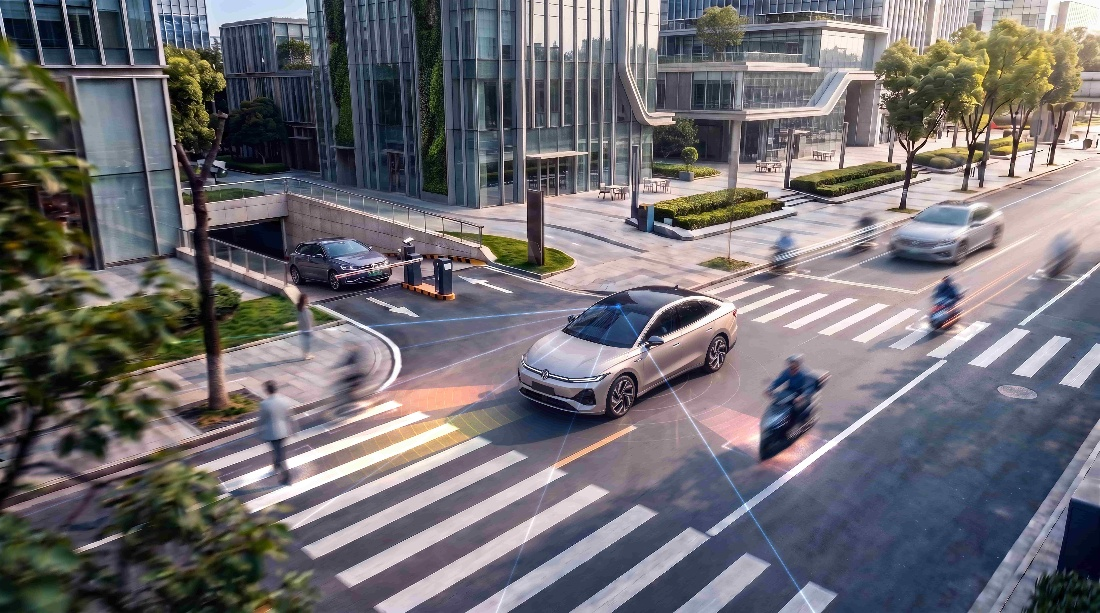
The competitive claim is not about any single specification. It is that platform, architecture and ADAS share one electronic and software base, so vehicle definition, software iteration and driver assistance validation can run in parallel. Volkswagen says the CEA-based software-defined vehicle process shortens the whole development cycle by about 30 per cent while holding its safety and reliability standards, with some new models completing development within two years and cost on some models improved by as much as 50 per cent.
The toolchain, and the numbers behind it
Whether VEGA can keep iterating depends on the development toolchain. Volkswagen China’s in-house AI toolchain, C-Brain, sits at the centre of CEA development and testing, bringing agentic AI into engineering design, code generation and test validation, turning a linear software process into an AI-driven loop. The figures are striking. Software function testing fell from two to three days to two to three hours, up to 36 times faster. Software issues moved from detection through fix to release in about two weeks across multiple teams, down to 20 minutes, a 1,008-fold improvement. Since the third quarter of 2026, Volkswagen has deployed AI agents across all CEA-equipped models, using natural voice interaction to anticipate needs across cabin control, route planning and entertainment.
On the driver assistance side, the in-house GAIA2.0 world model runs simulation equivalent to five million kilometres of real driving a day, drawing on up to 30 million real scenario clips. Against the previous generation, effective data utilisation is 10 times higher and long-tail scenario collection 50 times higher, with a training target of 10 million kilometres a day.
Safety and validation remain the base layer. The CMP and CSP platforms go through what Volkswagen calls its super closed loop, with test requirements well beyond national standards, including a 24K long-travel road simulation durability rig at the Hefei technology company that reproduces 15 years or 300,000 km of road load, a proving ground with about 60 km of test roads and a high-speed oval validated to 250 km/h, and more than 20 rollover, spiral flip and sand rollover tests at the SAIC Volkswagen safety centre. In a severe crash, the motor traction limitation system cuts power within 5 milliseconds, and the high-voltage battery system drops voltage to a safe level within 5 seconds, one twelfth of the 60 seconds required by national standards.
The export route
On the same day as the VEGA launch, Volkswagen China set out a deeper-in-China, win-globally strategy, expanding exports of products and technology to global South markets and pushing localised application of the CMP platform and CEA architecture in target markets.
Under the plan, Volkswagen will introduce China-developed technology to South America first, making South America the first region to include Chinese R&D in its local product portfolio before 2030, then extending to markets including South Africa. On vehicle exports, Volkswagen and Jetta brand models built in China already ship to the Middle East, Uzbekistan, Kazakhstan and sub-Saharan Africa, with Mexico, Egypt and Vietnam added before the end of 2026, and ASEAN, South America and more of Africa in the following years. Within 2026, China-built models will reach seven export markets.
The logic is Chinese development, localised manufacturing and global South demand. Those markets are cost-sensitive, have difficult road conditions and electrify at different speeds, and the CMP and CEA combination can cover battery-electric, plug-in hybrid and combustion powertrains with some flexibility.
Volkswagen spent 42 years building a large production and sales system in China and four years catching up on local R&D. VEGA marks the point where its China research moves from capability building to system export. For the industry it is a template for a multinational’s transition that neither imports head office technology wholesale nor starts from scratch, but rebuilds the development process at Chinese speed and holds the safety and quality floor with German standards.
Editor’s note: This is an adapted translation of the original Gasgoo report. It has been trimmed and restructured for readability for an international business audience. The full original (in Chinese) is at https://auto.gasgoo.com/news/202610/30I70476355C109.shtml.