Before Henry Ford’s moving line in 1913, cars were hand-built luxuries. Assembly fell to 93 minutes and cost collapsed. Today’s humanoids look like cars before 1913: the tech dazzles, but building one unit and stably building ten thousand are two different problems. Demo after demo shows dancing and tray-carrying, yet at scale there is no template line, no mature supply chain, and no agreement on what a production-grade humanoid should even be.
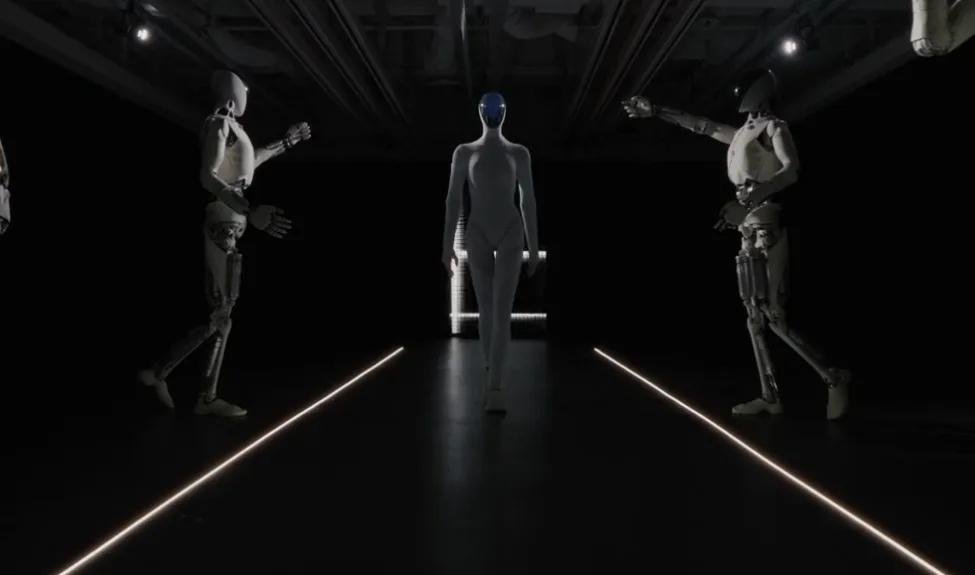
On 8 September, XPeng switched on its humanoid-robot production line. The world’s first high-end general-purpose humanoid completed automated assembly and walked off the line on its own, with more than 80 per cent of core processes automated. Notably, the first mover was not a robot company but a carmaker.
The scale-up gap is the industry’s hard knot. Tesla’s Optimus planned 5,000 to 10,000 units for 2025 but delivered only hundreds, and its Fremont line was rebuilt only by mid-2026. Figure AI delivered about 350 and took a 5,000-unit BMW order with unclear timing. Omdia puts 2025 global humanoid sales near 13,000, while China’s MIIT expects national output above 100,000 in 2026, a target hard to hit at the current pace. Most “mass production” today is still manual assembly.

Why XPeng moved first: the industry’s missing piece is not another prototype shop but the ability to turn complex tech into a stable industrial product, exactly what carmaking does. In June, He Xiaopeng made himself robot-business CEO, calling it the run-up to mass production. Cars and robots share deep logic: both make AI read the world and act. XPeng’s years in autonomous driving map directly onto robots.
XPeng designed the world’s first high-end humanoid automated line, with over 80 per cent core-process automation, but its quality methods come from automotive: every part reliability-tested, every step standardised, full inspection before delivery. Its robot and car supply chains overlap more than 85 per cent, so proven automotive suppliers feed the robot directly. Facing fast iteration, XPeng went full-stack self-research so development and manufacturing stay in its own hands. He says humanoid tech is at least 20 times harder than smart cars. As IRON runs in real scenes it collects daily data, training AI that reaches more scenes, a positive loop. One player clearing the path pulls the whole supply chain forward.
Editor’s note: This is an adapted translation of the original OFweek Robot report. It has been trimmed and restructured for readability for an international business audience.
Translated and adapted from OFweek Robot (https://robot.ofweek.com/2026-09/ART-898890-8420-30703253.html).