Capital dives into underwater robotics, betting on the next Unitree of the deep
Off Fujian, a cargo ship sits at anchor under a crust of barnacles. Cleaning its hull by hand takes two weeks. A robot called Orca, built by Shihang Intelligent, does it in 10 hours, roughly 50 times faster than a dive team.
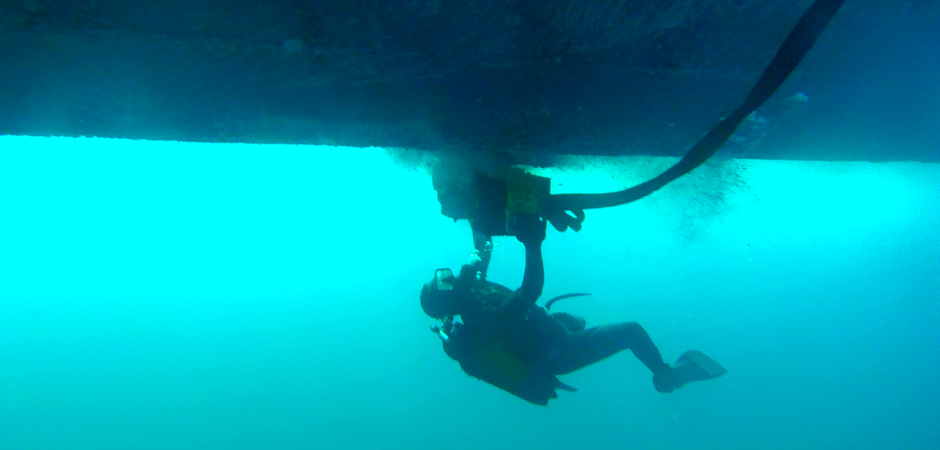
The owner’s arithmetic is simple. Every fraction of cleanliness recovered adds about two knots of speed, which saves roughly RMB 100,000 of fuel a day. Shihang has taken thousands of such jobs, booking more than RMB 1 billion of orders in the first half of 2026.
Around the same time, capital began entering the sector in formation.
Three record rounds in three months
In June, Shihang closed a Series A of more than RMB 1 billion, a record single round for an ocean robotics company. In August, Shenhai Zhiren raised more than RMB 500 million in Series A, a domestic record for deep-sea robotics. In early September, Gongzhi Ocean, barely two years old, took nearly RMB 100 million in angel funding, doubling the ceiling for deep-sea angel rounds.
Three record rounds in three months, and the founders of all three companies came out of the same university, Harbin Engineering University.
The robotics industry has spent years telling stories. The most money went into factories and homes. The first categories that pay for themselves have turned out to be the places people cannot reach.
Where it is dangerous, the sums work
Underwater robots share a commercial logic with mines and space. People can go there. They cannot stay.
The human limit is documented. Saturation divers holding internationally recognised qualifications can work effectively for only about 10 minutes at 200 metres. At 300 metres they are at the physiological edge, and beyond that only machines can operate. China has long had only 300 to 500 salvage divers, while offshore wind foundation scour surveys, subsea cable fault location and subsea pipeline repair have to be redone every year.
Willingness to pay rests on two sums. The first is the accident bill. Human diving accounts for 25 to 30 per cent of offshore wind maintenance incidents. The second is the cost bill. A single manual subsea cable operation can cost up to USD 5 million, and robots cut more than 40 per cent of that.
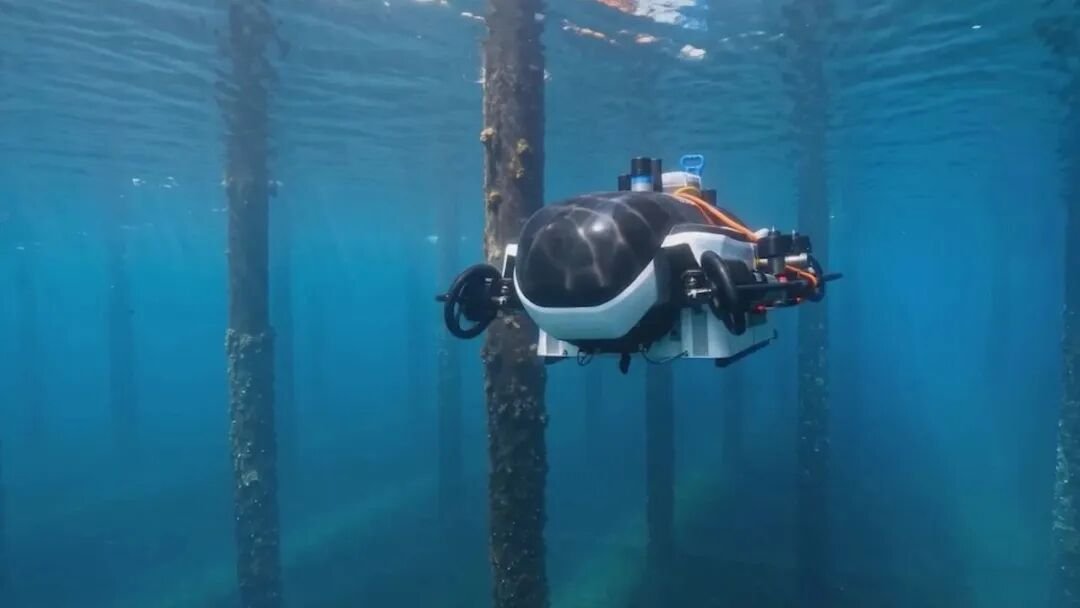
For reservoir inspection, Gongzhi Ocean compressed total cost from about RMB 5 million to RMB 700,000 and cut the cycle from six months to 20 days. China has about 94,000 reservoirs.
Dangerous scenarios commercialise faster for a reason. A humanoid robot entering a factory must first answer why an existing robotic arm will not do. A dirty, dangerous, submerged ship hull has no mature alternative. Policy pushes the same way. A 2024 mine intelligence directive requires robot substitution in dangerous and heavy roles to reach at least 30 per cent in coal mines and 20 per cent in non-coal mines by 2026.
More important, customers are already paying, which sets this apart from most robotics categories. Shihang booked more than RMB 1 billion of orders in the first half of 2026. Shenhai Zhiren signed several hundred million RMB of new unit sales contracts by July, has a similar pipeline to sign within two months and around RMB 1 billion of potential orders under discussion. Gongzhi Ocean holds an exclusive supply agreement for deep-sea mining components with Canada’s APG-Neuros, with nearly RMB 100 million of contracts awaiting signature.
The buyers are shipowners, wind operators, oil and gas companies, reservoir managers and state-owned enterprises, spending maintenance budgets and pricing downtime and accident liability.
The ceiling is not low. Global subsea services are worth about RMB 1.5 trillion and growing more than 20 per cent a year. China’s gross ocean product reached RMB 11.02 trillion in 2025, up 5.5 per cent, with marine engineering equipment manufacturing value added up 10.2 per cent.

The pattern also holds outside the water. 51World’s low-altitude, space and deep-space strategy treats mines as a demonstration case. It rebuilds the real environment as a digital twin, trains and evaluates robots inside it, then sends them to the site. On the space side it is developing purpose-built remote sensing satellites for physical AI with Huantian Zhihui.
Humanoid and home service robots have had years of narrative. The first real invoices are being issued somewhere else.
The investor’s ruler
No reading of this underwater boom is complete without Zhu Xiaohu. In March 2025 he drew a risk map in an interview with ChinaVenture. The horizontal axis was market consensus and the vertical axis was the route to commercialisation. The most dangerous quadrant is high consensus with no commercial path. A year earlier that was large models. That year it was embodied intelligence.
Every humanoid robot can do a somersault, he said, but where is the commercialisation? Explaining why GSR Ventures was exiting humanoid projects in bulk, he said he had asked those chief executives where the paying customers were. The answer, he said, was imagined customers, people who would supposedly spend more than RMB 100,000 on a robot to do this work.
Over the following year GSR exited Xinghaitu and Songyan Power. Half a year later, in a conversation with PingWest, he gave the positive answer. He had invested in a number of robotics companies, mostly workhorse robots that are not handsome or clever-looking but genuinely create commercial value. His first example was a hull-cleaning robotics company that dives into murky water to clean fouling from ship bottoms. The scenario is a hard requirement and the technical difficulty is high. That company was Shihang Intelligent.
In the same conversation he offered a ruler for the whole sector. Many start-ups run a trap in their return-on-investment maths. If a robot can only replace half a person, and that person cannot be made redundant anyway, the return is fake. His counter-example was a massage robot. A therapist is not only a therapist but the person who sells memberships. A robot has to do both jobs before it has genuinely replaced a role.
Applied underwater, the ruler fits exactly. A diver is precisely the employee a company can make redundant. In trials Shihang’s Orca compressed two weeks of work into 10 hours. What it replaced was not half a person but an entire dive team and two weeks of ship time.
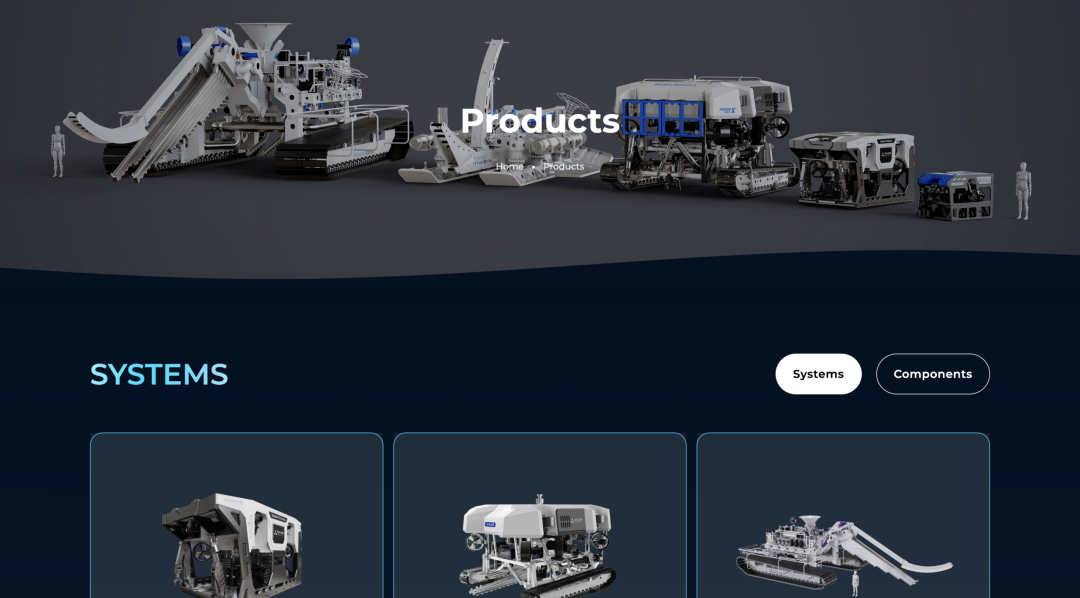
That may be why Zhu’s assessment of Shihang reads the way it does. SpaceX redefined space, he said, and Shihang is using embodied intelligence to redefine the ocean. By June 2026 GSR had taken part in a fifth round. Before that only Didi and Xiaohongshu had earned that treatment in his career, and Shihang is the only known continuing robotics position at GSR.
Exits and follow-on cheques use the same ruler. Does the arithmetic clear?
Three kinds of money, three intentions
The capital entering now is structured differently from the internet era. In Shenhai Zhiren’s Series A of more than RMB 500 million, four leading market institutions, Guanghe Ventures, Fortune Capital, GGV Capital and Yida Capital, invested in the deep-sea sector for the first time. China Insurance Investment represents insurance capital and CETC Investment represents state-owned enterprise capital. The energy technology fund managed by Cathay Capital sits behind TotalEnergies.
In Shihang’s June shareholder list, Shanghe Momentum Fund sits behind Moore Threads and Kunlunxin, while Vertex Growth under Temasek, CITIC Group’s agricultural industry fund and the listed Dayang Electric all joined.
According to data from Zhidx and IT Juzi, robotics funding in the first seven months of 2026 saw 918 institutions deploy RMB 104.46 billion. Market venture funds spread many early bets, state capital wrote large cheques into the growth stage, and industrial capital placed bets along its own supply chains. In the underwater niche, special robotics spanning underwater, transport, security and firefighting accounted for only 11 deals worth RMB 2.07 billion, or 2.0 per cent of all funding.
The money is modest. The three intentions are clearly divided. State and insurance capital back national strategy, after deep-sea technology first entered the government work report in 2025 and the fifteenth five-year plan set out building a maritime power and implementing deep-sea projects. Energy and industrial capital back a position in the supply chain, with TotalEnergies interested in subsea oil and gas maintenance costs and Dayang Electric in motors and thrusters. Market venture funds back scarcity, because private companies able to deliver a complete deep-sea robot are few.
Yinfeng Capital, reviewing its investment in Gongzhi Ocean, set one standard. Judge a project on real delivery and cash collection. A technology demonstration does not count.
A further precondition for all three to enter at once is a visible exit. Shenzhilan’s STAR Market listing has resumed at the inquiry stage. Yunzhou Intelligent filed for the second time in June. Shandong Future Robot completed its shareholding reform. When an initial public offering window is visible, every order is valued one layer higher.
Who is worth backing
Start with a coincidence. This sector is almost monopolised by one school. Chen Xiaobo studied navigation, guidance and control at Harbin Engineering University, built his first underwater cleaning robot in his second year and spent more than a decade validating it in ship cleaning and deep-sea survey work before founding Shihang Intelligent in Kunshan in 2023. Ma Yiming graduated from the same university in 2013 in ship and ocean engineering, worked on the world’s first commercial deep-sea mining robot Nautilus, and after returning to China led the development of three product lines. Guo Chunyu is a professor and doctoral supervisor there and worked on the Jiaolong crewed submersible.
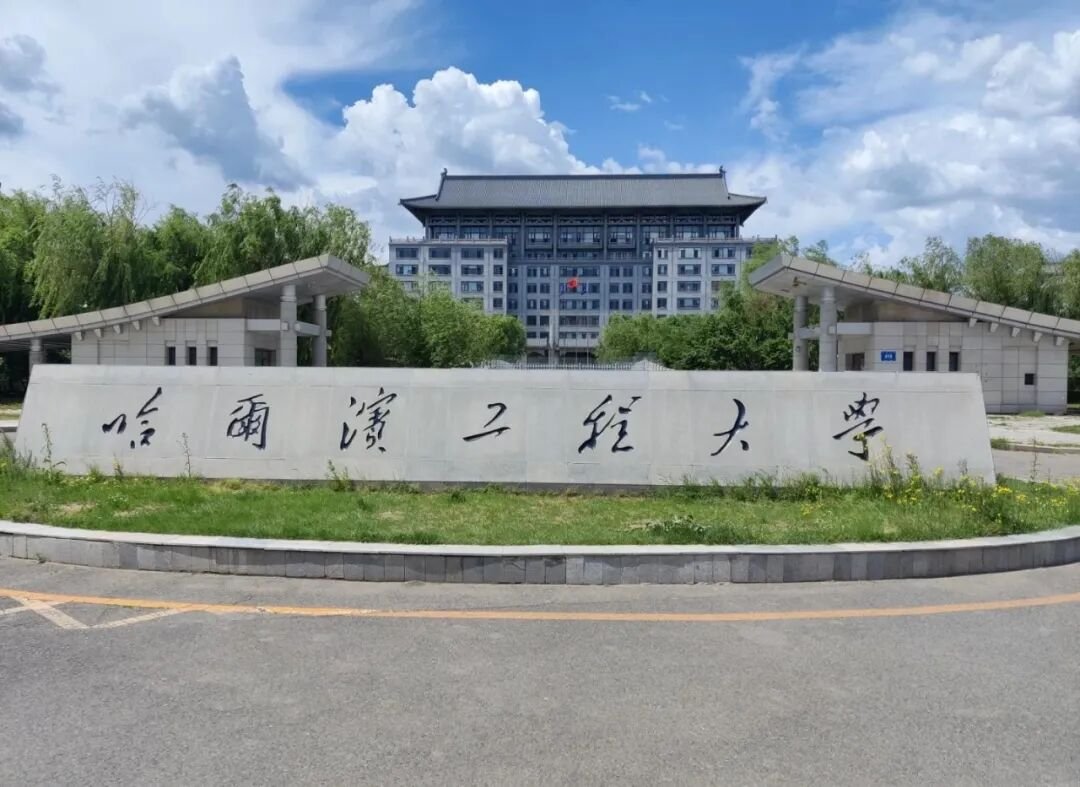
About 30 per cent of China’s shipbuilding technical and management talent comes out of that university. Even the university’s asset management platform has taken a stake in Gongzhi Ocean.
Same origin, different businesses. Shihang Intelligent runs a service model. The Orca series has replaced manual cleaning on vessels operated by China Merchants Energy Shipping and COSCO Bulk, at up to 70 times human efficiency, and has maintained more than a thousand large ships. In 2026 it was the only Chinese company selected for the Maritime and Port Authority of Singapore’s national underwater hull inspection and cleaning programme. Chen summarises his scenario selection as three laws of robot industrialisation. People cannot do the work or it is dangerous, manual efficiency is low, and manual cost is high. Ship cleaning occupies all three, and hull cleaning alone is a demand worth tens of billions of RMB a year.
Wang Gongbin of Longstone Capital put it more bluntly. DJI in the sky, Shihang underwater.
Shenhai Zhiren runs a whole-machine export model. In the summer of 2025 it beat British, Dutch and Norwegian incumbents to deliver a Phoenix 600 deep-sea robot worth nearly USD 10 million to the UAE telecom operator e&. It was China’s first commercial export of a deep-sea robot. In October the customer followed up with additional purchases based on the first unit, forming a one-plus-two order sequence. Its product matrix is layered by depth, with Singularity at 6,000 metres, Phoenix at 3,000 metres and Taurus at 1,000 metres. In April 2026 the company released SEAgent, an underwater multi-agent task decision model, in an attempt to move from building one machine per order towards unmanned clusters.
Gongzhi Ocean bets on the source of the technology. Guo Chunyu’s team has spent 40 years on underwater propulsion. Hetu combines flexible undulating fin bionics with vector pump-jet propulsion. At three knots its radiated noise is 86 decibels, close to ocean background noise, and its sediment plume is one five-hundredth of conventional equipment. Those figures target scenarios with strict limits on near-bed disturbance, such as nuclear power inspection and compliance review for deep-sea mining. Hetu has completed 1,000-metre sea trials. The company’s longer move is a plan to spend RMB 500 million to 600 million over five years with local government to build an integrated real-and-simulated underwater robot training ground, used both for equipment testing and for collecting data for an underwater world model. If that works, Gongzhi Ocean becomes not only an equipment supplier but a standards and data gateway for the sector.
Shandong Future Robot is closest to certainty and easiest to misread. The Weihai company holds about 60 per cent of China’s domestic deep-sea robot market and has fully localised its core components, with 2024 revenue of RMB 276 million and net profit of RMB 97.18 million. In the first half of 2025 revenue was only RMB 33.46 million with a net loss of RMB 22.01 million. Order-driven revenue volatility is visible in one line.
Younger founders are arriving too. Lindong Technology, which has just raised more than RMB 10 million in pre-Series A, was founded by Chu Yichen, a doctoral student at Northeastern University, who chose the harder route of underwater biomimetic robots.
It is worth noting that no listed company anywhere focuses purely on underwater robots. The top six global players by share are all owned by large defence or industrial groups. A first STAR Market listing for the category is therefore a scarce position.
The closest is Shenzhilan in Tianjin. Its STAR Market listing has resumed at the inquiry stage, with a plan to raise RMB 1.5 billion. Revenue in 2025 was RMB 355 million, up 41.7 per cent, and its net loss narrowed to RMB 10.15 million, with management expecting profitability as early as 2026. On the consumer side its Sublue underwater scooter holds about 60 per cent of the global market and provides a cash-flow base, while industrial products have risen to 66 per cent of revenue. But it is listing under the second STAR Market standard, where the binding test is cumulative research spending as a share of cumulative revenue over the most recent three years. An investment banking source told Jiemian News that this test measures a cumulative figure, so a delayed offering timetable can push the ratio below the threshold. The company has accumulated more than RMB 630 million of unrecovered losses and still depends on imports for acoustic sensors, inertial navigation and other key components.
On the surface side, Yunzhou Intelligent filed for the STAR Market for a second time on 24 June, seeking RMB 1.818 billion. Revenue was RMB 131 million, RMB 196 million and RMB 244 million from 2023 to 2025, with losses for three consecutive years totalling nearly RMB 580 million. Its previous filing was withdrawn in 2022 after its audit provider was investigated by the securities regulator. Valuation is a colder mirror. A capital increase in October 2024 implied about RMB 5.2 billion, while ZhenFund’s transfer of a 2.25 per cent stake in March 2025 implied only about RMB 2.581 billion. Shandong Future Robot completed its shareholding reform in December 2025 but has no publicly recorded listing guidance filing.
The darker side
Between order and revenue sit three gates, namely delivery acceptance, sea trials and cash collection. Underwater, the delivery cycle is measured in years. Shandong Future Robot’s swing from RMB 97.18 million of net profit in 2024 to a RMB 22.01 million loss in the first half of 2025 is the normal state of this business, not an accident.
Nauticus Robotics, a listed American peer, offers another mirror. It went public through a special purpose acquisition company at a valuation of USD 561 million. In the second quarter of 2026 its revenue was only USD 900,000, with USD 2 million of cash at quarter end and a net loss of USD 11.1 million. Management was explicit about the cause. A Gulf of Mexico oil and gas project was pushed to 2027 or later because the operator cut its oil price assumption. In the market it completed a one-for-nine reverse split in September 2025 and a one-for-eight reverse split in April 2026 to hold its listing. A single delivery schedule can puncture the valuation of an underwater robotics company. That is a more direct risk lesson than anything in a prospectus.
The hottest scenario is already crowded. By the end of 2025 the number of companies holding China Classification Society certification for hull cleaning robots had risen nearly 90 per cent year on year. Upstream is not as independent as it looks. In high-end synthetic aperture sonar, Teledyne of the United States and Kongsberg of Norway hold 85 per cent of the market, and Shenzhilan’s prospectus explicitly lists dependence on imported key components as a risk. Concepts running ahead of capability is the newest temptation in this sector.
Underwater communication has physical bottlenecks, and the gap between simulation and the real ocean will not close soon, which makes the notion of an ocean embodied model look premature. One underwater robotics founder described it as a premature baby force-fed by capital.
The view here
This round of funding has priced the certainty of the scenario. Factories and homes burned the most money. The first categories to clear their own arithmetic are the places people cannot go, underwater and underground.
It is equally necessary to see that underwater robot delivery cycles run for years and that revenue recognition crosses several gates after signature. After three record rounds the sector does not lack money. What it lacks is a record of turning orders into revenue and projects into products.
Nauticus stands there as a mirror. When revenue stops, capital markets do not care how moving the technology narrative is. Whoever produces that record first earns the title of the underwater Unitree, and today it is unclaimed.
Editor’s note: This is an adapted translation of the original OFweek report. It has been trimmed and restructured for readability for an international business audience. The full original (in Chinese) is at https://robot.ofweek.com/2026-09/ART-8321203-8420-30703502.html.