D-Robotics raises USD 400 million to become the Wintel of robotics
On 17 September D-Robotics announced a USD 400 million Series C. Mirae Asset led the round, with Meituan’s strategic investment arm, Hefei State Investment, Nanshan Zhanshi Investment and Jingquan Capital joining from local government platforms, while existing backers Hillhouse Venture Capital, Five Source Capital, Linear Capital, Vertex Growth under Temasek, Yunfeng Fund and Meituan Longzhu all increased their positions.
The investor list is worth a second look. Mirae Asset is one of South Korea’s largest asset managers. Meituan’s strategic arm represents industrial coordination from an internet giant. Hefei and Nanshan state investment represent local government industrial policy. Hillhouse and Temasek represent long-term capital. Four different kinds of money in the same round is a signal that D-Robotics is moving from start-up to industrial infrastructure.
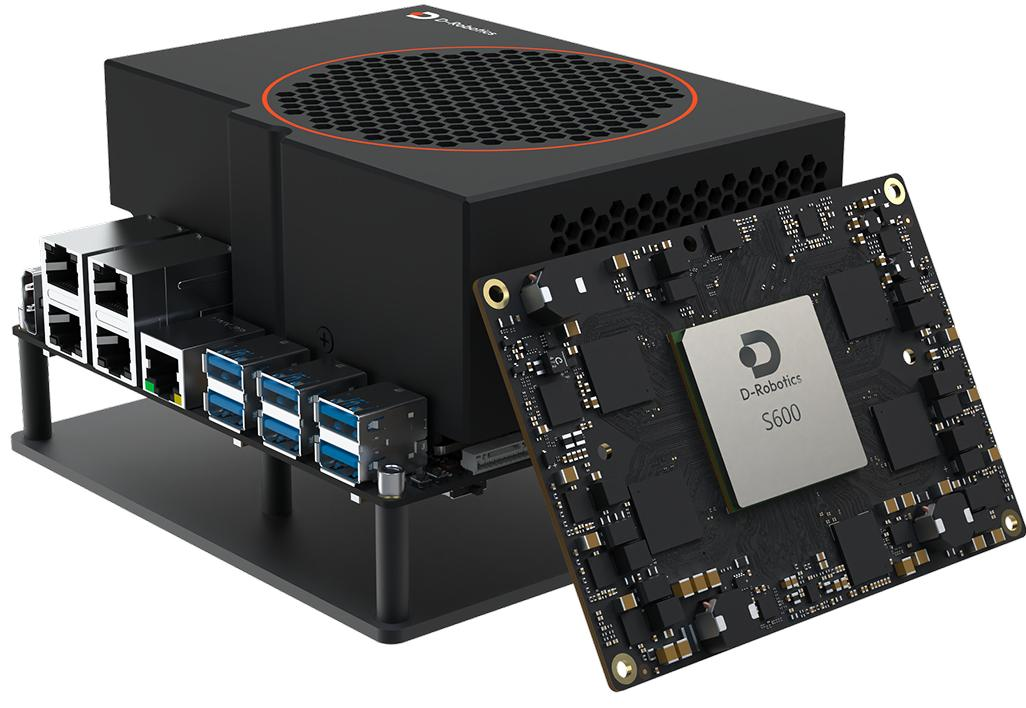
Chips are only half of the use of proceeds. The other half goes to building a full-stack software platform spanning data collection, model training, simulation validation and inference deployment. The company’s ambition is not to sell chips but to become the integrated hardware and software infrastructure of the robotics industry.
Eight million chips and 50 per cent customer coverage
The core product is the Sunrise chip line. The Sunrise S600, released in November 2025, is positioned as full-stack compute on a single die, covering perception, decision-making and control in one chip. Within half a year of launch it had been adopted by more than 20 leading customers, including TARS, Qianxun Intelligence, X Square Robot, Zhizai Wujie, UBTech, PaXini and the Beijing Humanoid Robot Innovation Centre. Customer coverage in embodied intelligence passed 50 per cent.
In the first half of 2026 cumulative Sunrise shipments passed eight million units, with revenue several times the level of a year earlier. The embodied intelligence business has entered volume shipment.
Why do those customers choose D-Robotics? One reason cited repeatedly is the value of domestic substitution. In embodied intelligence chips, Nvidia’s Jetson Orin has long been the default. Orin is expensive, its supply is uneven, and it carries long-term supply risk in the context of Sino-American technology competition. The Sunrise S600 is designed and fabricated in China, which favours cost control and allows faster local technical support.
A second reason is the completeness of the software toolchain. D-Robotics supplies a full development chain from data collection and model training to simulation validation and inference deployment. For a robotics company the fear in switching chips is rarely the hardware. It is the software migration cost, and the toolchain lowers it.
Among the 20-plus customers, most projects have already reached volume shipment. The chips are therefore not merely adopted but adopted at production scale.
Staff changes mark a recalibration
A week before the Series C was announced, the company completed a key personnel adjustment. He Yonghao, head of embodied intelligence, left to join a new company focused on industrial embodied intelligence. He had joined in 2024 and led work on embodied VLA and VA models and robot vision perception, contributing deeply to the general embodied software base. His path runs from a doctorate at the Chinese Academy of Sciences Institute of Automation, to gait recognition at Watrix, to industrial vision at Casi Vision, to autonomous driving perception architecture at Horizon Robotics, and then to embodied intelligence at D-Robotics. Every step moved from laboratory algorithms towards industrial delivery. He has argued repeatedly in public that industrial environments have fixed tasks, clear processes and limited need for language interaction, which makes lightweight VA models a better fit than the large VLA models built for homes.
At the same time Qin Wenkang joined as head of world models and large models. Qin holds a master’s degree from Peking University and worked on vision algorithms and multimodal perception at Baidu, SenseTime and Nio, before joining Jijia Vision in 2024 as head of driving world model algorithms. At D-Robotics he will lead technical planning and productisation for world models and large models. The company had already released the interactive world model Uranus, seen as a key signal of extending from compute infrastructure into model capability. Qin’s arrival fills out the driving-domain world model stack and connects driving and embodied scenarios under one model stack.
The departure and the arrival point in the same direction. D-Robotics is consolidating resources away from general embodied exploration and towards underlying platform capability. He’s departure does not mean the company is abandoning embodied software, but the emphasis moves from building a general embodied brain itself to supplying the tools and the base layer for others to build brains. Qin fills in world models, which are the engine that teaches a robot to understand the physical world rather than a customer-facing product.
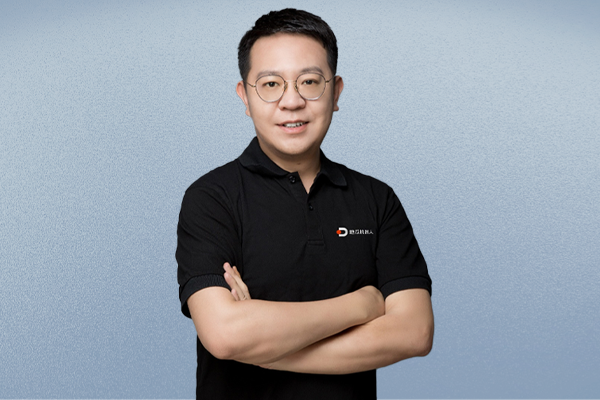
The reading is that D-Robotics is turning from an embodied intelligence company that does a bit of everything into an infrastructure company that does the base layer and not the application. That is the position its chief executive Wang Cong has consistently described, that the company does not build robot bodies and serves everyone who does. Wang has compared D-Robotics to the Wintel of the robotics era. The personal computer era had Windows and Intel, and the robotics era needs chips and an operating system.
The middle layer
Inside the embodied intelligence supply chain, D-Robotics occupies an unusual place. It does not build large models, which is the work of AgiBot, Xinghaitu and Qianxun Intelligence. It does not build robot bodies, which is the work of Unitree and UBTech. It does not build sensors, which is the work of PaXini and Orbbec.
What it builds is the middle layer, the infrastructure connecting compute and applications. The Sunrise chips supply on-device compute and the software platform supplies development tools, and together they form the AI base layer for robotics companies.
The advantage of that position is neutrality. Its customers span humanoids, industrial wheeled platforms, flexible consumer-electronics work, embodied foundation models and full-modal perception, including companies pursuing different technical routes. If D-Robotics built robots itself, those companies would not use its chips. Because it only builds infrastructure, every robotics company is a potential customer.
The middle layer also lets it avoid the sector’s most intense fights, over bodies and over models. Whichever robotics company wins, the chips and software platform remain infrastructure, just as Qualcomm’s chips remain infrastructure whichever phone maker wins. Passing 50 per cent customer coverage in embodied intelligence suggests the position is working. When more than half the leading players use one stack, the supplier becomes a de facto standard.
The difficulty is that it must keep proving it is the most neutral party. The moment its platform reaches into applications and competes with customers, that neutrality comes into question. The personnel reshuffle is evidence that D-Robotics is deliberately pulling back its application ambition and concentrating resources on lower-level technology.
What comes after USD 400 million
The first challenge is competition. Nvidia will not give up robotics chips easily, and the Orin and Thor lines still hold performance advantages. Domestically, traditional chip makers such as Moore Threads are entering embodied intelligence. The middle-layer position is distinctive but not impossible to copy.
The second is the pace of technical change. Technical routes in embodied intelligence are still shifting quickly. VLA models, world models and end-to-end architectures may place completely different demands on silicon, so the Sunrise line has to keep pace, or today’s adequate becomes tomorrow’s inadequate. Qin’s arrival is aimed squarely at the fast-moving world model direction.
The third is ecosystem building around the software platform. A toolchain alone has limited value. It needs to become an ecosystem where developers share models, datasets and application blueprints, which takes time and community capability that money cannot buy quickly.
The real value of D-Robotics does not lie in how many chips it has sold. It lies in becoming the default option for the embodied intelligence industry. When more than half the players in a sector use one stack, that stack stops being a supplier and becomes the operating system of the industry.
Editor’s note: This is an adapted translation of the original OFweek report. It has been trimmed and restructured for readability for an international business audience. The full original (in Chinese) is at https://robot.ofweek.com/2026-09/ART-8321201-12005-30703675.html.