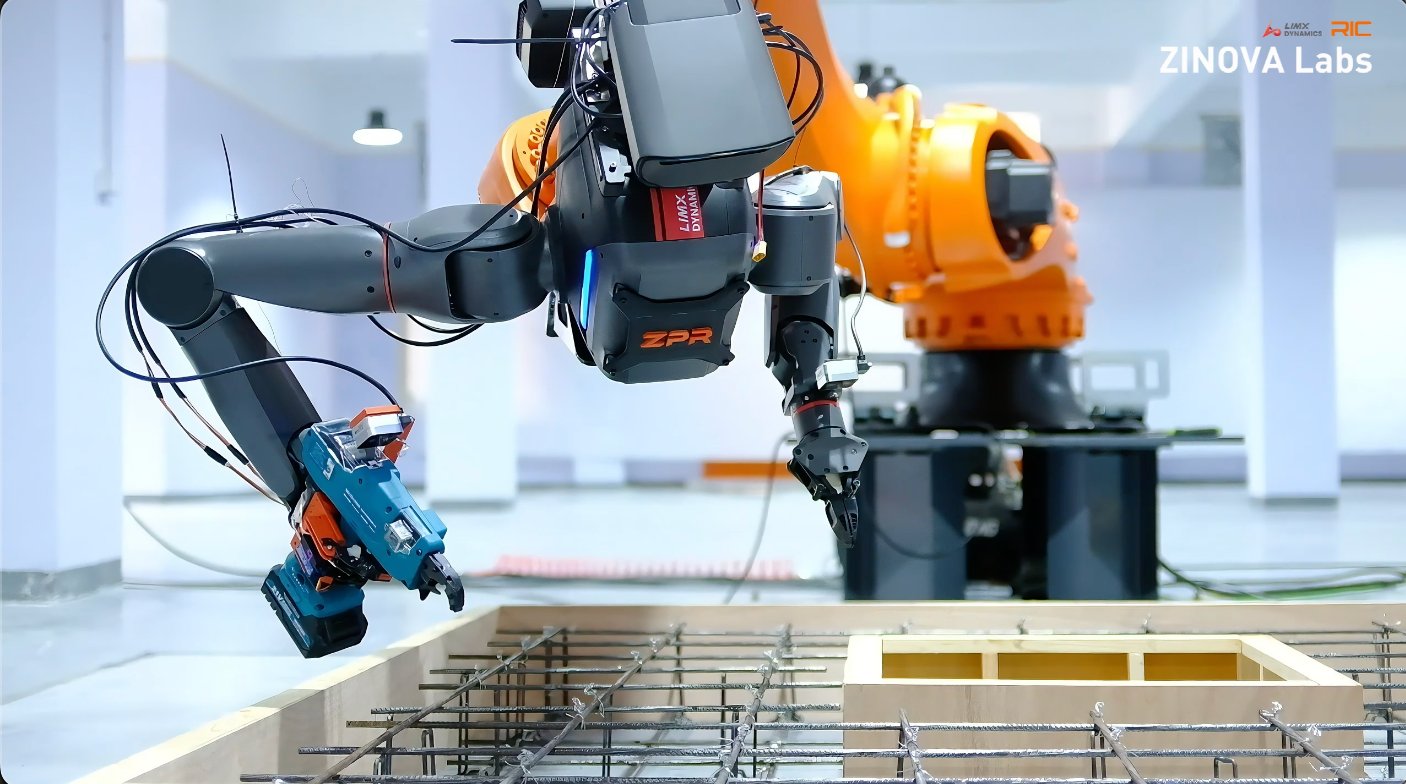
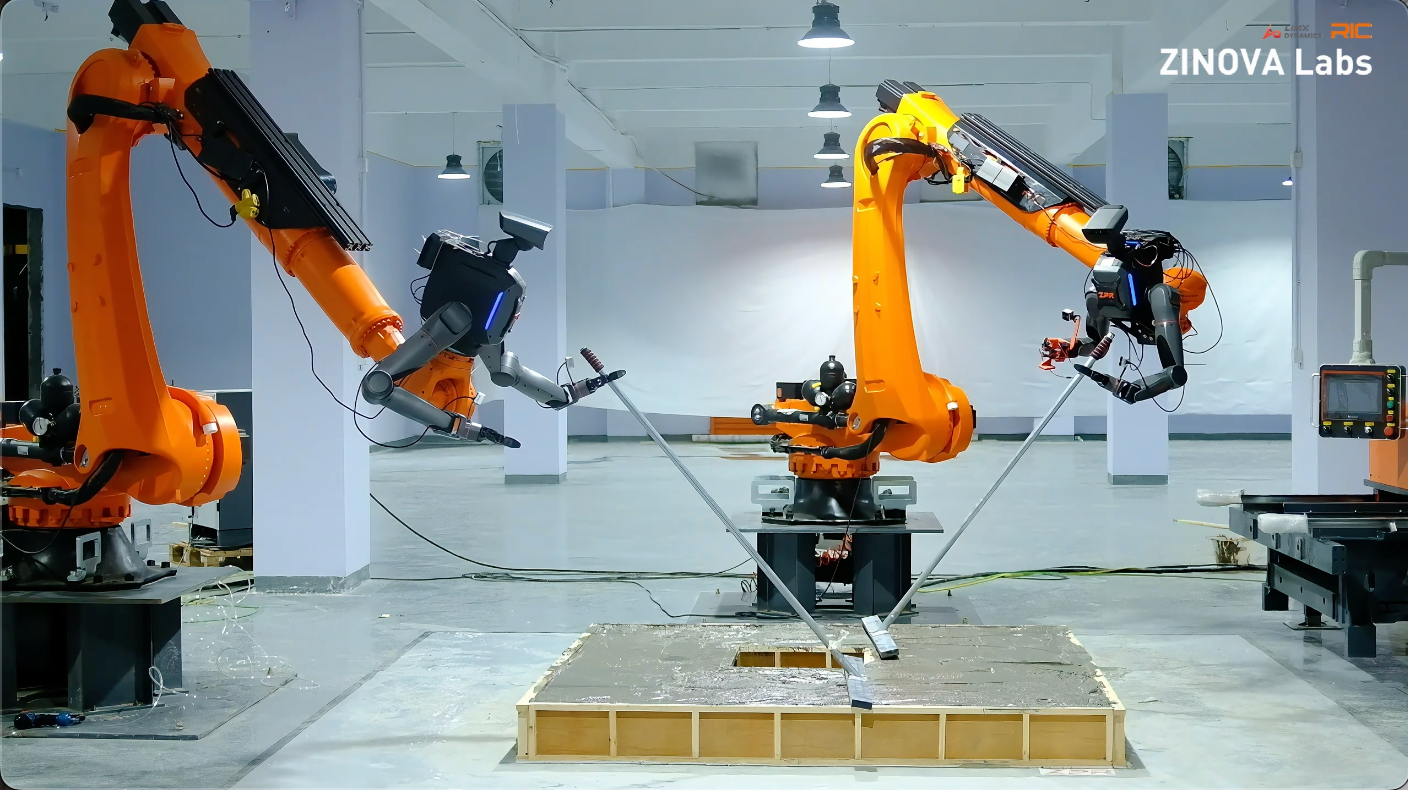
Physical-AI startup ZINOVA, building on LimX Dynamics’ TRON 2 dual-arm embodied robot, completed a scaled tilt-up construction demo with RIC Robotics that covers formwork framing, multi-layer rebar laying and tying. The proof of concept shows a general-purpose robot using off-the-shelf tools inside a complex build sequence.
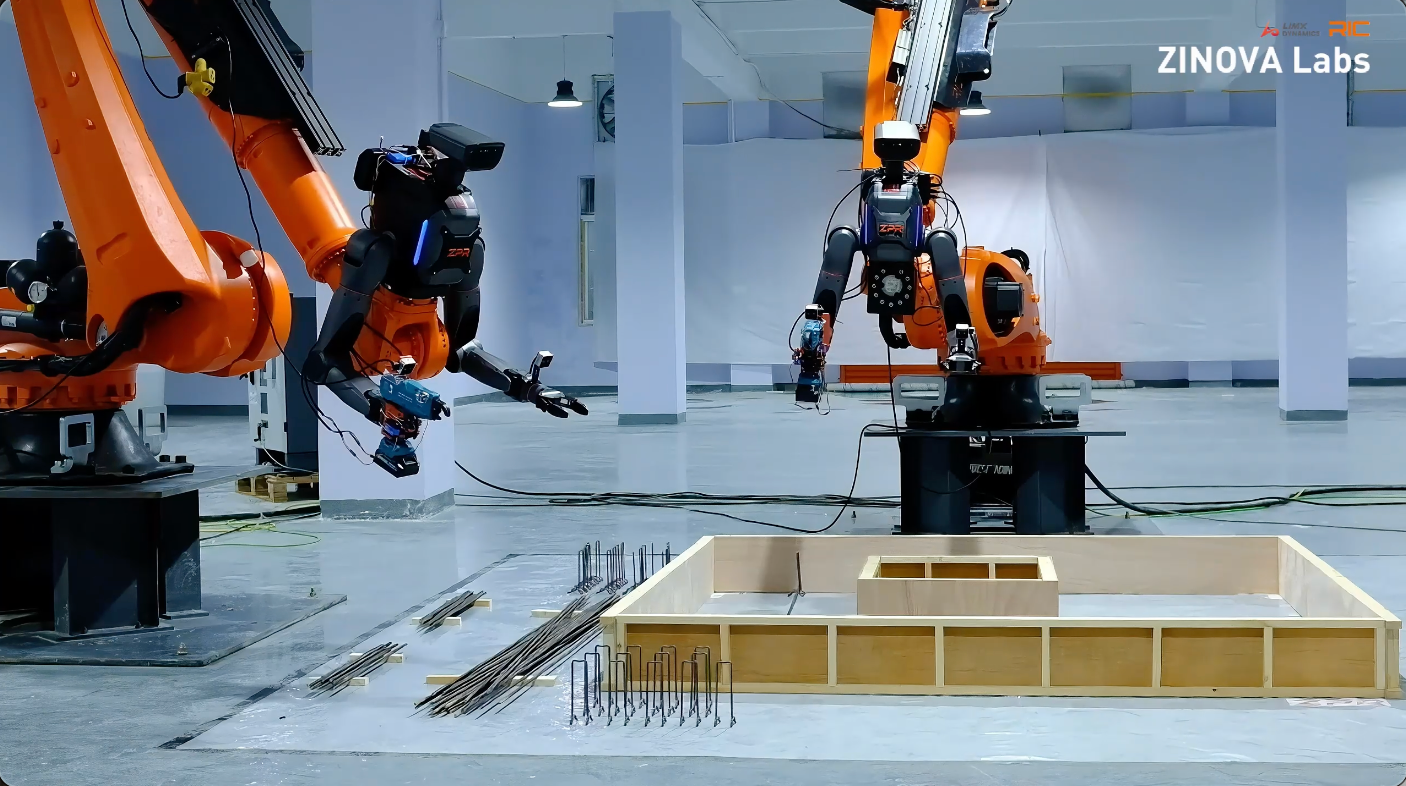
ZINOVA’s thesis is tool intelligence: teaching a robot to recognise, grasp and sense the tools already in the physical world so it can do real production work. The work rests on three pillars: grasp, for general tool picking; feel, through a sensing interface that captures force, torque, vibration and resistance at the tool; and form, exploring the right robot shape for each task. The aim is a tool-intelligence layer that transfers across tools, tasks and robot forms, rather than a dedicated machine per trade.
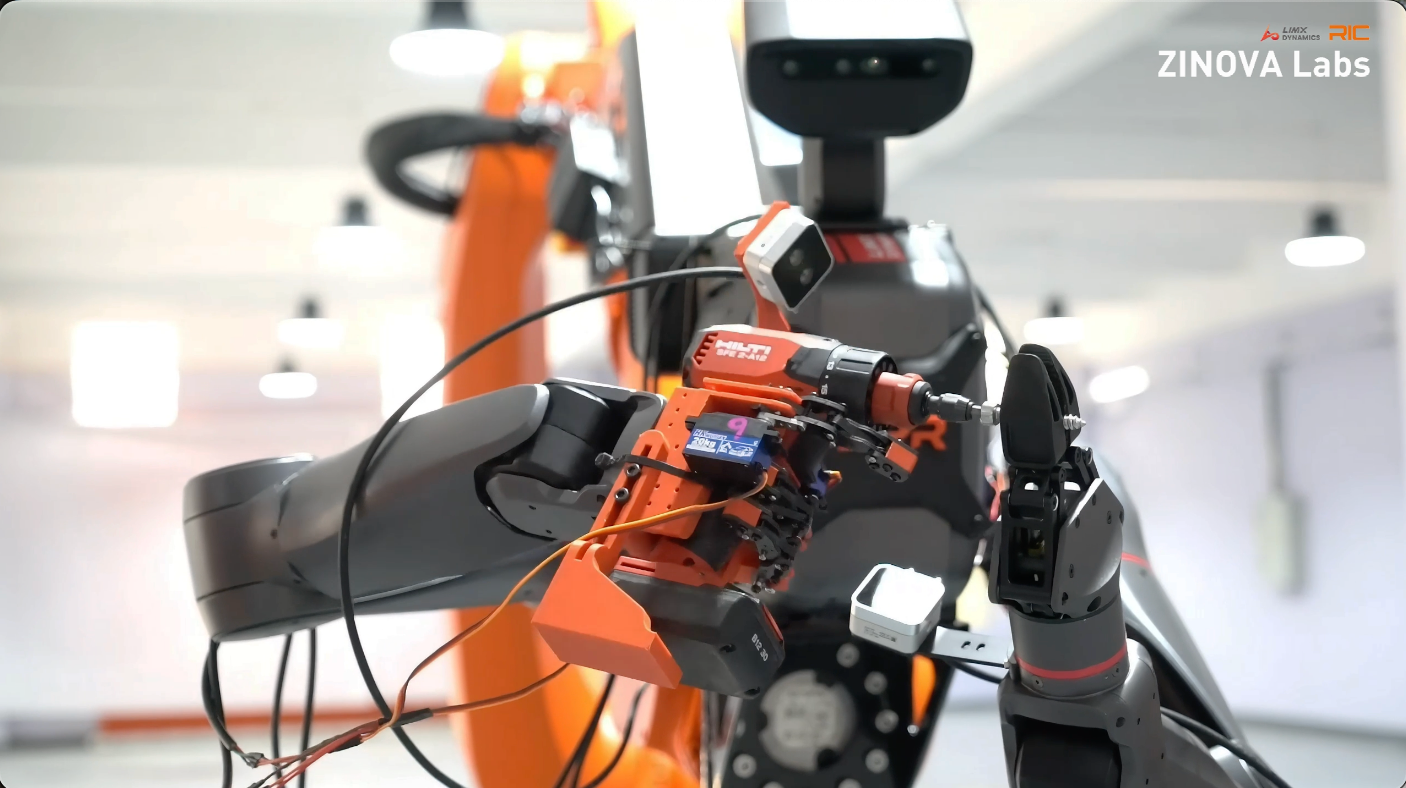
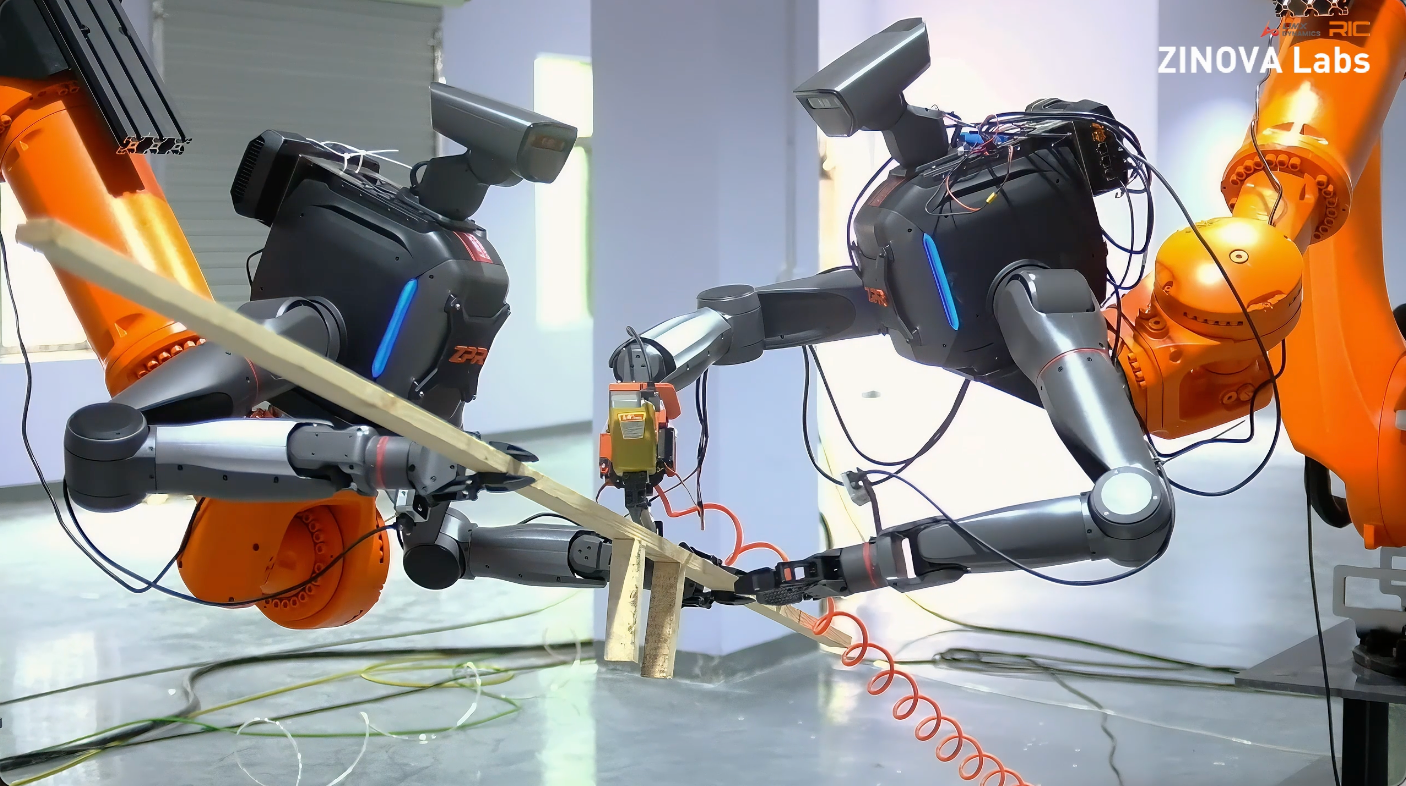
Construction is the first validation scene, and deliberately the hardest. The sector faces a chronic skilled-labour squeeze, sits on a mature tool ecosystem, and is so non-standardised that no single automation recipe fits. The demo rebuilt the core tilt-up steps: two TRON 2 units hold a nail gun and a board to assemble the formwork, then lay and tie rebar on multi-layer stools, mimicking how real trades hand off to each other. The difficulty is carrying one physical workflow end to end, not performing one isolated motion.
One robot, many trades
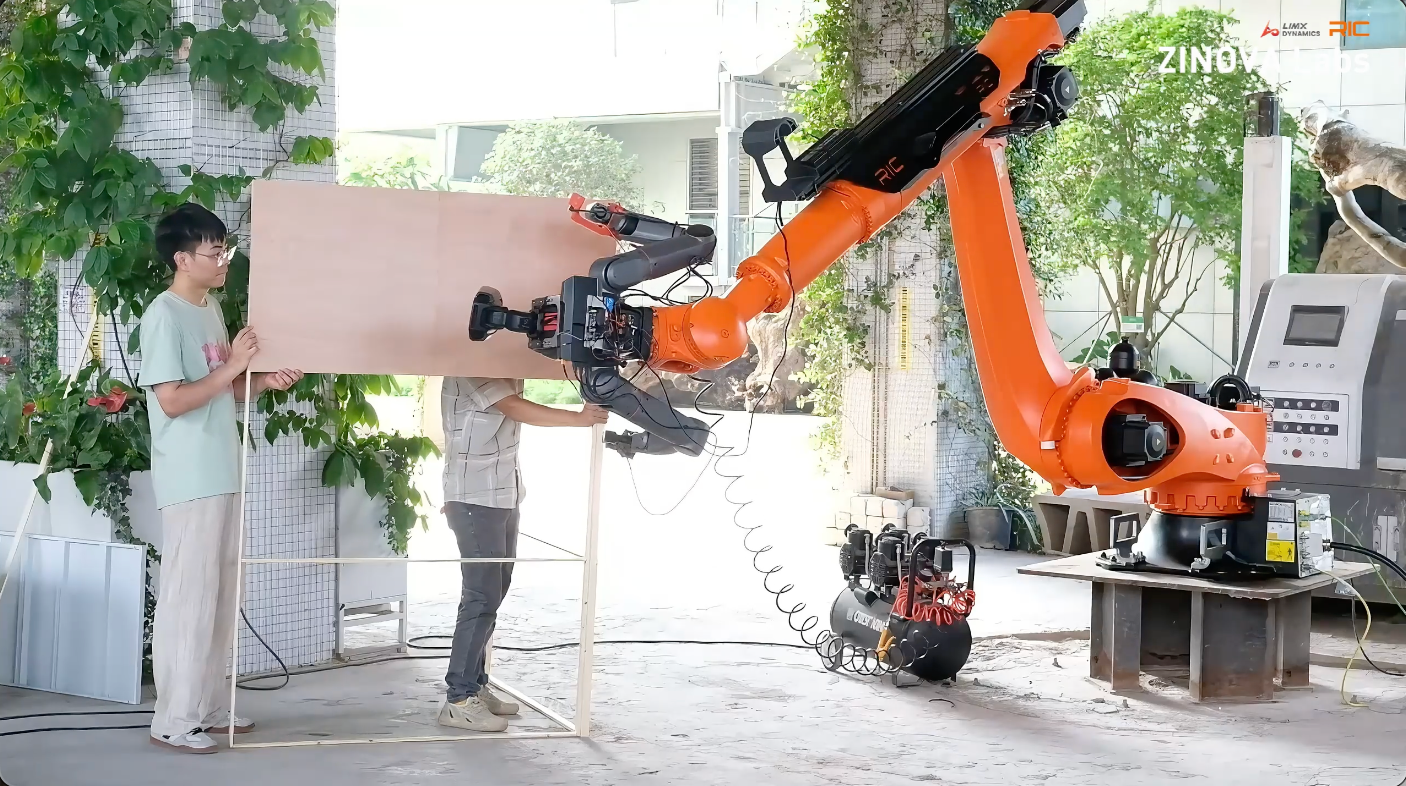
Three ideas shape the configuration. Scenario generality: TRON 2’s modular design swaps tools and bases to fit different trades, so one platform extends across the build instead of one robot per job. Human in the loop: a non-standard site still needs a person at the key nodes, but every tele-operated action feeds the data that trains autonomy later. Compliance efficiency: one robot that clears safety rules can cross trade boundaries that today require separate licences, cutting process friction and giving scale-up a cleaner path.
ZINOVA founder Xu Ziyou put it plainly: the breakthrough in physical AI will not come from a single robot form, but from intelligence that uses tools across forms. LimX co-founder Pang Bo called ZINOVA’s focus on tool intelligence the ecosystem muscle embodied AI needs to land in real scenarios. LimX’s platform strategy offers hardware, development tools and model-training layers with open SDKs and tele-op interfaces, and TRON 2 is the reusable general base on top of it.
More from the original report
Editor’s note: This is an adapted translation of the original Leiphone report. It has been trimmed and restructured for readability for an international business audience. The full original (in Chinese) is at https://www.leiphone.com/category/robot/TaL9FUorWHBFyKzT.html.