On 11 September, Tesla unveiled the European-spec Semi and confirmed deliveries will begin in 2027. That alone is a product update. What is more interesting is the math Morgan Stanley published alongside it.
The bank estimates that a future autonomous Semi, running about 18,000 miles a month, could generate roughly USD 12,000 to 18,000 in software revenue per truck per month. By 2040, some 82,000 autonomous Semis could throw off about USD 17 billion in software revenue, plus USD 7.5 to 8 billion of incremental EBIT. On the Semi programme alone, Morgan Stanley’s Andrew Percoco values the opportunity at around USD 80 billion of market cap, or about USD 20 a share.
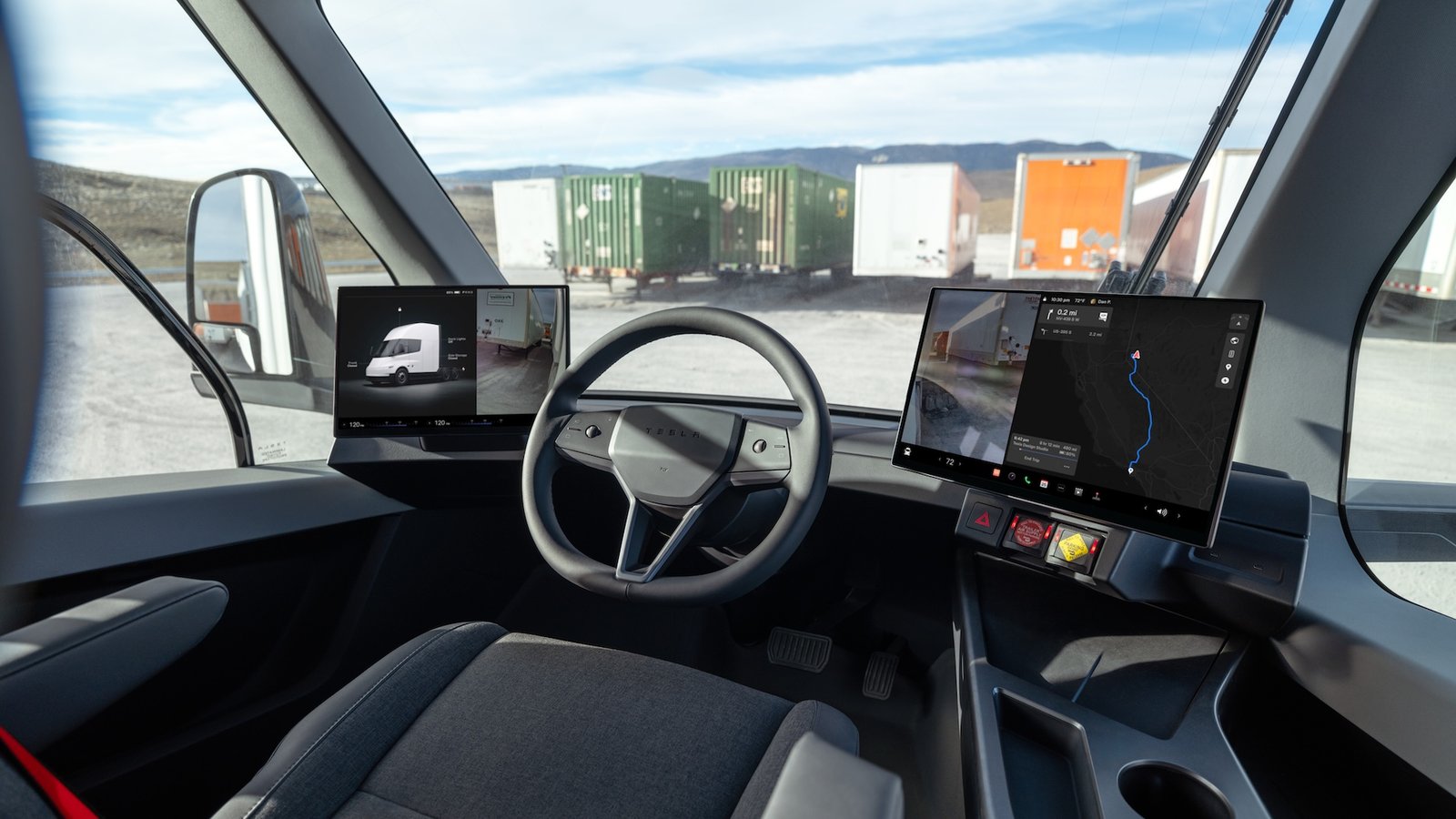
Why Morgan Stanley Re-rated the Truck
The core move is stretching the revenue window of a single vehicle. A conventional heavy truck is a one-time hardware sale: the manufacturer books most of the revenue the moment it sells to a logistics firm. Even servicing and parts stay hardware-led.
Autonomy changes that. By Morgan Stanley’s model, Tesla could charge a per-mile technology fee of about USD 0.85 to 1.00 for autonomous operation. At 18,000 miles a month, that is USD 12,000 to 18,000 of software revenue per truck monthly. Against Tesla’s roughly USD 100-a-month consumer FSD subscription, one autonomous Semi produces the software revenue of 120 to 180 passenger cars.
The economics are not theoretical. The bank models a human-driven electric truck running about 92,400 miles a year versus 215,200 for an autonomous one, with daily operating time rising from roughly 11 hours to 22. Combined cost per mile falls from USD 2.67 to USD 2.13, about a 20 per cent drop. After operating costs, annual profit per truck climbs from about USD 31,000 to USD 189,000, and margin from 11 per cent to 29 per cent. The truck stops being a truck. Once hardware volume sets the software user base and mileage sets the software revenue, the vehicle behaves like a mobile software terminal.
Why Heavy Trucks Are the Cleanest Autonomy ROI
The question is whether this is a Tesla-only story or an industry-wide opening. The pain points in freight are blunt. In China, the truck-driver shortfall passed 10 million by early 2025, and 84 per cent of drivers are aged 36 to 55 while under 20 per cent are below 35. Seventy-one per cent of drivers rest four or fewer days a month and work over ten hours a day.
For fleet operators squeezed by freight-rate competition and energy, insurance and idle-time costs, autonomy is a ledger entry: adopt it if the labour, energy, insurance and downtime saved exceed the software fee. Morgan Stanley puts the US addressable autonomous-freight market at about USD 601 billion in 2026, passing USD 1 trillion by 2041. China’s base is just as large: 2025 road freight hit 43.29 billion tonnes, with 11.69 million operating goods vehicles on the road at year-end.
The logic also lets trucks carry a higher software ARPU than cars. Consumers pay for convenience. Fleets pay with cost they no longer bear. High frequency and high mileage mean higher billing headroom, and the fleet keeps paying as long as the saving beats the subscription.
From Selling Trucks to Selling Capacity
The Robotruck model has three revenue layers. The first is still the vehicle itself, but its real purpose is building installed base for data, subscriptions and higher autonomy. The second is the software layer Morgan Stanley prizes most: a recurring, high-margin fee charged by time, mileage or feature. The third is L4 driverless capacity, where the provider sells transport itself rather than a truck or a system.
China already shows early proof. DeepWay, by April 2026, had delivered 13,707 new-energy heavy trucks, over 9,000 with L2 assisted driving and a paid-subscription rate above 30 per cent. Its L4 convoy completed driverless main-route testing in Inner Mongolia and ran L4 road tests with STO Express. DeepWay mirrors Tesla’s path: ship hardware, then charge for software, then move toward driverless transport. When valuing a Robotruck firm, unit sales stop being the only metric. Installed base, autonomy penetration, willingness to keep paying and per-truck software revenue all become variables.
For European fleet operators and OEMs watching the transatlantic EV race, the signal is direct: the winner in electric heavy freight may not be the one that builds the most trucks, but the one that turns each truck into a recurring software and capacity business.
Editor’s note: This is an adapted translation of the original Chedongxi report. It has been trimmed and restructured for readability for an international business audience. The full original (in Chinese) is at https://chedongxi.com/p/376367.html.