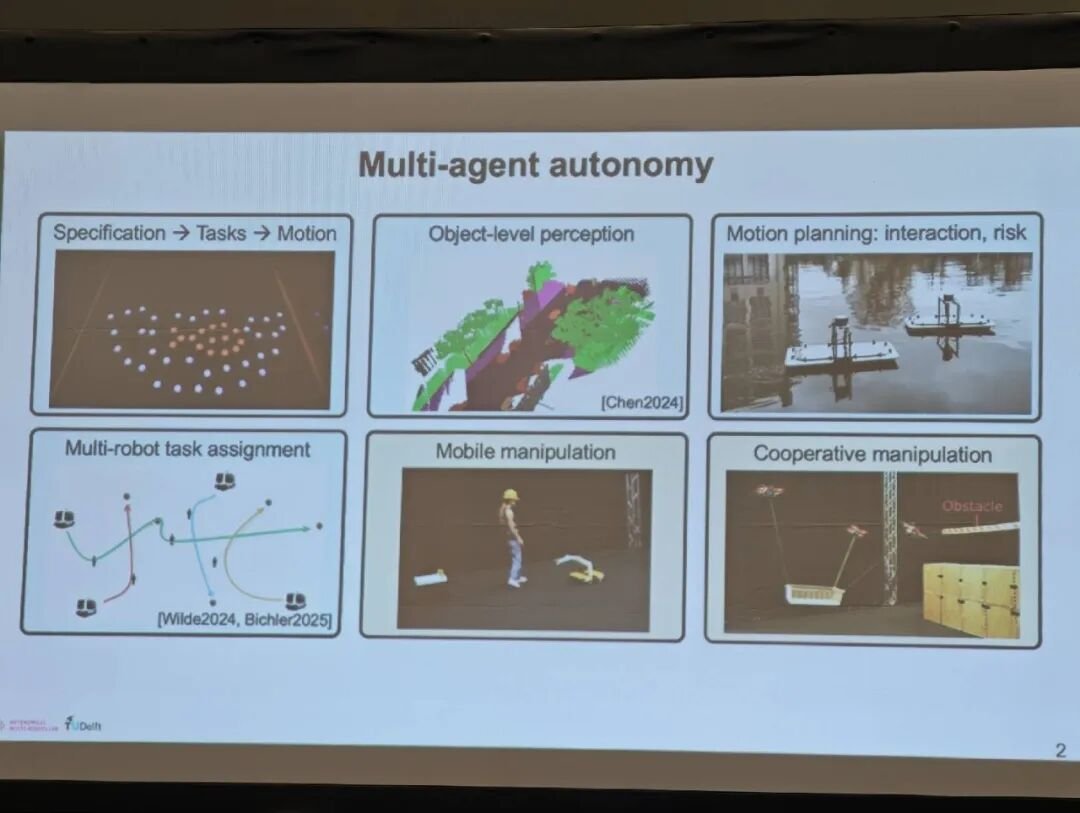
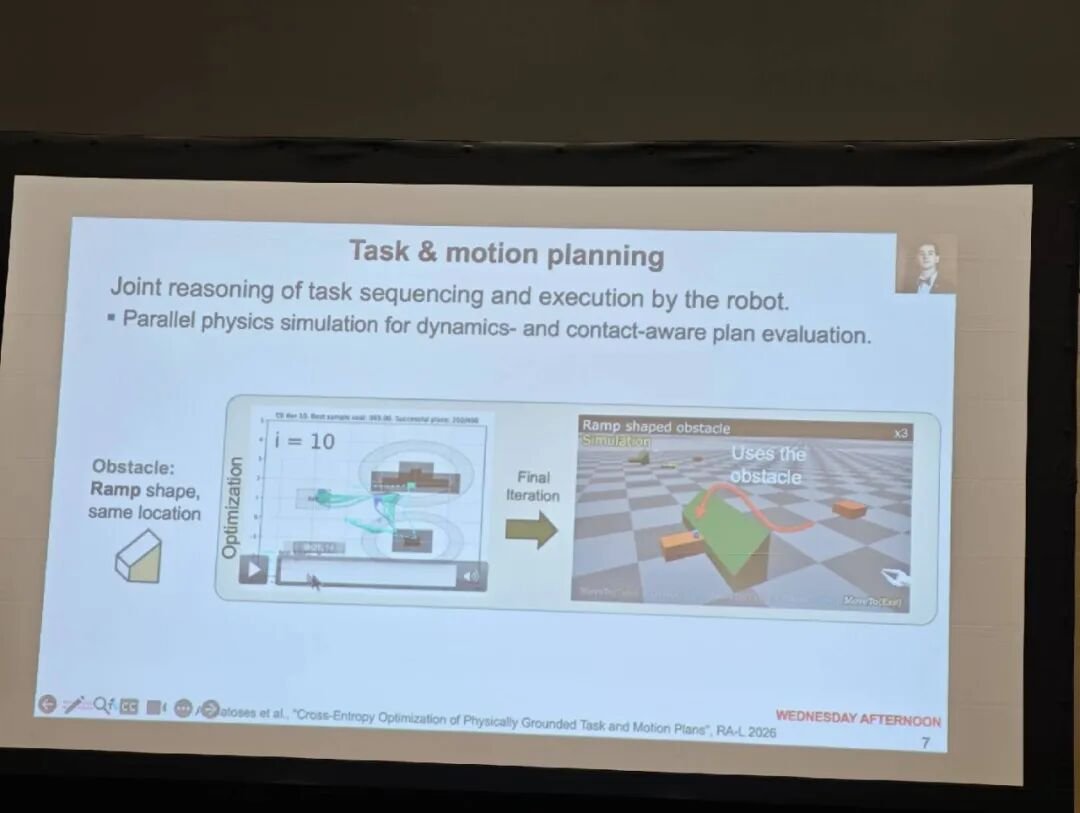
A recap from IROS 2026 argues that embodied intelligence is done waiting on the ground. The talk, Mobile Manipulation: From Task and Motion Planning to Aerial Collaboration, pushes manipulation onto flying platforms.
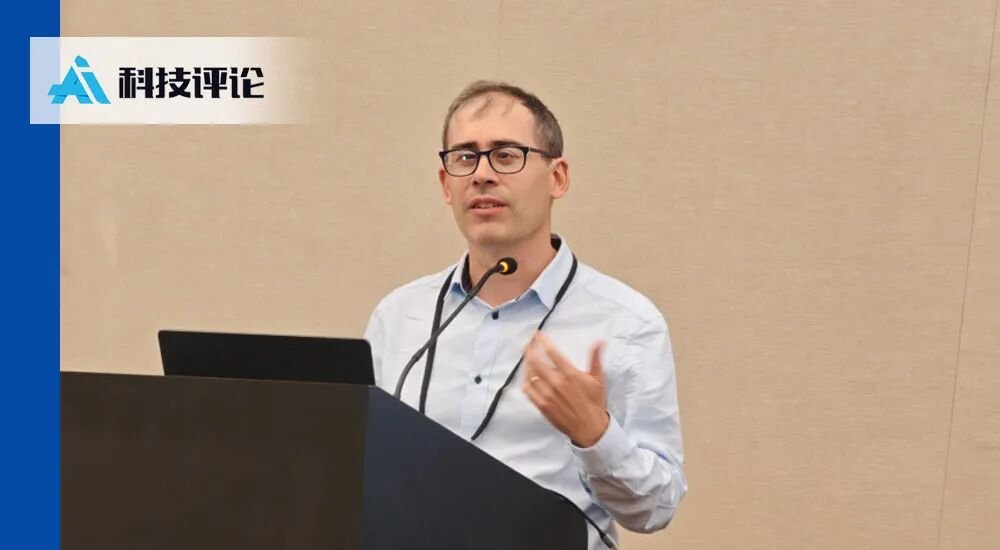
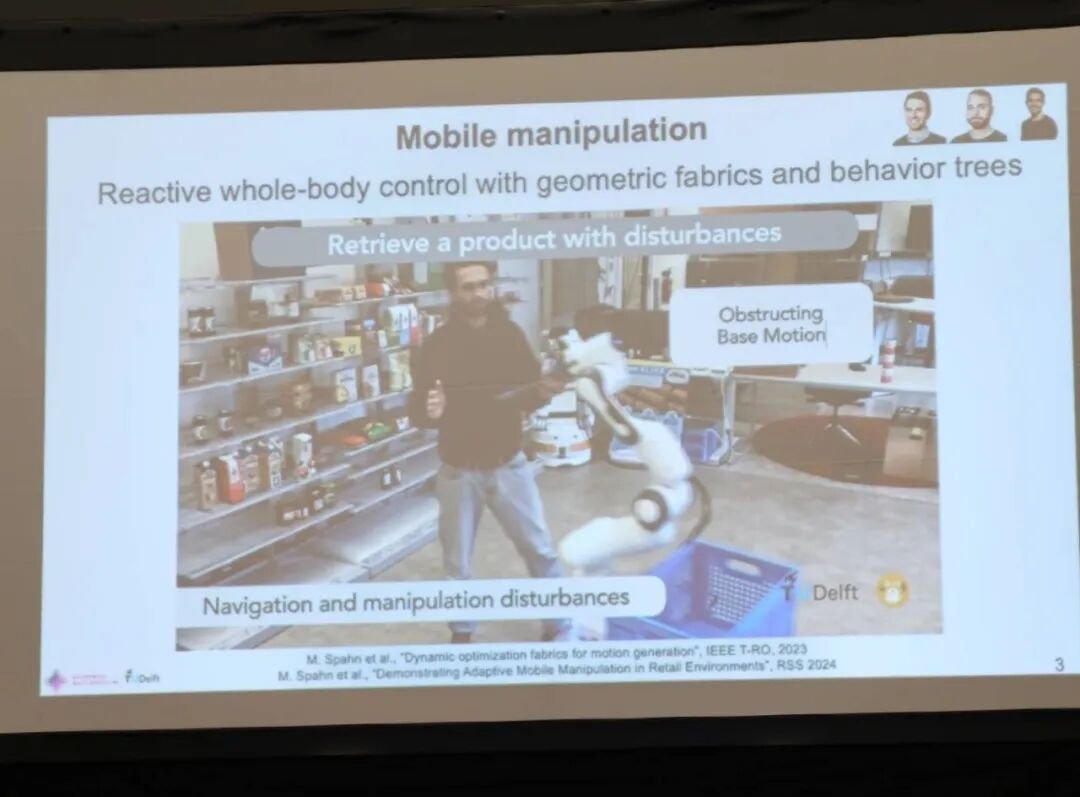
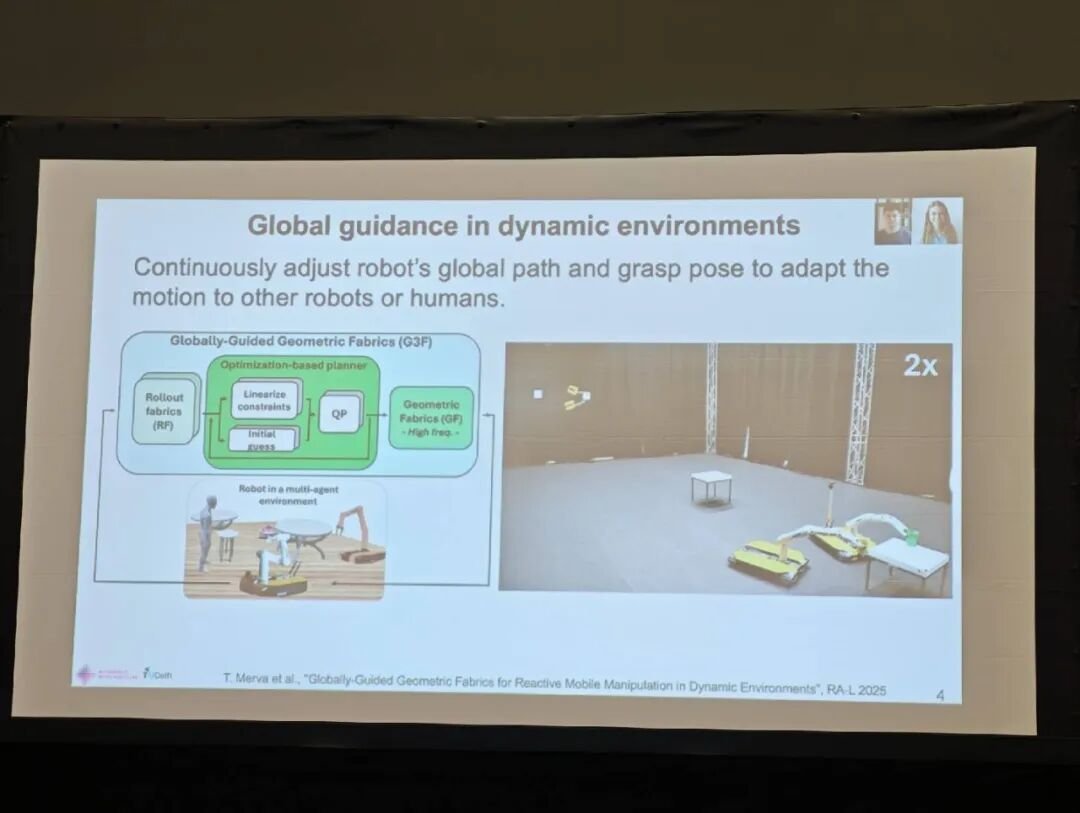
The first step is obvious but hard. A robot that walks must also learn to act while moving. Standing still to grasp is a luxury the real world rarely grants, so mobile manipulation treats locomotion and manipulation as one problem.
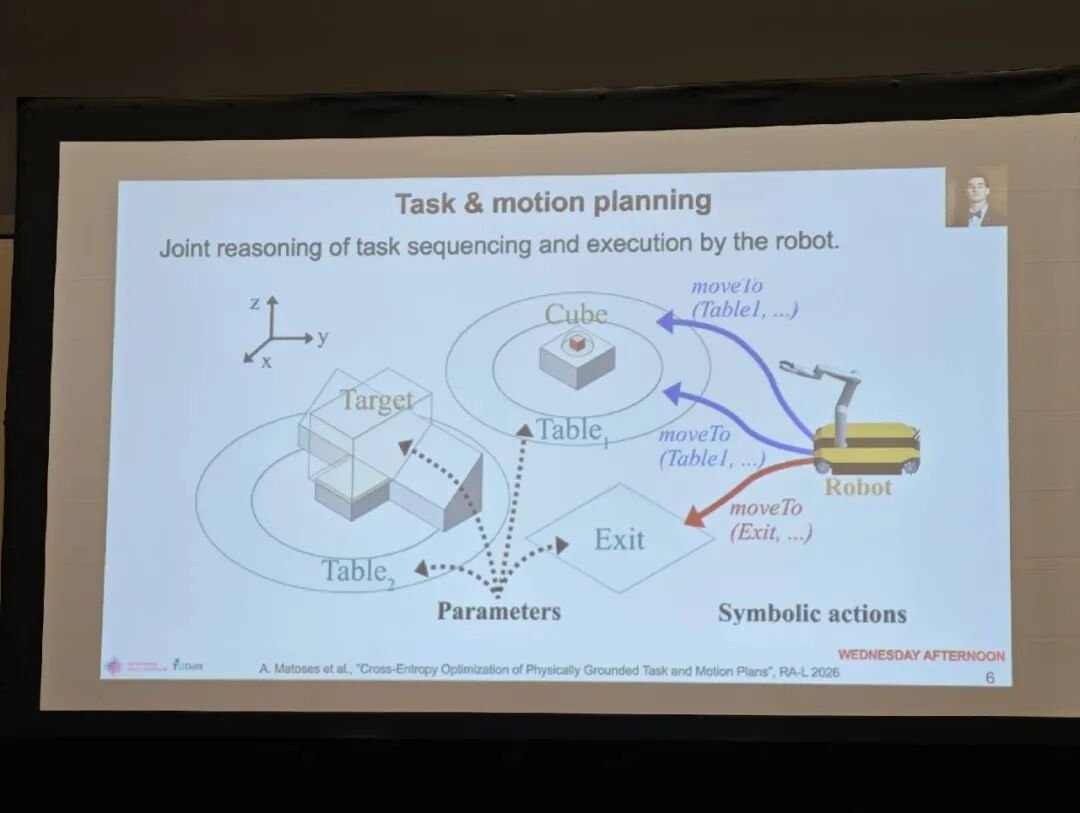
The second step is planning. Task and motion planning lets the robot find a faster route on its own by reasoning about what it must do and how its body must move, rather than following a fixed script. The win is fewer wasted metres and a plan that survives a cluttered site.
Multi-robot collaboration is where the field stalls, and the bottleneck is demonstration data. Coordinating several bodies around one payload needs examples, and those examples are expensive to collect. The talk frames this as the gating problem for aerial teams.
From the Floor to the Sky
The leap is aerial mobile manipulation. Drones are shown pushing boxes, writing, and tightening bolts, tasks that once belonged to fixed arms on factory floors. The thrust is that many inspection and light-assembly jobs happen where no floor exists, on towers, bridges and facades.
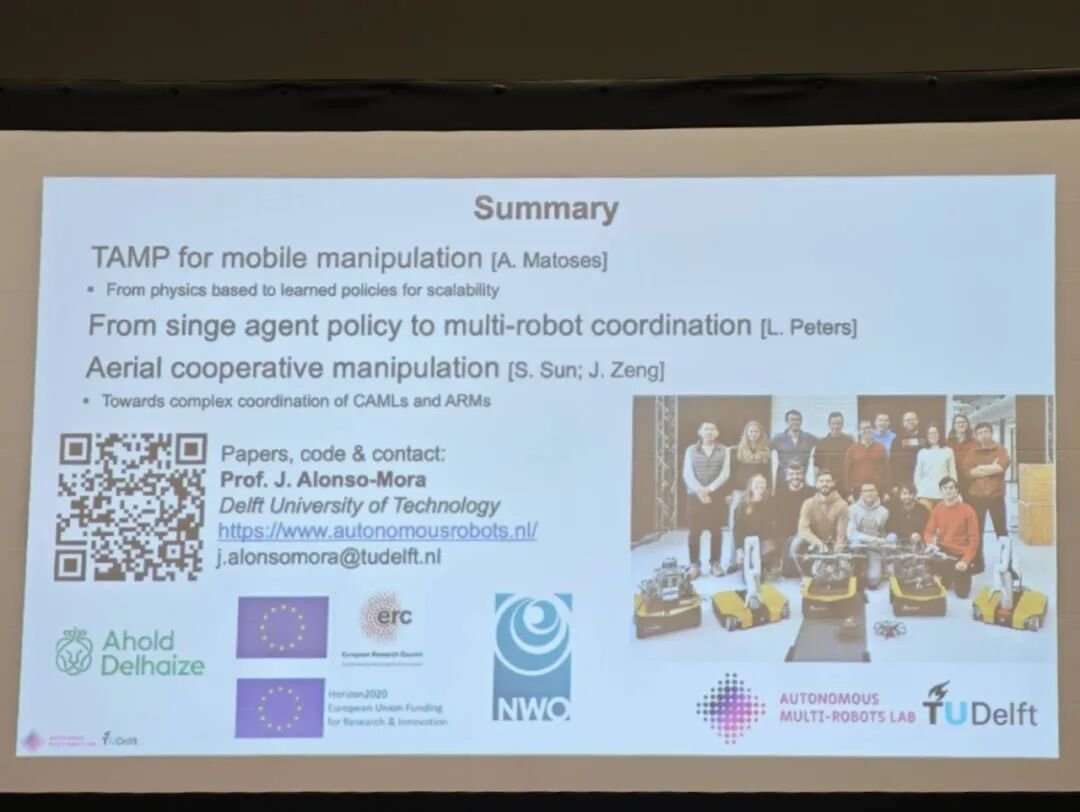
The next target is construction crews of drones. Instead of one flying arm, a coordinated team would handle payload pose, positioning and fastening together, turning a single trick into a workflow. The research agenda is less about one heroic robot and more about making several cheap ones behave as one.
The audience questions cut to the hard engineering. With several drones sharing one payload and no markers on the load, how is state estimated, does each drone rely only on its own IMU, and do the drones run a consensus algorithm to agree on where the payload is. For cable-suspended lifts, the assumption of constant tension is itself a research question.
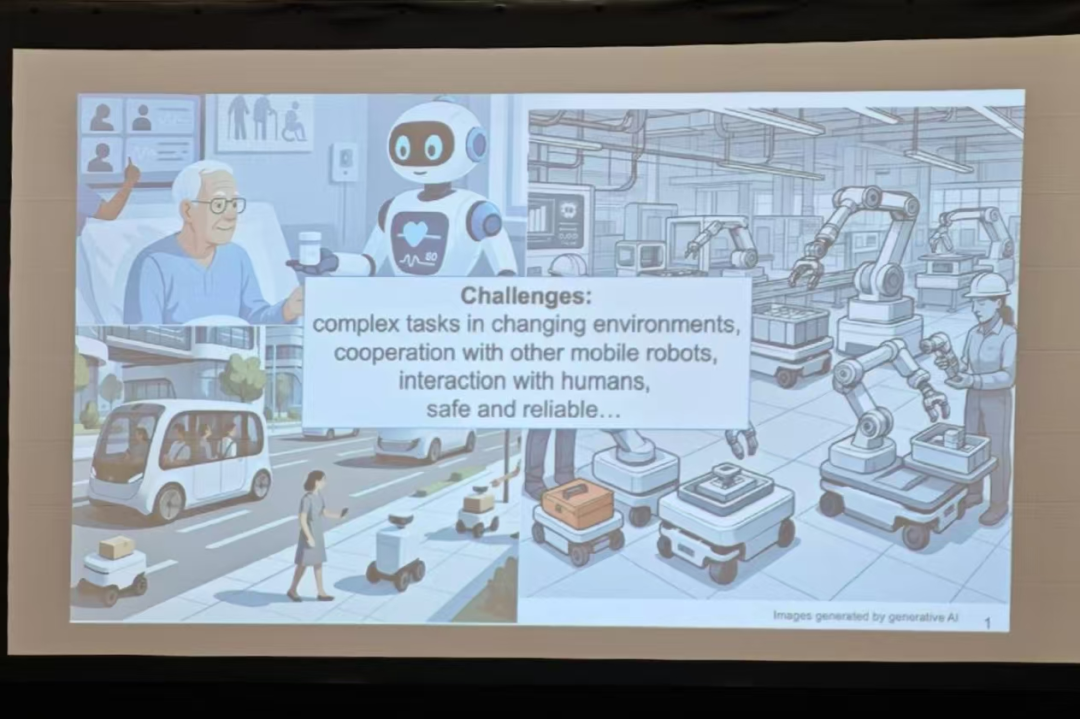
Editor’s note: This is an adapted translation of the original Leiphone report. It has been trimmed and restructured for readability for an international business audience. The full original (in Chinese) is at https://www.leiphone.com/category/academic/XSVcStujND4eWLFZ.html.
Image gallery