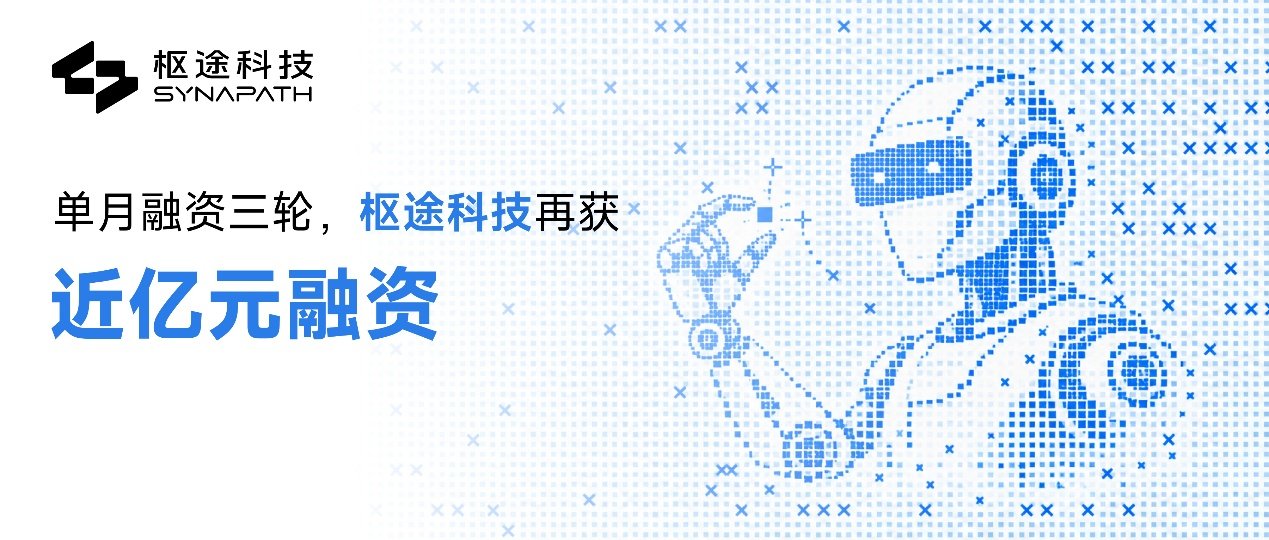
Shutu Tech has closed a Pre-A round of nearly RMB 100 million, led by CDH Investments’ Baifu and the Kunpeng Fund, a national big-data vehicle, with Guangzhou Industrial Investment and Yihe Capital joining and existing investor TrendSci topping up. It is the company’s third raise in a single month.
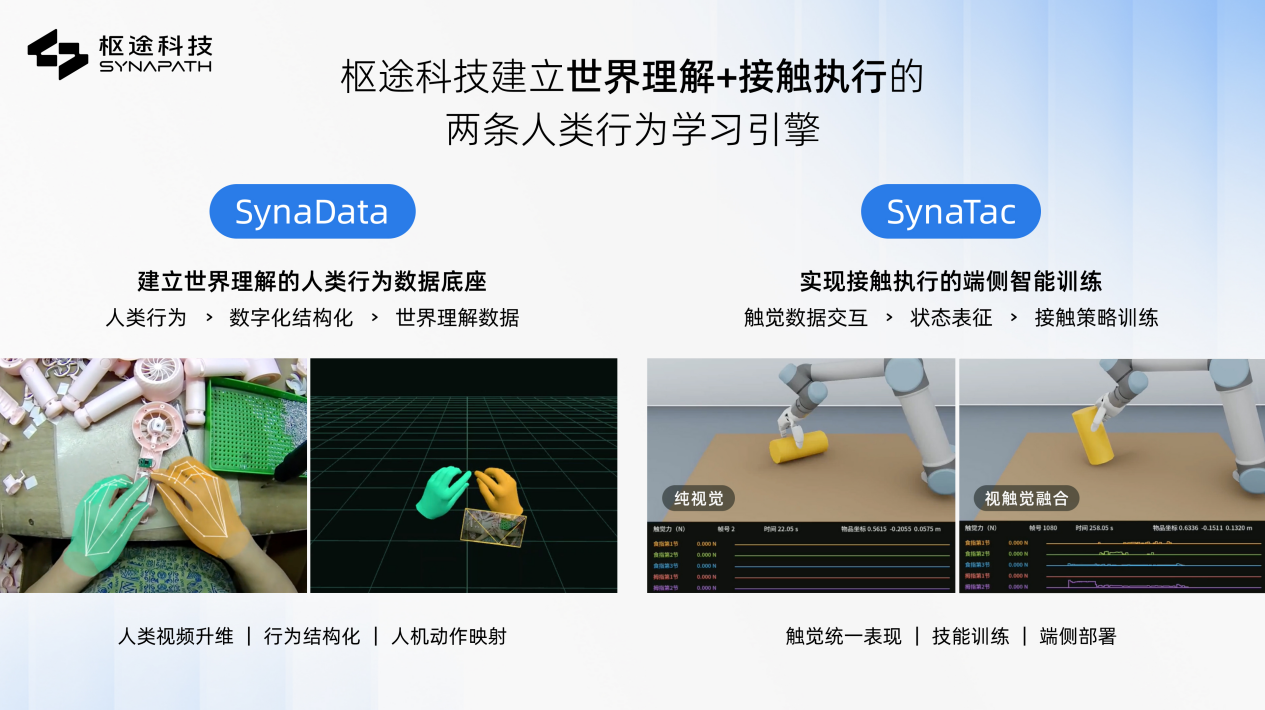
The round funds a specific bet: that embodied robots move from demo to delivery not on smarter brains alone, but on reliable contact. Shutu is extending from its SynaData video-upscaling product, which turns human action video into structured training data, into SynaTac, a unified representation for tactile data, building a two-engine matrix for world understanding and contact execution.
The team has the scars to make that claim. Chief technology officer Wei Mu was vice president of R and D and China software head at Covariant AI, the Silicon Valley embodied-AI pioneer, and Shutu’s core is built from that Covariant algorithm team. They have shipped embodied algorithms from demo to stable field operation and know the gap first hand.
Their thesis splits the hard problems. The brain layer under-understands the world, the cerebellum layer executes contact unstably. Massive human-behaviour video helps a robot know what to do. Tactile representation is what lets it do the job well, judging whether contact is stable and adjusting force against slip, deformation and resistance in real time. More sensors are not the same as contact capability. The win is making that signal actually drive learning.
Two Engines, One Evaluation System
SynaData already serves more than 60 per cent of the billion-dollar embodied-AI unicorns and has won bulk orders from top tech vendors. It reconstructs human-object interaction, cross-entity mapping and object pose into multimodal training data. SynaTac aligns object, action and contact state and fuses vision, touch and robot state, then trains contact strategy through demonstration, interaction and trial and error for edge deployment on dexterous hands.
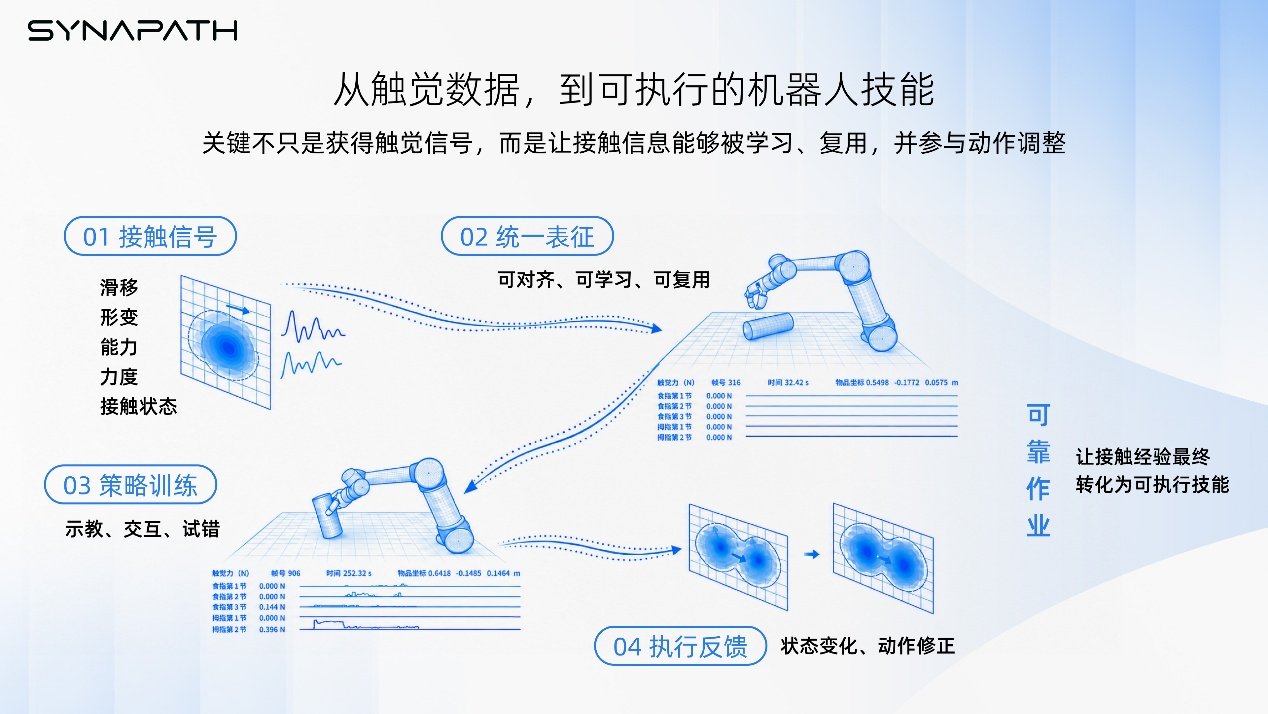
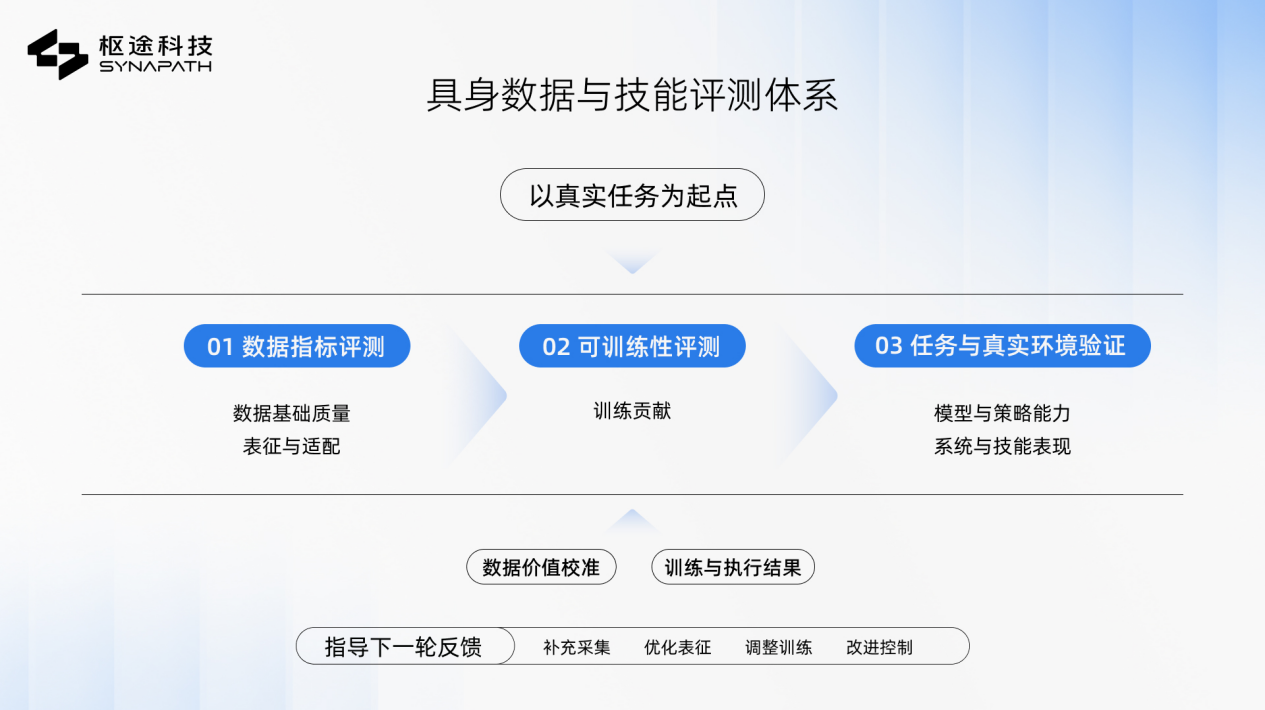
For the first time, Shutu has also published an embodied-data and skill evaluation system that links data supply, model training and robot execution across three stages, data metrics, trainability and real-environment validation, feeding results back into production and training.
The value is in the ecosystem slot. By anchoring the physical-AI infrastructure layer, Shutu offers common solutions for tactile data, strategy training and device adaptation, cutting duplicated effort up and down the chain when new hardware or new tasks arrive.
Editor’s note: This is an adapted translation of the original Leiphone report. It has been trimmed and restructured for readability for an international business audience. The full original (in Chinese) is at https://www.leiphone.com/category/robot/zVCVfjhnzD1S34Pm.html.
Image gallery