China’s car market in the first half of 2026 moved through pressure and upheaval at once. Domestic passenger-car registrations fell roughly 20 per cent year on year, even as nearly 500 new models hit the market. The supply-demand mismatch shrank the hot-selling window of any single model to almost nothing, and the average operating margin of domestic carmakers compressed to just 1.5 per cent.
That means a RMB 200,000 car leaves the maker about RMB 3,000 in profit. As NIO co-founder and president Qin Lihong puts it, that is quite literally being an “industrial porter.”
Yet the market structure is fracturing underneath the price war. In May 2026, pure-electric models became the single largest powertrain in China’s passenger market for the first time, taking more than 40 per cent of sales. In the large five-seat SUV segment, the BEV-to-range-extender sales ratio reversed from 1:23 in the first quarter of last year to 8:1 by June this year. The range-extender route, once sold as the answer to mileage anxiety, is now in its own painful correction.
NIO is a useful lens on this shift. In July, the group, including the NIO, Onvo and Firefly brands, delivered nearly 36,000 vehicles, up 71 per cent year on year. Qin describes a clean brand ladder: NIO above RMB 300,000, Onvo for family buyers between RMB 150,000 and 300,000, and Firefly for lifestyle urban buyers, with a current 4:2:1 sales mix where Onvo carries the most growth.
While volume rose, NIO held price. In June its average selling price was RMB 443,000 for NIO, RMB 245,000 for Onvo and RMB 120,000 for Firefly. Qin notes that Audi’s ASP sits near RMB 250,000, so Onvo undercuts it by only RMB 10,000 and beats Cadillac and Volvo by several times that. Weighted across the 4:2:1 mix, NIO’s group ASP stays above RMB 300,000 against an industry average still under RMB 200,000.

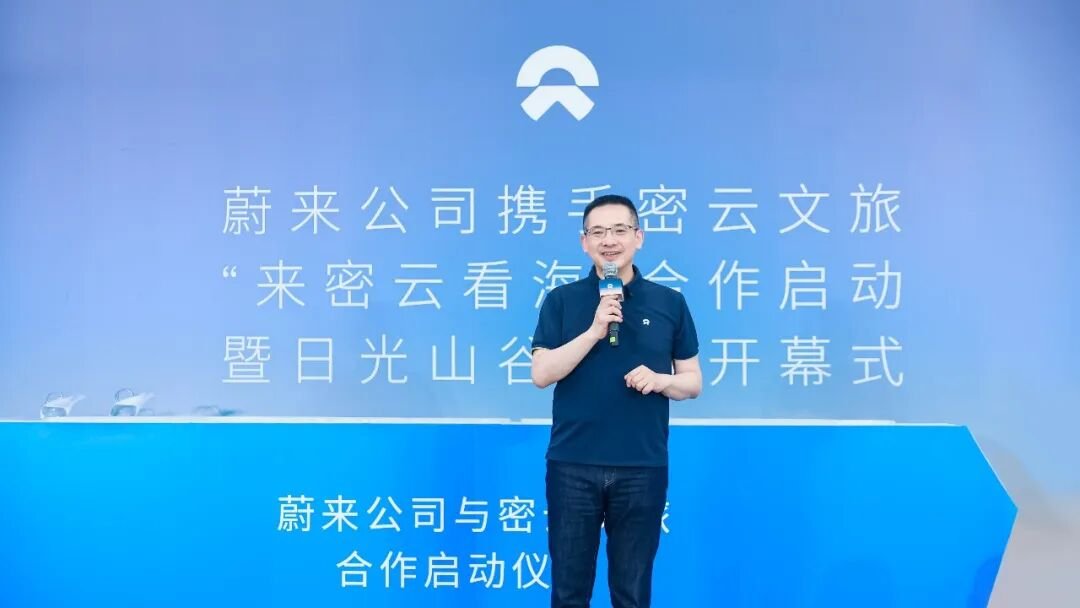
Beijing shows the premium bet working. In the first half NIO sold 10,232 vehicles in the capital, closing on BMW’s roughly 11,000, and Qin expects to overtake one of the German trio there this year. A partnership struck on 2 August with Miyun cultural tourism extends the three brands into a “car plus travel” experience for the Beijing-Tianjin-Hebei region.
Qin is blunt about the “sales-volume obsession.” Car companies are businesses, he argues, and the only metrics that matter are revenue and margin. Margin is under a triple squeeze this year: chip and precious-metal-driven battery inflation, and oil prices that raise both petrochemical content in parts and global logistics cost.
NIO’s answer is to defend price rather than join the discount spiral, keep the premium mix, and let pure-electric demand do the rest. The range-extender bought Chinese buyers time. As charging and battery range close the gap, that bridge gets crossed once and abandoned.
Editor’s note: This is an adapted translation of the original Leiphone report. It has been trimmed and restructured for readability for an international business audience. The full original (in Chinese) is at https://www.leiphone.com/latest/index/id/4762.