On the eve of its next Roadster unveiling, Tesla quietly did something that matters more to its installed base: it pushed a new driver-assistance build to cars that are nearly a decade old.
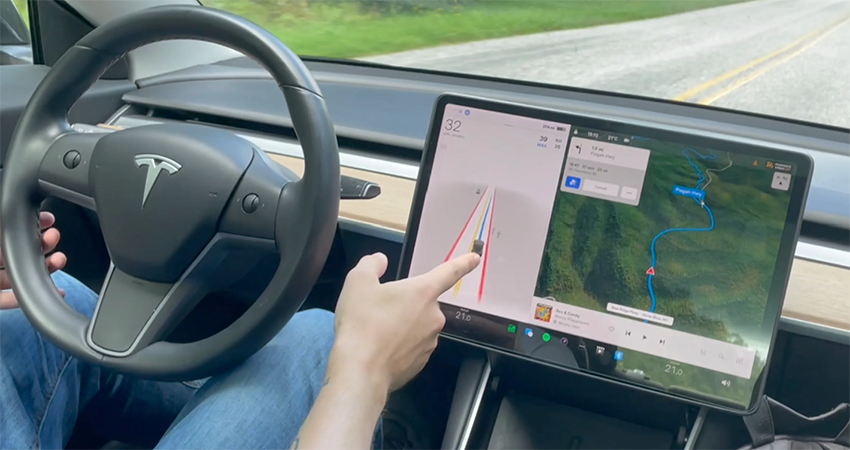
Chedongxi reported on 15 October that Tesla has started delivering FSD (Supervised) v14 Lite to Model S and Model X vehicles running on HW3, the company’s third-generation self-driving computer. According to the release notes, v14 Lite distils the intelligence of the HW4 version of FSD onto HW3 hardware through knowledge distillation, bringing HW4 gains from reinforcement learning and offline models to the older computers.
Why the Intel-chip wording
The reference to Intel chips is Tesla’s shorthand for a specific group of older cars. The earliest Model S and Model X used NVIDIA Tegra infotainment chips. From 2018 Tesla switched those models to Intel Atom chips, then from 2021 to AMD Ryzen. The self-driving hardware is still HW3 in all of them, which is why they qualify for the v14 Lite push. Cars on AMD Ryzen HW3 units already received the update in late September, and owners of 2017-model-year Model X have confirmed the rollout, even though those cars originally shipped without HW3 and later got a free HW3 retrofit.
What the older cars gain and lose
The update improves anticipatory and emergency response across navigation, ramp merges, lane splits, pedestrian interaction, traffic-light reading and cut-in scenarios, while smoothing everyday driving and steadying lane centring. Compared with HW3 Model 3 and Model Y on Intel chips, the S and X build drops a few features such as parking-position selection at destination, direct FSD launch from park, and automatic reversing. Against the full v14 it also lacks emergency-vehicle handling and automatic collision avoidance in manual driving, and its response speed trails the complete version.
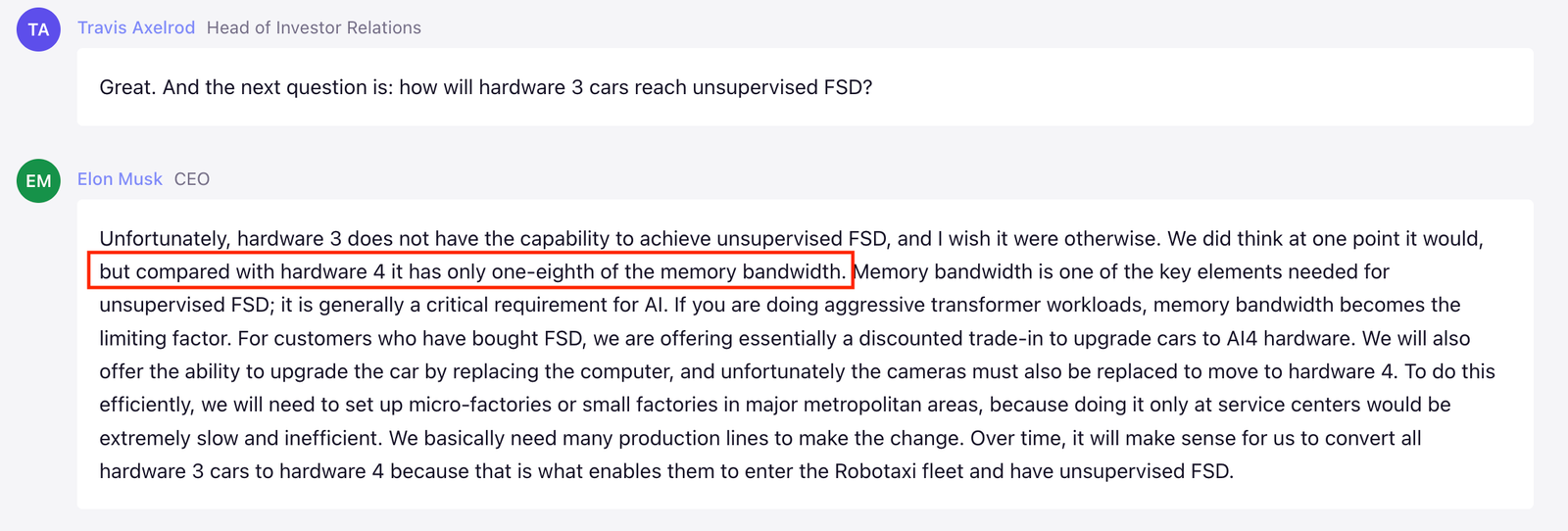
In April, Musk admitted on the first-quarter call that HW3 simply cannot support future unsupervised FSD, and noted its memory bandwidth is only one-eighth of HW4’s. Tesla has also confirmed HW3 cars will not get the coming FSD v15. Yet this v14 Lite push shows how Tesla treats its large base of legacy owners. Rather than abandon HW3, it migrates part of the newer stack onto old hardware through distillation, so those cars keep evolving. In a software-defined car, the sale is the start of a continuing experience, and letting long-owned models fall behind in the OTA era damages the trust asset that matters most.
Editor’s note: This is an adapted translation of the original Chedongxi report. It has been trimmed and restructured for readability for an international business audience. The full original (in Chinese) is at https://chedongxi.com/p/377985.html.