A five-month-old startup founded by a former Horizon smart-driving lead has closed a nine-figure seed round with Xiaomi and Baidu in the cap table, betting that self-driving know-how transfers to robots.

OFweek reported that Chuguang Yueqian recently closed a nine-figure seed round, with Chentao Capital, Xiaomi Strategy Investment, BV Baidu Ventures and Xinhe Capital all joining. The company is under five months old, but its founder carries a loud title: Zhang Ying, former core lead of Horizon’s HSD system, known in the trade as the “end-to-end war god”. He drove three generations of smart-driving stacks, mapped, mapless and pure-vision one-stage end-to-end, pushing production systems close to Tesla FSD level. When capital voted with real money, the first question was why a driving veteran turned to robots.
From wheel to world
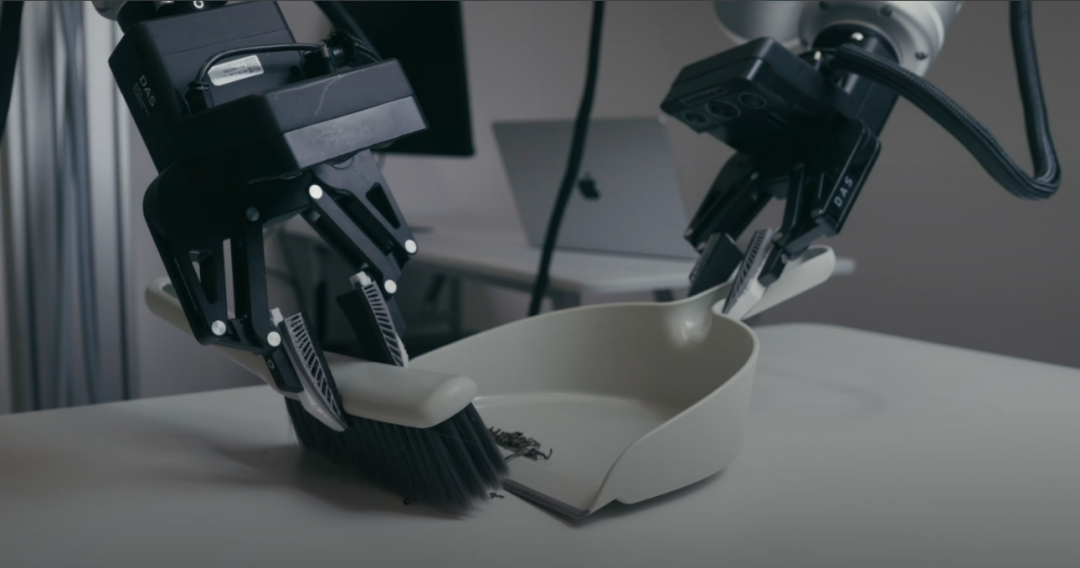
Zhang’s answer is blunt. The end-to-end method proven in autonomous driving is a perception-reasoning-execution path that should not be fenced by a steering wheel, and it generalises to broader robot manipulation: letting a model perceive, reason and act in unstructured environments in real time. The proof came on 23 September. The core product Simate-beta topped the RoboDojo benchmark at average score 33.95 with 27.96 per cent success, ahead of GPT-6-Astra and DeepMind, and completed a multi-step “make tea” task on a real machine, showing state tracking and environment adaptation across steps. The leaderboard gets chased, and Star Era and LiberAI soon climbed too, but Zhang’s real bet is Physical RSI, recursive self-improvement in physical intelligence.
Letting AI research AI
His AutoResearch system hands the loop of hypothesis, experiment planning, execution and analysis to machines, with human researchers only setting direction and constraints. Universities including MIT, Tsinghua, Peking and HKUST have entered the platform’s internal test. The deeper truth is that physical AI’s bottleneck was never model size but slow R and D: every new task means re-collecting data, re-training and re-tuning engineering, stuck on a man-power approach. When AI studies AI, dozens of experiment lines run in parallel, dead ends die in simulation, and only promising paths reach real hardware. That is the engine behind Simate-beta’s three-month climb. Zhang’s move is a footnote to an industry talent flow: top autonomous-driving engineers are systematically turning to physical AI, and robot R and D is becoming agentised and infrastructural, entering a phase built on understanding and acting in the physical world. A former end-to-end war god moved the method from the road to the physical world, and put a path of machines evolving themselves on the table. Physical AI’s GPT-3 moment may arrive faster than expected, and this time Silicon Valley may not define it.
Editor’s note: This is an adapted translation of the original OFweek report. It has been trimmed and restructured for readability for an international business audience. The full original (in Chinese) is at https://robot.ofweek.com/2026-10/ART-8321205-12003-30707448.html.