A company that is less than five months old has closed a seed round of several hundred million yuan, and the investors read like a roll call of Chinese automotive and AI capital: Chenway Capital, Xiaomi’s strategic investment arm, Baidu Ventures and Xinhe Capital. The founder is Zhang Ying, who ran core technology for Horizon Robotics’ HSD driving stack and was known in the industry as the end-to-end architect after pushing three generations of assisted driving, from mapped, to mapless, to a single-stage pure-vision system, to something close to Tesla’s FSD.

His explanation for the jump is plain. The end-to-end method validated in autonomous driving is a perception, reasoning and execution path, and it should not be fenced in by a steering wheel. Applied to manipulation, the model has to perceive in unstructured space, reason quickly and execute precisely, which is the same problem with a different actuator.
A leaderboard win, then the harder claim
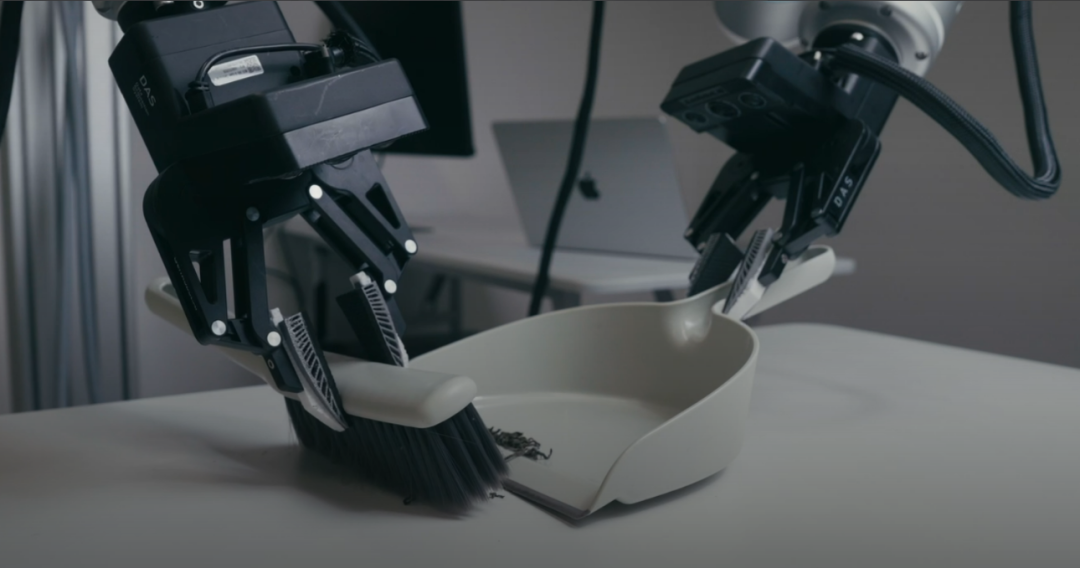
On 23 September the company’s Simate-beta took first place on the RoboDojo benchmark with an average score of 33.95 and a 27.96 per cent success rate, ahead of GPT-6-Astra and DeepMind entries. It also completed a multi-step tea brewing task on real hardware, which is the part that matters, since continuous operation demands state tracking and adaptation to a changing environment.
Leaderboards get overtaken. Robot Era and LiberAI climbed soon after. What Zhang is actually selling is something he calls Physical RSI, recursive self-improvement for physical intelligence, in which the research loop itself is automated. His AutoResearch system hands hypothesis generation, experiment planning, execution and analysis to machines, leaving human researchers to set direction and constraints. Researchers from MIT, Tsinghua, Peking University and HKUST are reportedly in the closed beta.
The bottleneck nobody prices
The claim lands because it names a real cost. The binding constraint in physical AI is not model size, it is iteration speed. Every new task means new data collection, new training and new engineering, and the loop scales with headcount. If the loop can run dozens of branches in parallel, with simulation killing the bad ones before they reach a robot, the cost per capability falls by an order of magnitude rather than a few per cent.
There is a talent signal underneath the funding announcement. The best autonomous driving engineers in China are moving into physical AI in numbers, and the methods they bring were hardened by years of shipping safety-critical systems under cost pressure. That is a different pedigree from a robotics lab, and it shows up in how they talk about data: as a cost to be driven down, not a moat to be accumulated.
Whether self-improving robots are three years away or ten is unknowable. What is knowable is that the capital is now funding the research process itself, not just the machine that comes out of it.
Editor’s note: This is an adapted translation of the original OFweek report. It has been trimmed and restructured for readability for an international business audience. The full original (in Chinese) is at https://robot.ofweek.com/2026-10/ART-8321205-12003-30707448.html.