While humanoid companies argue about form factors on exhibition stands, a Suzhou company has been selling robots into the places where the air is filtered to class 100 and nobody is allowed to watch. Limiaoda Intelligent disclosed this month that its B1 and B2 rounds together raised close to RMB 500 million, with a B3 of several hundred million oversubscribed and in signing.

The number that matters is not the funding. It is the order book: 2026 signed and intended orders approach RMB 1 billion, of which Micron alone accounts for several hundred million cumulatively.
The customer list is the argument
Limiaoda sells composite robots and intelligent production equipment into semiconductor and optical module lines. Its customers include Micron and SK Hynix in memory, ASE and Shenghe Jingwei in packaging and test, Foxconn and Wistron in AI servers, and AAOI and Coherent in optical modules. On the domestic side it serves Huawei, Baidu and State Grid.
The geography follows the fabs. Micron’s new Singapore wafer plant carries about $24 billion of investment over a decade. Its New York megafab is a $100 billion project. The Hiroshima HBM expansion started at roughly $9.3 billion. Every one of those adds cleanroom floor area, and every square metre of new floor needs material movement that cannot be done by people in bunny suits at scale.
Limiaoda has extended into the US, Japan, Singapore, Malaysia, India and Taiwan on the back of those programmes. It is the follow-your-customer model that Chinese suppliers have run in consumer electronics for two decades, applied to capital equipment.
Why this segment closes first
Cleanrooms impose hard constraints on stability, particle generation and precision, which is why general purpose automation struggles and why a specialist can charge. Limiaoda’s pitch is unattended line operation in which handling equipment and scheduling software work together, backed by more than 200 patents and software copyrights. That is engineering accumulation rather than a model demo, and it is why the segment closes commercially before humanoids do.
The capital is being split between semiconductor equipment and optical modules, and the optical module forecast explains the second leg. Goldman Sachs has raised its market estimate to about $67 billion for 2026 and above $130 billion for 2027, while TrendForce sees AI-specific optical transceivers rising from $16.5 billion in 2025 to $26 billion in 2026. Both are AI infrastructure lines, and both need automation that never stops.
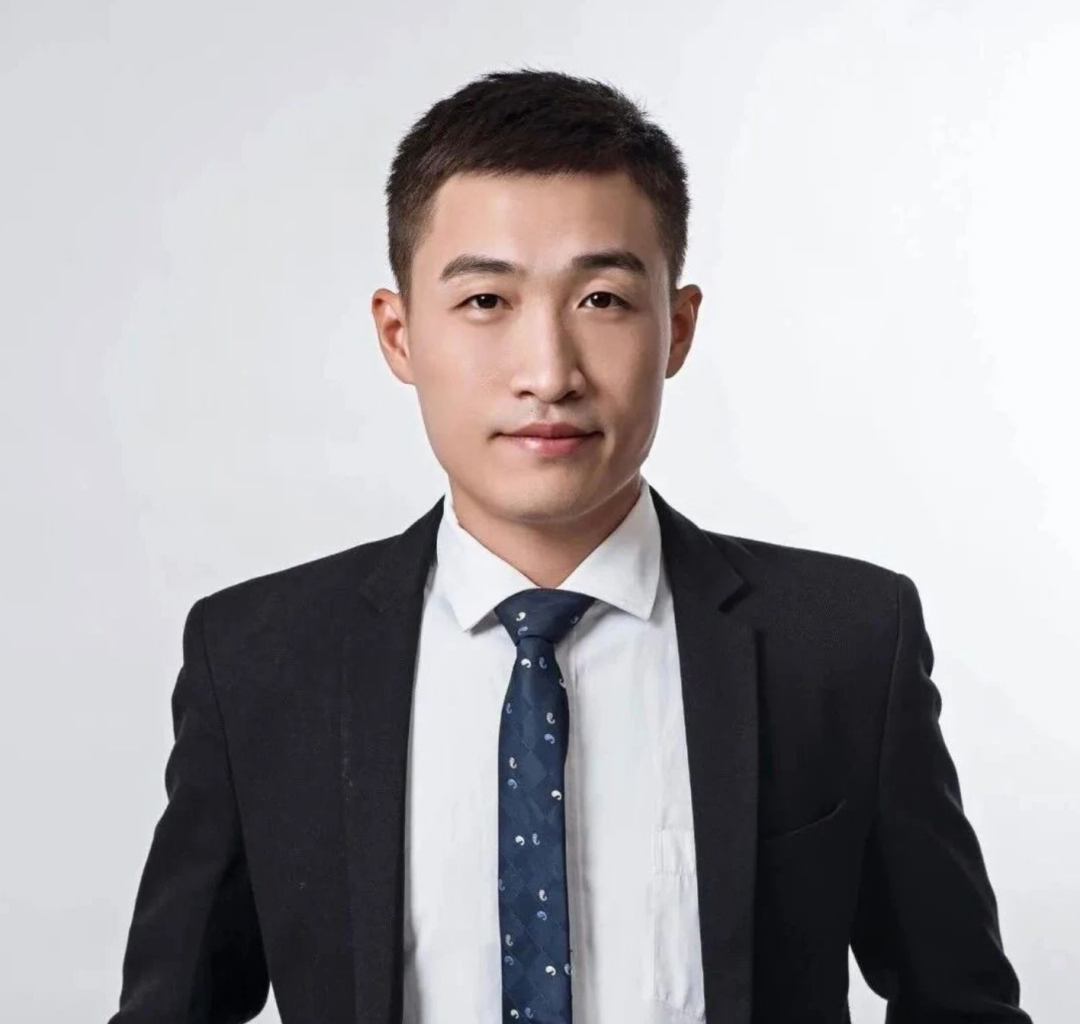
The founder path is unusual. Liu Yusong took a finance master’s, worked in quantitative analysis at a foreign bank in Xiamen, started an intelligent voice customer service company, then co-founded an AI drug discovery firm in 2021 before setting up Limiaoda Intelligent in 2025. The thread is not robotics. It is putting AI into a place where the customer measures output in yield.
Editor’s note: This is an adapted translation of the original OFweek report. It has been trimmed and restructured for readability for an international business audience. The full original (in Chinese) is at https://robot.ofweek.com/2026-10/ART-8321202-12003-30708263.html.